On this page
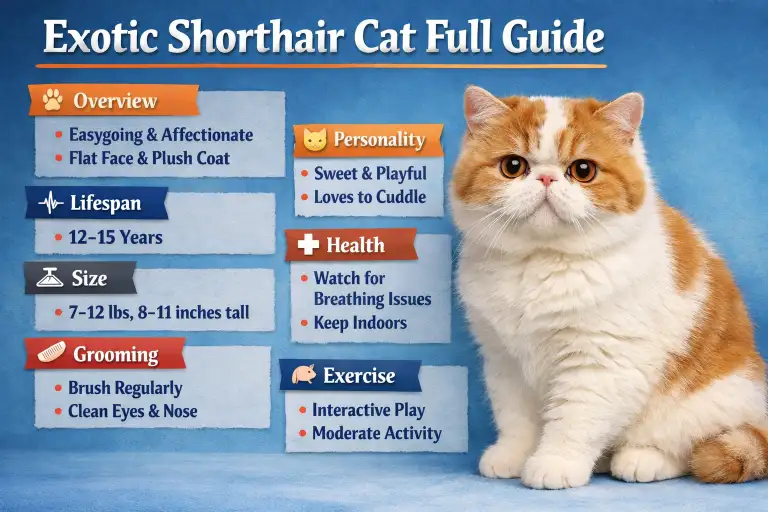
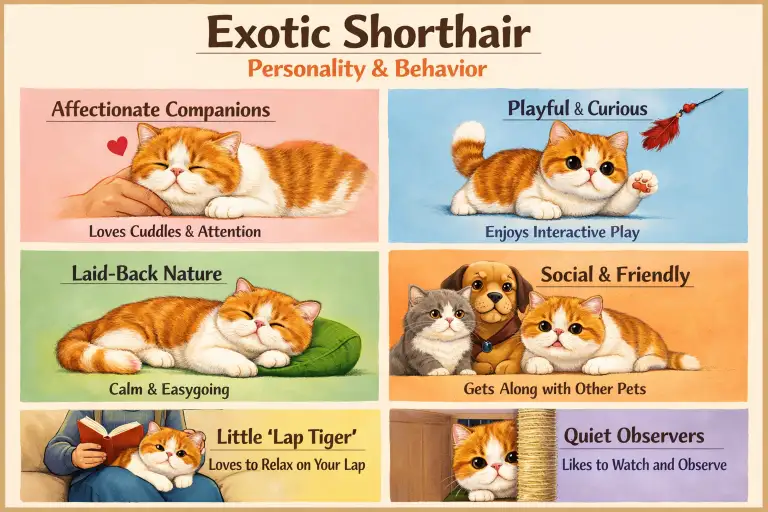
Exotic Shorthairs are gentle, calm cats with a soft, plush appearance that makes them instantly lovable. They are known for their easygoing nature, which is why they are often described as “the laid-back Persians.” Unlike some breeds that are high-energy or constantly on the move, Exotic Shorthairs usually enjoy lounging around but will also join in play when they feel engaged.
These cats are affectionate without being overly demanding. They enjoy sitting near their owners, following them from room to room, and participating in family life. Some may become lap cats, while others prefer to be near you without being held. Their temperament often balances calm independence with gentle curiosity, making them great companions for people of all ages.
Every Exotic Shorthair has its own personality, shaped by genetics, early socialization, and the home environment. A kitten that is gently handled and exposed to different experiences will usually grow into a confident adult cat. Still, individual differences are normal — even two kittens from the same litter may display different levels of affection, curiosity, or playfulness.
Exotic Shorthairs are also known for their patience. They usually tolerate new people, pets, and minor household changes better than more sensitive breeds. Their friendly demeanor combined with quiet confidence makes them an ideal choice for owners seeking a calm and loving companion.
How Exotic Shorthairs Communicate
Exotic Shorthairs use both their body and their voice to communicate. Their tail, ears, eyes, and posture all send messages to you and other cats. For example, a tail held high usually signals confidence or happiness, while a slow blink can show trust and affection. Soft purrs are common when they are relaxed or enjoying attention, while a gentle chirp may be used to get your notice.
These cats are not overly vocal compared to some breeds like Siamese, but when they do “talk,” they are easy to understand once you know the signs. Observing their body language alongside their meows helps owners read their moods accurately.
Here’s a simple table to help understand their signals:
| Signal | Meaning | Example Scenario |
|---|---|---|
| Tail up | Happy, confident | Greeting you at the door |
| Slow blink | Trust, affection | Sitting near you on the couch |
| Soft purr | Contentment, comfort | Relaxing in a sunny spot |
| Gentle chirp | Attention-seeking, curiosity | Looking out the window at birds |
| Flattened ears | Annoyance or discomfort | During rough play or a loud noise |
Exotic Shorthairs often communicate subtly, so paying attention to small movements like the flick of a tail tip or the position of their ears can tell you a lot about how they are feeling. Learning these cues strengthens your bond and helps prevent misunderstandings.
Social Behavior: With Humans, Kids & Other Pets
Exotic Shorthairs are friendly and enjoy interacting with humans. They may follow you around the house, nudge your hand for pets, or curl up next to you while you read or watch TV. Most are patient with children, especially if the kids are taught to be gentle. They may not be as playful as other breeds, but they respond well to slow, interactive games like wand toys or gentle fetch.
When it comes to other pets, Exotic Shorthairs are generally tolerant. They usually get along with other cats and can adapt to dogs if introductions are done gradually. Their calm nature helps reduce conflicts and makes multi-pet households easier to manage.
Some Exotic Shorthairs show a preference for certain family members but rarely display jealousy. They enjoy attention from anyone who approaches them gently and consistently. Understanding their limits — like when they need personal space — helps maintain harmony in the home.
Here’s a table summarizing common social behavior scenarios:
| Situation | Typical Response | How to Read Behavior |
|---|---|---|
| Guest arrives | Approaches or observes quietly | Curious but calm |
| Child plays nearby | Tolerates gentle play | May join in or move away if needed |
| Other cat in the house | Shares space, mild play interactions | Usually avoids conflicts |
| Dog in home | Observes, may retreat or interact | Slowly adapts to new companion |
Play, Energy & Daily Behavior Patterns
Exotic Shorthairs are not overly active cats, but they enjoy bursts of play. Typical play includes gentle stalking, pouncing on toys, and batting small objects. They are more likely to play in short sessions rather than long, intense bouts.
Energy levels in this breed are moderate. They often alternate between periods of curiosity and extended naps. Owners may notice increased activity during early mornings or evenings, sometimes referred to as “zoomies.” These bursts are normal and part of their natural behavior.
Daily routines help Exotic Shorthairs feel secure. They appreciate a predictable schedule for feeding, play, and quiet time. Providing toys, perches, or a sunny window spot keeps them mentally stimulated and content.
Here’s a table showing typical energy and play patterns:
| Time of Day | Activity Level | Typical Behavior |
|---|---|---|
| Morning | Moderate | Wand toy play, exploring |
| Midday | Low | Napping, observing |
| Evening | Moderate-High | Short play sessions, curiosity bursts |
| Night | Low | Sleeping, occasional window watching |
Interpreting Mood & Common Behavior Questions
Understanding an Exotic Shorthair’s mood is easier once you know their body language and typical behavior patterns. Following you around is usually a sign of affection rather than neediness. Hiding for a while is normal and helps them feel safe, especially in new environments.
Some common behavior questions include: Why does my cat knead blankets? Why does it follow me everywhere? Why does it purr even when alone? Most of these behaviors are normal ways of showing comfort, marking territory, or expressing curiosity.
Here’s a simple table summarizing common behaviors:
| Behavior | Meaning | Owner Tip |
|---|---|---|
| Kneading blankets | Comfort, marking scent | Let them knead, it’s normal |
| Following owner | Affection, curiosity | Enjoy their company |
| Hiding | Safety, stress relief | Provide cozy hiding spots |
| Purring when alone | Comfort or self-soothing | Normal, not always a call for attention |
Exotic Shorthairs are calm, affectionate, and generally easygoing. Understanding their subtle cues makes them even more rewarding companions. For more detailed guidance on this breed’s personality, you can check PetCare.com.

Ata Ur Rehman is the founder of Pet Age in Human Years Calculator, an educational platform that provides age conversion charts and lifespan guides for dogs, cats, birds, and other companion animals. His work focuses on helping pet owners understand how animal ages translate into human years using commonly accepted age conversion formulas and published lifespan averages.
The website compiles breed and species lifespan data from kennel clubs, breed organizations, and general animal lifespan studies to present simple and easy-to-understand guides for pet owners worldwide.
This website was created to centralize animal age conversion charts into one easy reference platform for pet owners.
This article is for general education. For symptoms, medication, diet changes, or health concerns, use a qualified veterinarian who can assess your individual pet.