On this page
Labrador Retrievers are friendly, active, and easy-going dogs, but they are not completely low-maintenance when it comes to grooming. Many owners think Labradors need very little care because they have short hair and do not require haircuts. However, Labrador Retriever grooming is important because Labs have a thick double coat, shed heavily, love outdoor activities, and can develop odor, ear problems, dry skin, and nail issues if basic grooming is ignored.
A good Labrador grooming routine helps control shedding, reduce dog smell, protect the skin, and keep the coat healthy. Grooming also gives you a chance to check your dog for early signs of problems such as hot spots, redness, ear infections, unusual hair loss, ticks, lumps, or skin irritation.
Whether you have a Labrador puppy, adult Lab, or senior Labrador, regular grooming keeps your dog comfortable, clean, and healthy.
Why Labrador Grooming Is Important
Labradors are active dogs that often enjoy running, swimming, rolling in dirt, and playing outdoors. Because of this, dirt, loose hair, moisture, and odor can build up in their coat. Grooming removes dead hair, spreads natural oils, and keeps the skin and coat in better condition.
Regular Labrador grooming helps:
- Control heavy shedding
- Reduce Labrador odor
- Keep the coat shiny and healthy
- Prevent dry skin and irritation
- Lower the risk of ear infections
- Keep nails at a safe length
- Improve dental health
- Help you notice health issues early
Labradors do not need complicated grooming, but they do need consistent grooming.
Understanding the Labrador Double Coat
Labrador Retrievers have a double coat. This means their coat has two layers. The outer coat is short, straight, and water-resistant. It helps protect the dog from dirt, water, and weather. Underneath, Labradors have a soft, dense undercoat that helps regulate body temperature.
This double coat is the main reason Labradors shed so much. They shed throughout the year, but shedding becomes heavier during seasonal coat changes. During these times, large amounts of undercoat loosen and fall out.
Many owners ask whether shaving a Labrador will stop shedding. The answer is no. Shaving a Labrador does not stop shedding and can damage the coat. It may also affect how the coat grows back and can increase the risk of sunburn, overheating, and skin irritation.
Instead of shaving, Labradors need regular brushing and deshedding.
How Often Should You Brush a Labrador?
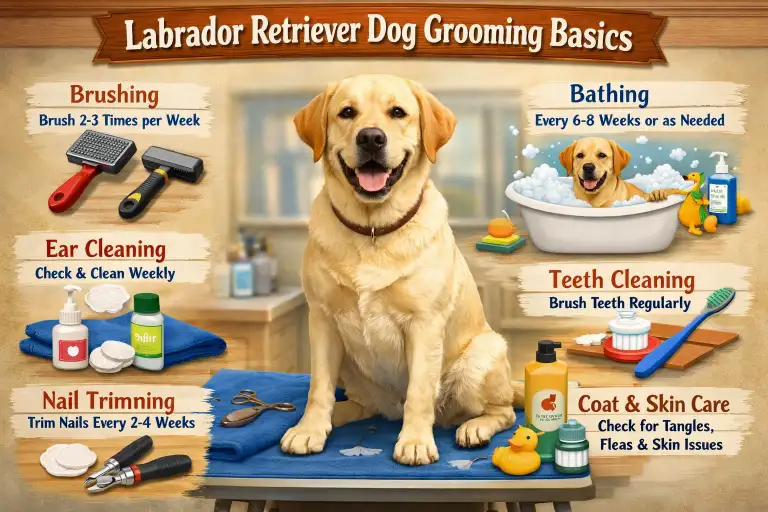
Brushing is one of the most important parts of Labrador Retriever grooming. Most Labradors should be brushed 2–3 times per week. During heavy shedding seasons, daily brushing or brushing every other day is helpful.
Brushing removes loose undercoat before it ends up on your floors, clothes, furniture, and car seats. It also spreads natural oils through the coat, which keeps the coat healthy and shiny.
Labrador Brushing Schedule
| Situation | How Often to Brush |
|---|---|
| Normal weeks | 2–3 times per week |
| Heavy shedding season | Daily or every other day |
| After swimming | Brush once the coat is dry |
| Indoor Labradors | 2–3 times per week |
Even indoor Labradors need regular brushing because they still shed year-round.
Best Grooming Tools for Labradors
Using the right grooming tools makes Labrador grooming easier and more effective. Labradors do not need fancy styling tools, but they do need tools that can remove loose undercoat without damaging the coat.
Useful Labrador grooming tools include:
- Slicker brush
- Rubber curry brush
- Deshedding tool
- Grooming mitt
- Nail clippers or nail grinder
- Dog-safe shampoo
- Ear cleaning solution
- Dog toothbrush and toothpaste
- Towels or pet-safe dryer
Do not use harsh tools too aggressively. Brushing should remove loose hair without scratching the skin or making your dog uncomfortable.
How Often Should You Bathe a Labrador?
Most Labradors should be bathed every 4–8 weeks. Some active Labradors may need baths more often if they get very dirty, but bathing too much can cause problems.
Labradors have natural oils that protect their skin and coat. If you bathe your Labrador too often, these oils can be stripped away. This may lead to dry skin, itching, irritation, and even stronger odor over time.
Always use dog-safe shampoo. Human shampoo is not suitable for dogs because it can irritate their skin.
Labrador Bathing Schedule
| Situation | Bathing Frequency |
|---|---|
| Normal activity | Every 4–8 weeks |
| Frequent swimming | Every 6–8 weeks or as needed |
| Strong odor | Brush first before bathing |
| Sensitive skin | Follow veterinarian advice |
If your Labrador smells bad soon after bathing, the problem may be trapped undercoat, ear infection, skin irritation, or another health issue.
How to Bathe a Labrador Properly
Before bathing, brush your Labrador well to remove loose hair. This helps shampoo reach the coat and skin more effectively.
Use lukewarm water and wet the coat fully. Apply dog shampoo and massage it gently into the coat. Rinse thoroughly because leftover shampoo can cause itching and irritation.
After the bath, dry your Labrador well. Leaving the coat damp can trap moisture and create odor or skin problems. Use towels first, then a pet-safe dryer on low heat if your dog tolerates it.
Labrador Shedding Control Tips
You cannot completely stop Labrador shedding, but you can manage it. Labradors naturally shed because of their double coat. The goal is to remove loose hair before it spreads around your home.
To control Labrador shedding:
- Brush 2–3 times per week
- Brush daily during shedding season
- Use a deshedding tool carefully
- Feed a balanced diet
- Keep the skin healthy
- Avoid shaving the coat
- Bathe only when needed
- Dry the coat properly after swimming or bathing
If shedding suddenly becomes excessive or patchy, contact a veterinarian because allergies, parasites, stress, poor nutrition, or illness may be involved.
Nail Care for Labradors
Labrador nails should usually be trimmed every 2–4 weeks. Active dogs may wear their nails down naturally, but many Labradors still need regular trimming.
A simple sign is the clicking sound. If you hear your Labrador’s nails clicking on the floor, they are probably too long.
Long nails can cause discomfort while walking and may affect how your dog stands or moves. Trim small amounts at a time to avoid cutting the quick, which can be painful and cause bleeding.
If your dog is nervous, use short sessions and reward calm behavior. A groomer or veterinarian can help if nail trimming is difficult.
Ear Cleaning for Labradors
Labradors have floppy ears, which can trap warmth and moisture. This makes them more likely to develop ear infections, especially if they swim often.
Clean your Labrador’s ears every 1–2 weeks or as needed. Use a dog-safe ear cleaner and avoid pushing anything deep into the ear canal.
Signs of ear problems include:
- Strong ear odor
- Redness
- Swelling
- Head shaking
- Scratching at the ears
- Brown or yellow discharge
- Pain when touched
If you notice these signs, contact a veterinarian.
Dental Care for Labradors
Dental care is an important part of Labrador grooming. Plaque and tartar can build up on the teeth and lead to gum disease, bad breath, pain, and tooth loss.
Brush your Labrador’s teeth 2–3 times per week. Daily brushing is even better. Always use dog toothpaste because human toothpaste can be unsafe for dogs.
Dental chews and toys can help, but they should not completely replace brushing.
Skin Care and Health Checks
Labradors can develop skin problems such as hot spots, allergies, dryness, redness, and irritation. Because their coat is thick, skin problems can be hidden until they become uncomfortable.
During brushing, run your hands over your dog’s body and check for:
- Red patches
- Dry or flaky skin
- Bald spots
- Lumps
- Ticks or fleas
- Hot spots
- Scratches
- Sores
- Unusual odor
Weekly skin checks help you catch problems early.
Labrador Grooming Schedule
A simple routine makes grooming easier and less stressful for both you and your dog.
| Grooming Task | Recommended Schedule |
|---|---|
| Brushing | 2–3 times per week |
| Brushing during shedding season | Daily or every other day |
| Bathing | Every 4–8 weeks |
| Nail trimming | Every 2–4 weeks |
| Ear cleaning | Every 1–2 weeks |
| Teeth brushing | 2–3 times per week |
| Skin check | Once per week |
| Professional grooming | As needed |
Short, regular grooming sessions are better than long sessions that make your dog tired or stressed.
Common Labrador Grooming Mistakes
Many Labrador grooming problems happen because owners misunderstand the breed’s coat and care needs.
Avoid these common mistakes:
- Shaving the Labrador double coat
- Bathing too often
- Using human shampoo
- Skipping brushing during shedding season
- Ignoring ear smell or redness
- Letting nails grow too long
- Brushing too roughly
- Not drying the coat properly
- Ignoring sudden hair loss or itching
Good grooming should support the coat, not damage it.
When Should You Visit a Professional Groomer?
Most Labrador grooming can be done at home, but professional grooming can still be helpful. A professional groomer can assist with deep deshedding, nail trimming, bathing, and coat maintenance.
Professional grooming is useful when:
- Your Labrador is shedding heavily
- The undercoat feels packed
- Your dog dislikes nail trims
- You want a deep bath and blow-dry
- Your dog needs extra help during seasonal shedding
Professional grooming should support your home routine, not replace it completely.
When to Contact a Veterinarian
Grooming can help prevent some problems, but it is not a replacement for veterinary care.
Contact a veterinarian if your Labrador has:
- Open sores
- Strong ear odor
- Constant scratching
- Sudden hair loss
- Swollen skin
- Bleeding nails
- Pain during grooming
- Red or inflamed ears
- Persistent bad smell
- Skin that feels hot or painful
These signs may point to infections, allergies, parasites, or other health problems.
To understand your dog’s current life stage, use the Labrador Retriever Dog Age Calculator.
For more detail, see our Labrador Retriever nutrition and feeding guide.
FAQs About Labrador Grooming
Do Labradors need grooming?
Yes, Labradors need regular grooming. They do not need haircuts, but they do need brushing, bathing, nail trimming, ear cleaning, dental care, and skin checks.
How often should I brush my Labrador?
Brush your Labrador 2–3 times per week. During heavy shedding seasons, brush daily or every other day.
How often should I bathe my Labrador?
Most Labradors should be bathed every 4–8 weeks. Bathing too often can dry out the skin and make odor worse.
Can I shave my Labrador to stop shedding?
No, shaving a Labrador is not recommended. It does not stop shedding and can damage the double coat.
Why does my Labrador smell bad?
Labrador odor can come from trapped undercoat, natural oils, damp fur, dirty ears, skin irritation, or dental problems. Brushing often helps reduce odor.
Do Labradors shed a lot?
Yes, Labradors shed year-round and shed more during seasonal coat changes.
How often should I clean my Labrador’s ears?
Clean your Labrador’s ears every 1–2 weeks or as needed, especially if your dog swims often.
How often should Labrador nails be trimmed?
Labrador nails usually need trimming every 2–4 weeks.
Do Labradors need professional grooming?
Not always, but professional grooming can help during heavy shedding seasons or if your dog needs help with nails, bathing, or deshedding.
Conclusion
Labrador Retrievers are not high-maintenance dogs, but they are not no-maintenance dogs either. Their thick double coat, heavy shedding, active lifestyle, floppy ears, and skin care needs make regular grooming important.
A good Labrador grooming routine includes brushing, bathing, nail trimming, ear cleaning, teeth brushing, and weekly skin checks. With consistent care, your Labrador will stay cleaner, healthier, more comfortable, and easier to manage.
Regular grooming also builds trust between you and your dog, making each session calmer and more enjoyable over time.

Ata Ur Rehman is the founder of Pet Age in Human Years Calculator, an educational platform that provides age conversion charts and lifespan guides for dogs, cats, birds, and other companion animals. His work focuses on helping pet owners understand how animal ages translate into human years using commonly accepted age conversion formulas and published lifespan averages.
The website compiles breed and species lifespan data from kennel clubs, breed organizations, and general animal lifespan studies to present simple and easy-to-understand guides for pet owners worldwide.
This website was created to centralize animal age conversion charts into one easy reference platform for pet owners.
This article is for general education. For symptoms, medication, diet changes, or health concerns, use a qualified veterinarian who can assess your individual pet.