On this page
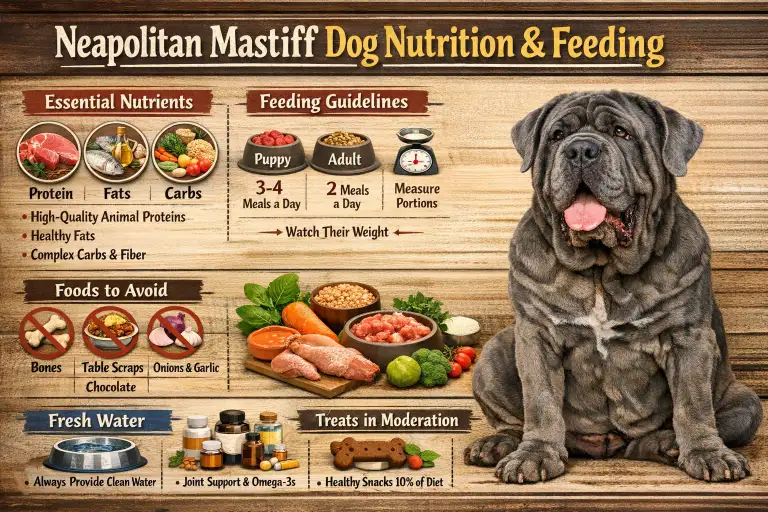
Feeding a Neapolitan Mastiff is not simply about providing more food because this breed is large. These dogs are a giant, heavy-boned, slow-maturing breed that requires carefully balanced nutrition to support healthy growth, strong joints, stable weight, digestion, skin health, and a longer quality of life.
A proper Neapolitan Mastiff diet must focus on controlled calories, appropriate protein levels, balanced minerals, and feeding routines that protect this breed from common giant-dog problems such as obesity, joint stress, digestive issues, and excessive growth during puppyhood.
This complete Neapolitan Mastiff feeding guide explains what to feed, how much to feed, how nutrition changes throughout life, and the common mistakes owners should avoid.
Why Nutrition Is Especially Important for Neapolitan Mastiffs
Neapolitan Mastiffs develop differently from many other breeds. Their massive frame, loose skin, heavy bone structure, and slow maturity mean that nutrition mistakes can have long-term consequences.
Feeding too much does not create a healthier Mastiff. In giant breeds, excessive calories and rapid growth can increase stress on developing joints and contribute to mobility problems later in life.
Key Reasons Diet Matters for This Giant Breed
| Nutrition Concern | Why It Matters for Neapolitan Mastiffs |
|---|---|
| Controlled growth | Puppies need steady growth rather than rapid weight gain to reduce stress on developing bones and joints. |
| Joint protection | Their heavy body places constant pressure on hips, elbows, and other joints. |
| Weight management | Extra weight is difficult to notice under loose skin but can increase health risks. |
| Digestive health | Large meals and unsuitable foods can contribute to gas, loose stool, and stomach discomfort. |
| Skin and coat health | Balanced fats and nutrients help support skin folds, coat quality, and overall condition. |
What a Healthy Neapolitan Mastiff Diet Should Provide
The best food for a Neapolitan Mastiff is not necessarily the most expensive option. The goal is a complete and balanced diet that provides the right amount of nutrients without encouraging unnecessary weight gain.
A suitable diet should support:
- Strong muscles without excessive body weight
- Healthy bone development during puppy growth
- Joint protection through proper mineral balance
- Stable digestion and stool quality
- Healthy skin and coat condition
- Maintaining an ideal body condition throughout life
Neapolitan Mastiff Nutritional Requirements
Giant breeds require a different nutritional approach compared with smaller dogs. A Neapolitan Mastiff needs enough protein to maintain muscle, but excessive calories can quickly lead to unhealthy weight gain.
Recommended Nutrient Levels for Adult Neapolitan Mastiffs
| Nutrient | Recommended Range | Why It Matters |
|---|---|---|
| Protein | 22–26% | Supports muscle maintenance without unnecessary calorie excess. |
| Fat | 10–14% | Provides energy while helping prevent obesity. |
| Calcium | 0.8–1.2% | Supports bone health when properly balanced. |
| Phosphorus | 0.6–1.0% | Works with calcium for healthy skeletal development. |
| Omega-3 Fatty Acids | Recommended | Supports joints, skin, and inflammation control. |
| Fiber | 3–6% | Helps digestion and improves stool quality. |
For puppies, nutrient balance becomes even more important. Giant breed puppies should not be pushed to grow faster because rapid growth can increase the risk of skeletal problems.
Protein, Fat, and Carbohydrates Explained
Protein
Protein helps maintain muscle tissue and supports normal body repair. However, more protein does not automatically mean a stronger dog.
A Neapolitan Mastiff benefits from:
- High-quality animal protein sources
- Moderate protein levels
- Consistent daily intake
Fat
Fat provides concentrated energy and supports skin and coat health. Because Neapolitan Mastiffs are naturally less active than many breeds, excessive fat can quickly lead to weight gain.
Healthy fat sources include:
- Fish oil
- Salmon
- Chicken fat
- Omega-3 rich ingredients
Carbohydrates
Carbohydrates are not automatically harmful for dogs. Quality carbohydrates can provide energy and fiber that support digestion.
Good carbohydrate sources may include:
- Brown rice
- Sweet potatoes
- Oats
- Vegetables
Important Vitamins and Minerals for Neapolitan Mastiffs
Because this breed carries significant body weight, certain nutrients play an important role in maintaining mobility and overall health.
| Nutrient | Main Benefit | Common Sources |
|---|---|---|
| Omega-3 Fatty Acids | Supports joints, skin, and coat health | Fish oil, salmon, marine sources |
| Glucosamine | Supports cartilage and joint function | Large breed supplements and joint formulas |
| Zinc | Helps maintain healthy skin and immune function | Meat and fish ingredients |
| Vitamin E | Supports skin and cellular health | Animal fats and oils |
| Probiotics | Supports digestion and gut balance | Specialized dog foods and supplements |
How to Choose the Best Food for a Neapolitan Mastiff
When selecting food for a Neapolitan Mastiff, focus on nutritional quality rather than marketing claims.
Look For:
- Complete and balanced nutrition
- Large-breed or giant-breed formulas
- Clearly listed nutrient information
- Appropriate calorie density
- High-quality protein sources
- Balanced calcium and phosphorus levels
Avoid:
- Extremely high-calorie formulas
- Unbalanced homemade diets
- Excess calcium supplements for puppies
- Foods designed to promote rapid growth
- Feeding based only on the amount written on the bag
The best Neapolitan Mastiff nutrition plan is one that keeps the dog lean, comfortable, mobile, and healthy throughout every stage of life.
How Much to Feed a Neapolitan Mastiff: Feeding Amounts, Calories, and Schedule
Knowing what to feed a Neapolitan Mastiff is only part of successful nutrition. The amount you provide each day is equally important because this breed can gain weight easily without owners noticing.
A healthy Neapolitan Mastiff should be strong and muscular, not overweight. Extra body weight puts additional pressure on already heavy joints and can reduce mobility, comfort, and overall quality of life.
Daily Calorie Requirements for Neapolitan Mastiffs
The exact calorie requirement depends on body weight, age, activity level, metabolism, and health condition. The following chart provides a general starting point.
| Body Weight | Low Activity | Moderate Activity | High Activity |
|---|---|---|---|
| 110 lb (50 kg) | 1,900 calories/day | 2,300 calories/day | 2,700 calories/day |
| 130 lb (59 kg) | 2,100 calories/day | 2,500 calories/day | 2,900 calories/day |
| 150 lb (68 kg) | 2,300 calories/day | 2,700 calories/day | 3,100 calories/day |
| 170 lb (77 kg) | 2,500 calories/day | 3,000 calories/day | 3,400 calories/day |
These numbers are starting estimates. A Neapolitan Mastiff that is gaining excess weight may need fewer calories, while a very active dog may require more.
Neapolitan Mastiff Feeding Chart by Age
Nutrition needs change significantly as a Neapolitan Mastiff grows. Puppies, adults, and seniors require different feeding strategies.
| Life Stage | Feeding Frequency | Main Nutrition Goal |
|---|---|---|
| Puppy (8 weeks–6 months) | 3 meals daily | Controlled growth and healthy bone development |
| Young Adult (6–24 months) | 2–3 meals daily | Maintain steady growth and lean muscle |
| Adult (2–7 years) | 2 meals daily | Maintain ideal weight and joint health |
| Senior (7+ years) | 2 smaller meals daily | Support mobility, digestion, and healthy aging |
Neapolitan Mastiff Puppy Feeding Guide
Neapolitan Mastiff puppies grow rapidly during their first year, but their growth should be controlled. Overfeeding a giant breed puppy can create unnecessary stress on developing bones and joints.
Important Puppy Feeding Rules
- Use a high-quality large-breed puppy formula.
- Avoid adding calcium supplements unless recommended by a veterinarian.
- Do not encourage rapid weight gain.
- Monitor body condition rather than focusing only on size.
- Increase food gradually as the puppy grows.
| Puppy Age | Typical Meals Per Day | Feeding Focus |
|---|---|---|
| 8–12 weeks | 3–4 meals | Digestible food and steady growth |
| 3–6 months | 3 meals | Controlled calories and joint protection |
| 6–12 months | 2–3 meals | Maintain healthy growth rate |
| 12–24 months | 2 meals | Transition toward adult nutrition |
Best Food Types for Neapolitan Mastiffs
There is no single perfect diet for every Neapolitan Mastiff. The best choice depends on your dog’s digestion, activity level, health, and your ability to maintain consistency.
| Food Type | Advantages | Potential Concerns |
|---|---|---|
| Dry Kibble | Affordable, convenient, complete nutrition | Some formulas may contain excessive calories |
| Fresh Food | Highly palatable and digestible | More expensive and requires careful balancing |
| Canned Food | Good moisture content and easier for seniors | Higher cost and larger feeding volume |
| Raw Diet | Can be customized with proper planning | Risk of nutritional imbalance and contamination |
| Homemade Diet | Complete ingredient control | Requires professional formulation |
Foods Neapolitan Mastiffs Can and Cannot Eat
Many owners share human foods with their dogs. Some foods are safe additions, while others can be dangerous.
| Food | Status | Notes |
|---|---|---|
| Cooked chicken | Safe | Serve plain without seasoning or bones |
| Carrots | Safe | Low-calorie treat option |
| Rice | Safe | Can support digestion in some cases |
| Apples | Safe | Remove seeds before feeding |
| Chocolate | Toxic | Can affect the heart and nervous system |
| Grapes | Toxic | May cause kidney problems |
| Onions | Toxic | Can damage red blood cells |
| Xylitol | Extremely dangerous | Can cause life-threatening reactions |
Common Neapolitan Mastiff Feeding Problems
| Problem | Possible Cause | Solution |
|---|---|---|
| Weight gain | Too many calories or treats | Reduce calories and monitor body condition |
| Gas and loose stool | Food intolerance or sudden changes | Switch foods gradually |
| Picky eating | Too many treats or inconsistent routine | Create a consistent feeding schedule |
| Fast eating | Eating too quickly | Use slow feeder bowls |
| Joint stiffness | Excess weight or poor nutrition | Improve diet and maintain healthy weight |
When to Contact a Veterinarian
Nutrition can solve many problems, but some symptoms require professional evaluation.
| Warning Sign | Why It Matters |
|---|---|
| Sudden weight loss | May indicate an underlying health issue |
| Persistent vomiting | Could signal digestive problems |
| Long-term diarrhea | Risk of dehydration and nutrient loss |
| Difficulty walking | Possible joint or mobility concern |
| Loss of appetite | May indicate illness |
Frequently Asked Questions About Neapolitan Mastiff Nutrition
What is the best food for a Neapolitan Mastiff?
The best food for a Neapolitan Mastiff is a complete and balanced large-breed formula that provides moderate protein, controlled calories, and appropriate calcium and phosphorus levels. The ideal food keeps the dog lean while supporting joints, muscles, and digestion.
How much food should a Neapolitan Mastiff eat per day?
Most adult Neapolitan Mastiffs require approximately 1,900 to 3,400 calories per day depending on weight and activity level. The exact amount should be adjusted based on body condition and lifestyle.
How many cups of food should a Neapolitan Mastiff eat?
The number of cups depends on the calorie density of the food. Many adult Neapolitan Mastiffs eat around 5–7 cups of dry kibble daily, divided into two meals, but calorie content should always be checked rather than relying only on volume.
Can Neapolitan Mastiff puppies eat regular puppy food?
No. Neapolitan Mastiff puppies should ideally eat food designed for large or giant breed puppies because their calcium, calorie, and growth requirements are different from smaller breeds.
Should Neapolitan Mastiffs eat grain-free food?
Grain-free food is not automatically healthier. Unless your dog has a diagnosed sensitivity or a veterinarian recommends it, a balanced grain-inclusive diet may be completely suitable.
How often should I feed my Neapolitan Mastiff?
Adult Neapolitan Mastiffs should usually eat two meals per day. Puppies often require three meals daily to support steady growth and digestion.
Are supplements necessary for Neapolitan Mastiffs?
Supplements are not always required. Joint supplements, omega-3s, or probiotics may help some dogs, but unnecessary supplementation can create nutritional imbalances.
How can I tell if my Neapolitan Mastiff is overweight?
You should be able to feel the ribs without excessive fat covering, and the dog should have a visible waist from above. Because of their loose skin, appearance alone is not always reliable.
Final Thoughts: Creating the Right Neapolitan Mastiff Diet
A successful Neapolitan Mastiff feeding plan is built around balance, consistency, and careful monitoring. This breed does not need excessive food; it needs the correct nutrition at every stage of life.
The most important principles are:
- Feed for healthy body condition, not maximum size.
- Choose balanced large-breed nutrition.
- Control calories to protect joints.
- Adjust feeding as your dog ages.
- Monitor weight, digestion, and mobility regularly.
With the right diet and feeding routine, a Neapolitan Mastiff can maintain better mobility, healthier skin, stronger joints, and a better quality of life throughout adulthood and senior years.

Ata Ur Rehman is the founder of Pet Age in Human Years Calculator, an educational platform that provides age conversion charts and lifespan guides for dogs, cats, birds, and other companion animals. His work focuses on helping pet owners understand how animal ages translate into human years using commonly accepted age conversion formulas and published lifespan averages.
The website compiles breed and species lifespan data from kennel clubs, breed organizations, and general animal lifespan studies to present simple and easy-to-understand guides for pet owners worldwide.
This website was created to centralize animal age conversion charts into one easy reference platform for pet owners.
This article is for general education. For symptoms, medication, diet changes, or health concerns, use a qualified veterinarian who can assess your individual pet.