On this page
Training a Neapolitan Mastiff is not about creating a dog that performs endless commands or behaves like a high-energy working breed. This powerful guardian breed requires a different approach built around trust, consistency, patience, and calm leadership.
A well-trained Neapolitan Mastiff is not necessarily the fastest dog to respond. Instead, success means having a dog that understands boundaries, remains controlled around people and animals, and can confidently handle everyday situations despite its size and protective instincts.
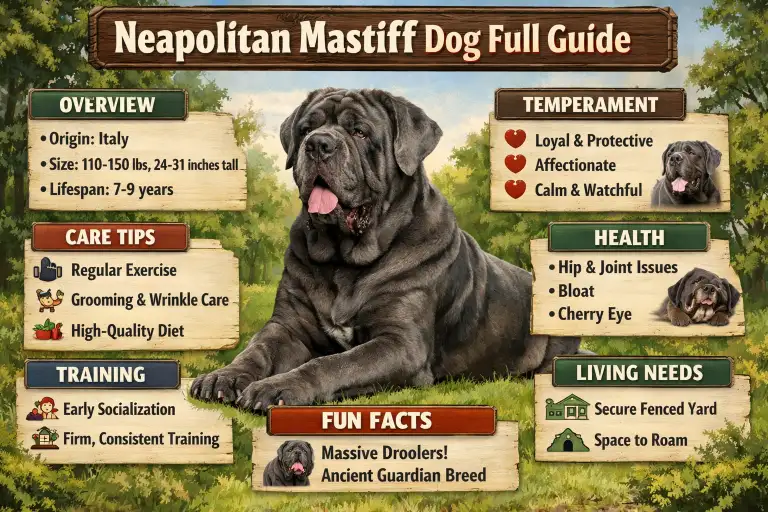
Because Neapolitan Mastiffs were developed as ancient guardian dogs, they naturally think independently. They are loyal to their families, cautious with strangers, and often slower to mature compared with many other breeds. Understanding these traits is the first step toward successful training.
This guide explains how to train a Neapolitan Mastiff puppy or adult dog using realistic, breed-appropriate methods. You will learn about obedience training, socialization, leash manners, common behavior challenges, and how to build a calm relationship with this giant breed.
Is a Neapolitan Mastiff Easy to Train?
The Neapolitan Mastiff is not considered an easy-training breed in the traditional sense. These dogs are intelligent, but they are also independent thinkers. They were bred to protect homes and families rather than complete repeated tasks on command.
Many owners mistake this independence for stubbornness. In reality, a Neapolitan Mastiff often takes time to process situations before responding. Training works best when owners use clear communication instead of force or repeated commands.
| Training Area | What Owners Expect | Neapolitan Mastiff Reality |
|---|---|---|
| Learning Speed | Fast obedience like sporting breeds | Slow but thoughtful learning |
| Personality | Always eager to please | Independent and selective |
| Maturity | Adult behavior within one year | Can take 2–3 years to fully mature |
| Training Style | Strong corrections | Calm guidance and positive reinforcement |
Understanding Neapolitan Mastiff Temperament Before Training
Before starting obedience training, owners must understand how a Neapolitan Mastiff naturally behaves. Training becomes much easier when expectations match the breed’s personality.
These dogs are naturally protective, deeply attached to their families, and often suspicious of unfamiliar people. A Neapolitan Mastiff does not usually rush toward strangers looking for attention. Instead, it observes first and decides whether a situation is safe.
This guardian instinct is valuable, but without proper socialization it can become difficult behavior. Early training helps the dog understand the difference between a real threat and normal everyday situations.
Important Neapolitan Mastiff Traits That Affect Training
| Trait | How It Appears | Training Approach |
|---|---|---|
| Protective Instinct | Watching doors, visitors, and surroundings | Teach calm responses and controlled introductions |
| Independence | Pausing before responding | Use patience and consistency |
| Sensitivity | Stress from harsh handling | Use reward-based methods |
| Strong Bond With Family | Very loyal and attached | Build trust before advanced training |
When Should You Start Training a Neapolitan Mastiff Puppy?
The best time to begin Neapolitan Mastiff puppy training is as soon as the puppy comes home. Early training does not mean forcing advanced obedience. It means creating habits that will become important when the dog reaches full size.
A small Neapolitan Mastiff puppy may seem easy to control, but this changes quickly. A mature dog can weigh well over 100 pounds, making early manners extremely important.
Neapolitan Mastiff Puppy Training Timeline
| Age | Main Training Goals |
|---|---|
| 8–12 Weeks | Name recognition, handling, house rules, gentle socialization |
| 3–6 Months | Basic commands, leash skills, calm behavior |
| 6–12 Months | Impulse control, confidence building, public manners |
| 12+ Months | Advanced control and adult behavior management |
Best Training Methods for a Neapolitan Mastiff
The most effective Neapolitan Mastiff training methods focus on cooperation rather than control. This breed responds best when training feels predictable and fair.
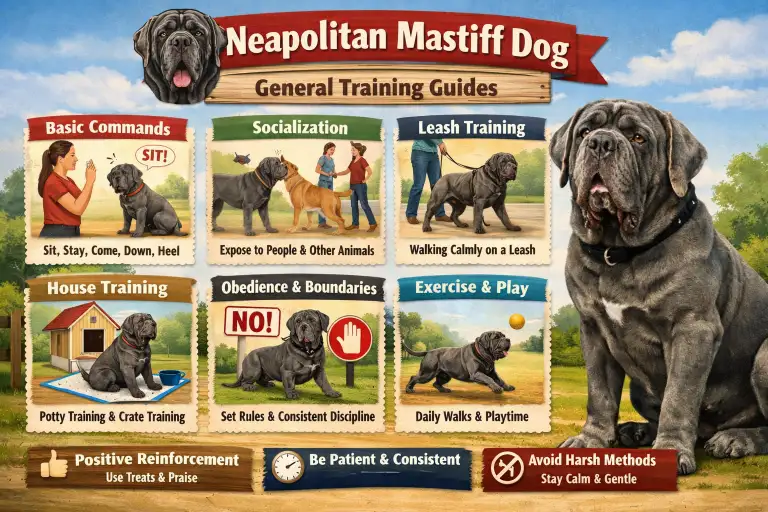
- Positive reinforcement: Reward correct behavior with treats, praise, or calm attention.
- Short training sessions: Keep sessions brief to prevent frustration and boredom.
- Clear rules: Establish consistent expectations from the beginning.
- Calm leadership: Avoid emotional reactions or harsh corrections.
- Daily practice: Small repeated lessons create reliable habits.
The goal is not to break the Neapolitan Mastiff’s personality. The goal is to guide its natural confidence and protective nature into controlled, appropriate behavior.
Neapolitan Mastiff Obedience Training: Essential Commands Every Owner Should Teach
Because of their size and strength, Neapolitan Mastiff obedience training should focus on practical life skills rather than unnecessary tricks. A dog weighing more than 100 pounds must learn reliable behaviors that make everyday situations safe and manageable.
The most important commands are not about showing off. They are about communication, control, and building trust between the owner and the dog.
| Command | Why It Matters | Training Tip |
|---|---|---|
| Name Recognition | Creates focus and attention | Reward whenever your dog looks at you after hearing its name |
| Sit | Helps control excitement and greetings | Practice before meals and visitors |
| Stay | Builds impulse control | Increase distance slowly |
| Come | Important safety command | Never call only for punishment |
| Leave It | Prevents unwanted behavior | Reward self-control |
| Place | Teaches calm behavior around guests | Use a bed or specific resting area |
Neapolitan Mastiff Socialization Training
Socialization is one of the most important parts of raising a stable Neapolitan Mastiff. Since this breed naturally has guarding instincts, controlled exposure to different people, places, sounds, and experiences helps prevent fear and overreaction.
The goal of socialization is not to make your Neapolitan Mastiff love every person or dog. The goal is to teach the dog that normal situations do not require defensive behavior.
Proper Socialization Includes:
- Meeting different types of people calmly
- Walking in different environments
- Hearing normal household and outdoor sounds
- Learning to accept handling of ears, paws, and body
- Remaining calm around visitors
- Seeing other dogs without needing to interact with every dog
A common mistake is forcing interaction. A nervous Neapolitan Mastiff should not be dragged toward strangers or crowded environments. Confidence grows through calm exposure and positive experiences.
How to Train a Neapolitan Mastiff Not to Pull on the Leash
Leash training is especially important for this breed because a large, powerful dog that pulls can quickly become difficult to control.
The goal is not to physically overpower the dog. The goal is teaching the dog that walking calmly beside you is rewarding.
| Problem | Why It Happens | Solution |
|---|---|---|
| Pulling Forward | Dog moves toward interesting smells or sights | Stop movement and reward loose leash walking |
| Ignoring Direction | Dog is distracted | Practice attention exercises |
| Overexcitement | Too much stimulation | Choose quieter training locations |
Common Neapolitan Mastiff Training Problems and Solutions
Training challenges with this breed are usually connected to its size, protective nature, and independent personality. Understanding the reason behind behavior makes solving problems much easier.
| Behavior Problem | Possible Cause | What Helps |
|---|---|---|
| Stubborn Behavior | Confusion or lack of motivation | Use clearer commands and better rewards |
| Barking at Visitors | Protective instinct | Reward calm behavior and teach boundaries |
| Fear of Strangers | Poor socialization | Use gradual exposure |
| Jumping | Excitement and poor manners | Reward four paws on the floor |
When Should You Hire a Professional Dog Trainer?
Many Neapolitan Mastiff training issues can improve with consistent home training. However, professional guidance is recommended when behavior becomes unsafe or difficult to manage.
Consider working with an experienced trainer if your dog shows:
- Aggression toward people or animals
- Strong resource guarding
- Fear-based reactions
- Lunging during walks
- Behavior that creates safety concerns
Choose a trainer who understands giant guardian breeds and uses modern, reward-based training methods. Avoid approaches based on intimidation or harsh punishment, as these can damage trust and increase defensive behavior.
Frequently Asked Questions About Neapolitan Mastiff Training
Are Neapolitan Mastiffs difficult to train?
Neapolitan Mastiffs can be challenging to train because they are independent and slow to mature. They are intelligent dogs, but they do not always respond quickly like breeds developed for obedience work. Consistency, patience, and positive reinforcement produce the best results.
How long does it take to train a Neapolitan Mastiff?
Training is an ongoing process. Basic manners can begin within weeks, but full emotional maturity may take two to three years. Regular practice throughout puppyhood and adulthood creates the most reliable behavior.
Can a first-time owner train a Neapolitan Mastiff?
A first-time owner can train a Neapolitan Mastiff with proper preparation and commitment. However, because of the breed’s size and guardian instincts, new owners should educate themselves about large-breed handling and consider professional guidance when needed.
Are Neapolitan Mastiffs aggressive?
Neapolitan Mastiffs are not naturally aggressive when properly bred, socialized, and trained. They are naturally protective, which means responsible training is important to help them understand appropriate behavior around strangers and new situations.
What is the best training method for a Neapolitan Mastiff?
The best training method combines positive reinforcement, clear boundaries, patience, and consistency. Harsh methods often create fear and resistance in this sensitive guardian breed.
How do you socialize a Neapolitan Mastiff puppy?
Socialize a Neapolitan Mastiff puppy through calm exposure to different people, environments, sounds, and experiences. Avoid forcing interactions. Reward relaxed behavior and allow the puppy to build confidence gradually.
Final Thoughts: Raising a Well-Trained Neapolitan Mastiff
Training a Neapolitan Mastiff requires patience, understanding, and realistic expectations. This is not a breed that thrives under pressure or constant correction. It is a powerful guardian that responds best to trust, structure, and calm leadership.
The most successful owners focus on building communication rather than demanding obedience. Early socialization, consistent rules, leash training, and positive reinforcement help transform a strong-willed puppy into a dependable adult companion.
A well-trained Neapolitan Mastiff may never behave like a traditional obedience champion, but it can become something more valuable: a calm, confident, loyal, and trustworthy member of the family.

Ata Ur Rehman is the founder of Pet Age in Human Years Calculator, an educational platform that provides age conversion charts and lifespan guides for dogs, cats, birds, and other companion animals. His work focuses on helping pet owners understand how animal ages translate into human years using commonly accepted age conversion formulas and published lifespan averages.
The website compiles breed and species lifespan data from kennel clubs, breed organizations, and general animal lifespan studies to present simple and easy-to-understand guides for pet owners worldwide.
This website was created to centralize animal age conversion charts into one easy reference platform for pet owners.
This article is for general education. For symptoms, medication, diet changes, or health concerns, use a qualified veterinarian who can assess your individual pet.