On this page
The Neapolitan Mastiff is one of the most recognizable giant dog breeds in the world. Known for its massive body, deep wrinkles, loose skin, and powerful guardian instincts, this breed was developed for protection rather than casual companionship. Understanding the Neapolitan Mastiff requires looking beyond its impressive appearance and learning about its temperament, size, care needs, health concerns, and suitability for modern homes.
Originally developed in Italy from ancient Molosser-type guardian dogs, the Neapolitan Mastiff was bred to protect estates, property, and families. Unlike highly active working breeds that rely on speed and constant movement, this giant guardian uses presence, confidence, and natural suspicion toward strangers as its main protection tools.
Today, the Neapolitan Mastiff remains a loyal, calm, and deeply devoted companion for experienced owners. However, this is not a breed for everyone. Its enormous size, protective personality, heavy drooling, health requirements, and need for proper socialization make responsible ownership essential.
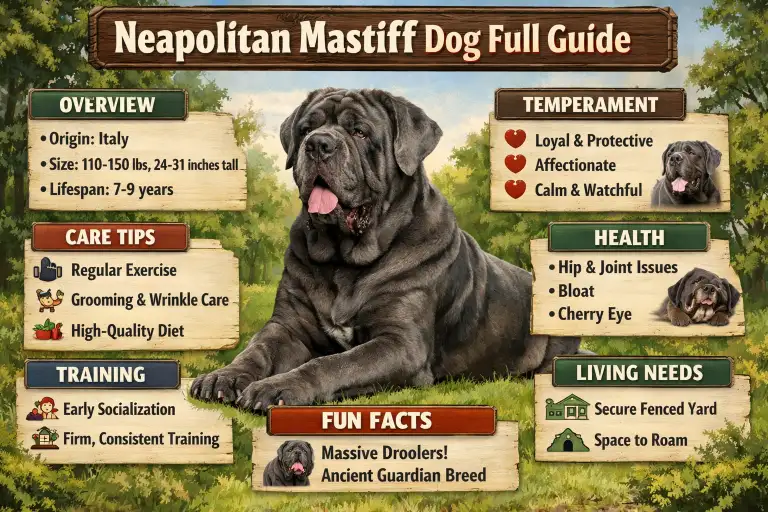
Neapolitan Mastiff Breed Overview
| Trait | Details |
|---|---|
| Breed Type | Giant guardian dog |
| Origin | Italy |
| Original Purpose | Estate and family protection |
| Size Category | Giant breed |
| Average Lifespan | 7–9 years |
| Temperament | Loyal, calm, protective, independent |
| Energy Level | Low to moderate |
| Experience Level | Best suited for experienced owners |
The Neapolitan Mastiff is a serious guardian breed. It does not typically seek attention from everyone it meets and is naturally reserved around strangers. With its family, however, it can form an extremely strong bond and often becomes a calm, affectionate protector.
Neapolitan Mastiff History and Origin
The history of the Neapolitan Mastiff goes back thousands of years to ancient Molosser dogs that were used as guardians and war dogs. These powerful dogs were valued for their strength, courage, and ability to protect homes and property.
The modern Neapolitan Mastiff developed in southern Italy, especially around the Naples region. Italian breeders preserved the breed’s unique characteristics, including its heavy bone structure, large head, protective nature, and famous wrinkled appearance.
After World War II, dedicated breeders helped standardize the breed and introduce it to the wider world. Today, the Neapolitan Mastiff is recognized as a distinct giant guardian breed known for loyalty, confidence, and a natural protective instinct.
Neapolitan Mastiff Size, Weight, and Physical Characteristics
The Neapolitan Mastiff size is one of the breed’s defining features. This is a giant, heavy-boned dog with a powerful frame designed to create a strong visual deterrent. While not the tallest breed, it is among the heaviest and most muscular dogs.
| Gender | Height | Weight |
|---|---|---|
| Male Neapolitan Mastiff | 26–31 inches | 150–200+ pounds |
| Female Neapolitan Mastiff | 24–29 inches | 110–150 pounds |
Neapolitan Mastiffs mature slowly compared with many other breeds. Although they grow rapidly during puppyhood, they may continue developing muscle and body mass until they are three to four years old.
Physical Features of the Neapolitan Mastiff
| Feature | Description |
|---|---|
| Body Structure | Large, muscular, heavy-boned frame |
| Head | Very large head with strong jaws |
| Skin | Loose skin with deep wrinkles and folds |
| Coat | Short, dense, easy-care coat |
| Drooling | Heavy compared with most breeds |
| Shedding | Moderate year-round shedding |
The breed’s wrinkles and loose skin are among its most famous traits, but they also require regular maintenance. Moisture, dirt, and food particles can collect inside skin folds, making routine cleaning important for preventing irritation and infections.
Neapolitan Mastiff Temperament and Personality
The Neapolitan Mastiff temperament is defined by calm confidence, loyalty, and natural guarding ability. This breed is not typically energetic or overly playful. Instead, it prefers observing its surroundings and staying close to its family.
A well-raised Neapolitan Mastiff is usually stable and controlled. However, because of its protective instincts, early socialization and consistent training are extremely important.
| Temperament Trait | What It Means |
|---|---|
| Loyalty | Forms a strong bond with family members |
| Protectiveness | Naturally guards home and owners |
| Independence | Can make its own decisions |
| Confidence | Usually calm and self-assured |
| Stranger Behavior | Reserved and watchful |
Many people ask whether Neapolitan Mastiffs are aggressive. The better description is that they are naturally protective. Problems usually occur when a powerful guardian breed does not receive proper training, socialization, and responsible handling.
Neapolitan Mastiff Training, Exercise, and Daily Care
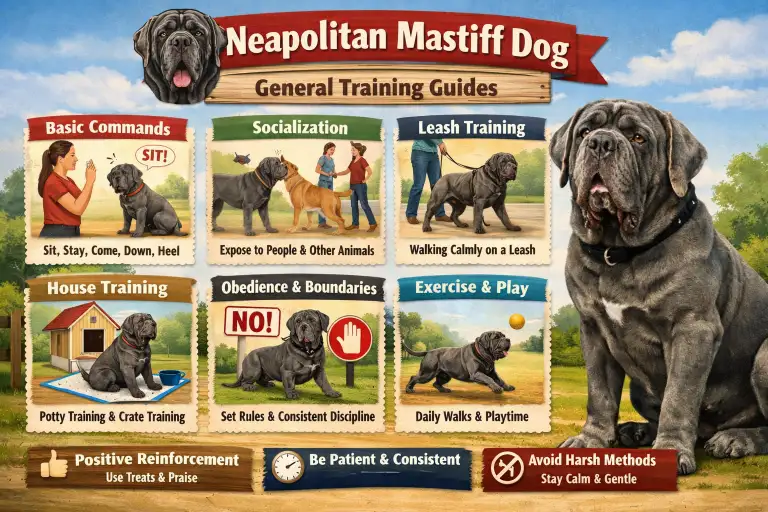
Training a Neapolitan Mastiff is not about teaching endless commands or creating a highly obedient performance dog. It is about building trust, control, and reliable behavior in a very large and powerful breed. Because these dogs mature into massive adults, early training is one of the most important responsibilities of ownership.
The Neapolitan Mastiff is intelligent but independent. It does not always respond well to repetitive drills or harsh correction. The best results come from calm leadership, consistent rules, positive reinforcement, and early social exposure.
| Training Area | What Owners Should Know |
|---|---|
| Early Socialization | Essential for teaching appropriate behavior around people and animals |
| Obedience Training | Should begin while the dog is still young and manageable |
| Training Style | Calm, patient, and consistent methods work best |
| Leash Training | Important because of the breed’s enormous strength |
| House Rules | Clear boundaries prevent unwanted protective behavior |
Neapolitan Mastiff Exercise Needs
Despite its giant size, the Neapolitan Mastiff does not require intense exercise. This breed is naturally calm and has lower energy compared with many working dogs. However, daily movement is still necessary to maintain healthy weight, muscle condition, and joint health.
| Activity | Recommended Level |
|---|---|
| Daily Walks | 30–60 minutes of controlled walking |
| Puppy Exercise | Short sessions with limited impact activities |
| Mental Stimulation | Training, routines, and calm interaction |
| High Impact Exercise | Should be avoided, especially during growth |
Young Neapolitan Mastiffs grow quickly, and excessive running or jumping can put unnecessary stress on developing joints. Controlled exercise is much safer than intense activity.
Neapolitan Mastiff Grooming Requirements
Neapolitan Mastiff grooming is relatively simple because of its short coat, but owners should not underestimate the care required for its skin folds, wrinkles, and drooling.
| Grooming Task | Frequency |
|---|---|
| Brushing | Weekly to remove loose hair |
| Wrinkle Cleaning | Regular cleaning to prevent moisture buildup |
| Bathing | Only when needed |
| Nail Trimming | Regular maintenance |
| Ear Cleaning | Routine checking and cleaning |
The deep wrinkles that make this breed famous can also create problems if ignored. Owners should check skin folds regularly for redness, odor, irritation, or trapped moisture.
Another major consideration is drooling. Neapolitan Mastiffs are heavy droolers, and owners should expect regular cleanup around water bowls, furniture, and floors.
Neapolitan Mastiff Health Problems and Lifespan
Like many giant dog breeds, the Neapolitan Mastiff has specific health concerns related to its size, structure, and genetics. Responsible breeding, proper nutrition, and regular veterinary care can help reduce risks, but owners should understand that giant breeds generally have shorter lifespans than smaller dogs.
| Health Concern | Description |
|---|---|
| Hip Dysplasia | Joint development problems that can affect mobility |
| Elbow Dysplasia | Common orthopedic issue in large breeds |
| Bloat (GDV) | Serious stomach emergency requiring immediate care |
| Heart Conditions | Giant breeds have increased cardiac risks |
| Skin Fold Infections | Can occur without proper wrinkle care |
| Eye Problems | Loose eyelids may contribute to irritation |
Neapolitan Mastiff Lifespan
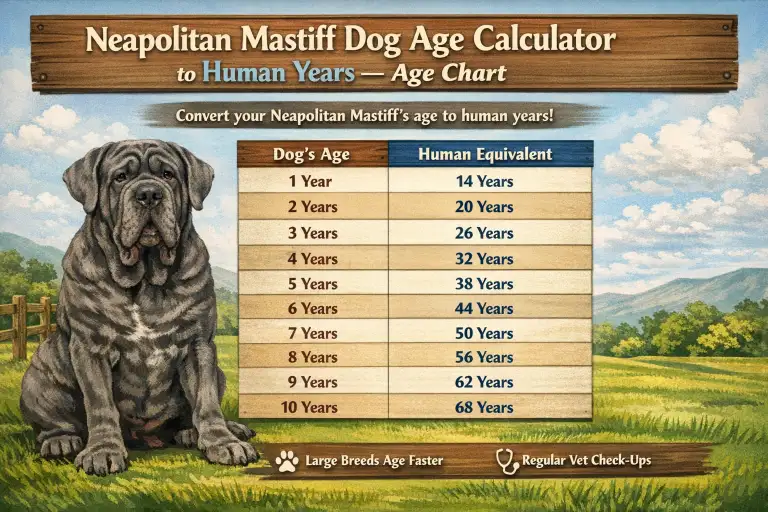
The average Neapolitan Mastiff lifespan is around 7 to 9 years. Some individuals live longer with excellent genetics, proper diet, weight management, and preventive veterinary care.
Because giant breeds age differently from smaller dogs, owners often want to understand how their Neapolitan Mastiff’s age compares with human years. You can use our Neapolitan Mastiff age calculator to estimate your dog’s equivalent human age.
Neapolitan Mastiff Cost of Ownership
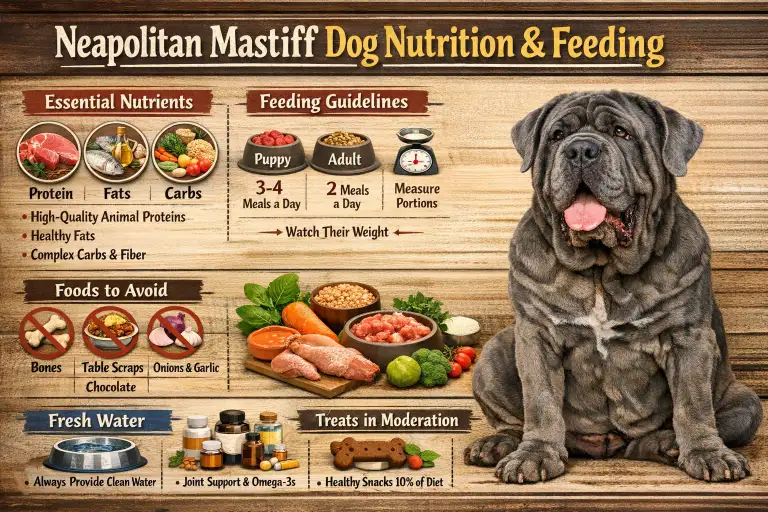
Owning a Neapolitan Mastiff requires financial preparation. The purchase price is only one part of ownership. Food, healthcare, supplies, and maintenance costs are significantly higher than those of smaller breeds.
| Expense | Cost Level |
|---|---|
| Puppy Price | High |
| Food | Very High |
| Veterinary Care | High |
| Insurance | Recommended |
| Grooming Supplies | Moderate |
The size of this breed affects almost every expense. Larger food portions, stronger equipment, bigger beds, and higher medication costs should all be considered before bringing one home.
Pros and Cons of Owning a Neapolitan Mastiff
| Pros | Cons |
|---|---|
| Extremely loyal to family | Shorter lifespan than many breeds |
| Excellent natural guardian | Very large and physically demanding |
| Calm indoors | Heavy drooling |
| Low barking tendency | High ownership costs |
| Strong protective instinct | Requires experienced handling |
Is the Neapolitan Mastiff Right for You?
The Neapolitan Mastiff can be an incredible companion for the right owner. It offers deep loyalty, calm confidence, and natural protection that few breeds can match.
However, this breed requires commitment. Potential owners must be prepared for its size, strength, grooming needs, health concerns, and protective personality.
A Neapolitan Mastiff is best suited for owners who:
- Have experience with large or guardian breeds
- Can provide consistent training and socialization
- Have enough indoor space for a giant dog
- Can afford higher food and veterinary expenses
- Want a calm and protective family companion
This breed may not be suitable for:
- First-time dog owners
- Small apartments or limited living spaces
- Owners wanting an extremely social dog with strangers
- People unable to manage a powerful giant breed
Frequently Asked Questions About Neapolitan Mastiff
Are Neapolitan Mastiffs good family dogs?
Yes, Neapolitan Mastiffs can be excellent family dogs when raised and managed properly. They are usually calm and deeply loyal with their owners, but their enormous size means children should always be supervised around them.
How big does a Neapolitan Mastiff get?
A male Neapolitan Mastiff usually weighs between 150 and 200+ pounds and can reach 26 to 31 inches tall. Females are slightly smaller but are still considered giant dogs.
Are Neapolitan Mastiffs aggressive?
Neapolitan Mastiffs are naturally protective rather than naturally aggressive. Proper breeding, early socialization, and responsible training are important for developing stable behavior.
How long do Neapolitan Mastiffs live?
The average Neapolitan Mastiff lifespan is approximately 7 to 9 years. Maintaining healthy weight, regular veterinary care, and responsible breeding can support better longevity.
Do Neapolitan Mastiffs drool a lot?
Yes. Heavy drooling is one of the most common characteristics of the breed. Owners should be prepared for regular cleanup, especially after drinking or eating.
Are Neapolitan Mastiffs easy to train?
They are intelligent but independent. They respond best to calm, consistent training rather than harsh methods or repetitive drills.
How much exercise does a Neapolitan Mastiff need?
Most adult Neapolitan Mastiffs need around 30 to 60 minutes of controlled daily exercise. They benefit more from steady walking and mental stimulation than intense physical activity.
What is the difference between a Neapolitan Mastiff and other Mastiff breeds?
The Neapolitan Mastiff stands out because of its extreme wrinkles, loose skin, massive head, and strong guardian instincts. Compared with many Mastiff breeds, it has a more distinctive appearance and a very serious protective personality.
Final Thoughts
The Neapolitan Mastiff is not an ordinary dog breed. It is a giant guardian with a long history, powerful presence, and deep loyalty toward its family. For experienced owners who understand its needs, this breed can become a devoted and impressive companion.
However, ownership requires honesty and preparation. The Neapolitan Mastiff demands space, training, healthcare planning, and daily responsibility. Anyone considering this breed should carefully evaluate whether their lifestyle matches the needs of such a powerful dog.
When properly raised, the Neapolitan Mastiff represents the best qualities of a guardian breed: calm confidence, loyalty, stability, and unwavering devotion.

Ata Ur Rehman is the founder of Pet Age in Human Years Calculator, an educational platform that provides age conversion charts and lifespan guides for dogs, cats, birds, and other companion animals. His work focuses on helping pet owners understand how animal ages translate into human years using commonly accepted age conversion formulas and published lifespan averages.
The website compiles breed and species lifespan data from kennel clubs, breed organizations, and general animal lifespan studies to present simple and easy-to-understand guides for pet owners worldwide.
This website was created to centralize animal age conversion charts into one easy reference platform for pet owners.
This article is for general education. For symptoms, medication, diet changes, or health concerns, use a qualified veterinarian who can assess your individual pet.