On this page
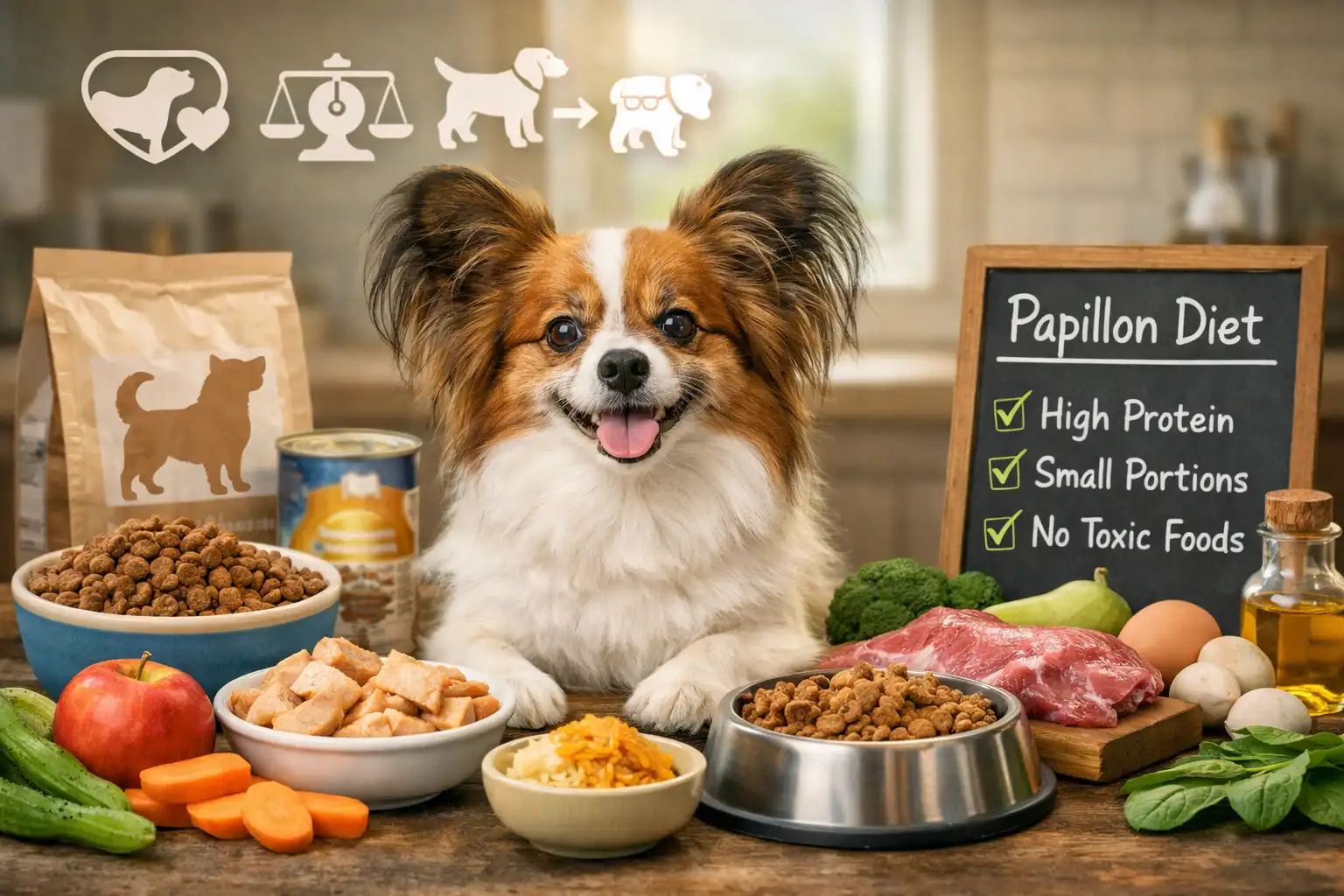
Papillon dog food should be chosen carefully because Papillons are small, active, and long-lived dogs. Their food affects weight, teeth, coat health, digestion, energy, and long-term wellness. Because they are a toy breed, even small mistakes in portion size or food choice can lead to weight gain or stomach issues faster than in larger dogs.
The best dog food for Papillons is a high-quality small-breed formula with real meat as the first ingredient, moderate fat for steady energy, controlled calories for weight management, and small kibble that is easy to chew. The right food should match your Papillon’s age, weight, activity level, and digestion.
Papillon Feeding Quick Guide:
- Best food: Complete and balanced small-breed dog food
- Daily calories: About 150-300 kcal for most adult Papillons weighing 5-10 lbs
- Meals per day: 2 meals for adults, 3-4 smaller meals for puppies
- Best diet focus: Protein, calorie control, healthy fats, and easy digestion
- Foods to avoid: Chocolate, grapes, raisins, onions, garlic, xylitol, alcohol, and cooked bones
A good Papillon diet should support steady energy, a healthy coat, strong teeth, and smooth digestion. Nutrition also connects with other parts of breed care, including coat maintenance, training routines, lifespan planning, and monthly ownership costs.
For best results, choose food based on your Papillon’s life stage. Puppies need more frequent meals and growth-supporting nutrients, adults need balanced maintenance food, and seniors may need lower calories with easier digestion. You can also use your Papillon’s age and life stage to make better feeding decisions when planning portions and meal timing.
Good nutrition is not about choosing the most expensive food. It is about feeding the right amount, choosing a complete and balanced formula, limiting unsafe foods, and adjusting portions as your Papillon’s body condition changes. In the next section, we will look at what the best food for Papillon dogs should include and how to choose it wisely.
Best Food for Papillon Dogs: What to Feed and Why
The best food for a Papillon dog is usually a small-breed formula made for toy or small dogs. Papillons have small mouths, active bodies, and fast energy needs, so their food should be nutrient-dense without being too high in calories. Small kibble size also makes chewing easier and may help reduce feeding discomfort.
Look for Papillon dog food with real animal protein such as chicken, turkey, lamb, fish, or beef as the first ingredient. A good formula should also include moderate fat for coat and energy support, digestible carbohydrates, and a clear statement that the food is complete and balanced for your dog’s life stage.
Avoid foods that rely heavily on fillers, artificial colors, unnecessary flavors, or vague ingredient names. Papillons can have sensitive digestion, so simple, consistent food choices often work better than frequent food changes.
Types of Dog Food for Papillons
| Food type | Good for Papillons? | Main benefits | Things to watch |
|---|---|---|---|
| Dry food / kibble | Yes | Easy to measure, easy to store, often better for daily feeding routines | Choose small-breed kibble and check calories per cup |
| Wet food | Yes | Softer texture, good for picky eaters or dogs with chewing trouble | Can add extra calories if portions are not measured |
| Fresh food | Yes | Soft texture, often highly palatable, easy to portion when prepared correctly | Can be expensive and must be nutritionally balanced |
| Raw food | Sometimes | Some owners prefer minimally processed diets | Requires careful handling and should be discussed with a veterinarian |
| Homemade food | Sometimes | Gives control over ingredients | Must be properly balanced to avoid nutrient gaps |
Most Papillons do well on high-quality dry food, wet food, or a measured mix of both. The best choice depends on your dog’s age, weight, dental health, digestion, and activity level. Whatever food type you choose, portion control matters more than the label claim on the front of the package.
What to Look for on a Dog Food Label
| Label item | What it means | Why it matters for Papillons |
|---|---|---|
| Real meat first | The first ingredient is a named protein source | Supports muscle, energy, and overall nutrition |
| Protein level | The amount of protein in the food | Helps support active small dogs |
| Moderate fat | Fat supports energy and coat health | Too much fat can cause weight gain in small dogs |
| Calories per cup | Shows how energy-dense the food is | Important for measuring small Papillon portions accurately |
| Complete and balanced statement | Shows the food is made to meet nutritional needs | Helps avoid nutrient gaps, especially for puppies and seniors |
| Small-breed formula | Food made for smaller dogs | Usually has smaller kibble and calorie density suited to toy breeds |
If your Papillon is a picky eater or has a sensitive stomach, choose a simple recipe and avoid switching foods too often. When changing food, transition slowly over several days by mixing the new food with the old food. Sudden changes can cause loose stool, vomiting, or loss of appetite.
Choosing the right food is only the first step. To prevent weight gain and keep energy stable, you also need to know how much to feed a Papillon based on weight, age, and activity level.
Best Papillon Dog Food Recommendations
The best dog food for Papillons is not always the most expensive brand. The right choice is a complete and balanced small-breed formula that supports healthy weight, steady energy, digestion, dental comfort, and coat condition. Papillons are active toy dogs, so their food should be nutrient-dense but not too high in calories.
When comparing Papillon dog food options, focus on the formula type, ingredient quality, calorie content, kibble size, and life-stage suitability. A good food should be easy to chew, easy to digest, and measured carefully so your Papillon does not gain excess weight.
What to Look for in a Good Papillon Dog Food
- Real meat as the first ingredient, such as chicken, turkey, lamb, fish, or beef
- Small-breed or toy-breed formula with kibble that is easy for a Papillon to chew
- Moderate protein to support lean muscle and daily activity
- Moderate fat for energy and coat health without unnecessary weight gain
- Clear calories per cup so portions can be measured accurately
- Complete and balanced nutrition for your Papillon’s current life stage
- Simple, digestible ingredients if your Papillon has a sensitive stomach
Best Food Type by Life Stage
| Life stage | Best food type | What to focus on |
|---|---|---|
| Papillon puppy | Small-breed puppy food | Growth support, frequent meals, easy chewing, healthy development |
| Adult Papillon | Small-breed adult maintenance food | Healthy weight, steady energy, lean muscle, portion control |
| Senior Papillon | Small-breed senior or lower-calorie food | Digestive comfort, joint support, weight control, easy chewing |
| Active Papillon | Higher-quality small-breed formula | Enough calories for activity without overfeeding |
| Overweight Papillon | Weight-control small-breed food | Lower calories, measured meals, fewer treats |
If your Papillon is healthy, a quality small-breed dry food, wet food, or measured mix of both can work well. If your dog has allergies, frequent vomiting, loose stool, dental pain, or sudden appetite changes, speak with a veterinarian before changing to a special diet.
Always introduce new Papillon dog food gradually over 5-7 days. Mix a small amount of the new food with the old food, then slowly increase the new food while watching for stool changes, vomiting, itching, or appetite loss.
How Much to Feed a Papillon and Feeding Schedule
Knowing how much to feed a Papillon is just as important as choosing the right food. Because Papillons are small dogs, even a small amount of extra food can cause weight gain over time. Feeding too little can also lead to low energy, weakness, or poor body condition.
Most adult Papillons weighing 5-10 pounds need about 150-300 calories per day, usually divided into two meals. The exact amount depends on weight, age, activity level, body condition, metabolism, and the calorie density of the food.
Papillon Feeding Chart by Weight
| Papillon weight | Daily calories | Estimated daily food amount | Best meal split |
|---|---|---|---|
| 5 lbs | 150-180 kcal | About 1/3 cup | 2 small meals |
| 6 lbs | 170-200 kcal | About 1/3-1/2 cup | 2 small meals |
| 7 lbs | 200-230 kcal | About 1/2 cup | 2 meals |
| 8 lbs | 220-250 kcal | About 1/2 cup | 2 meals |
| 9 lbs | 240-275 kcal | About 1/2-2/3 cup | 2 meals |
| 10 lbs | 250-300 kcal | About 2/3 cup | 2 meals |
These feeding amounts are general starting points. Different dog foods have different calories per cup, so always check the feeding label and adjust portions based on your Papillon’s body condition. You should be able to feel the ribs gently without seeing them sharply.
If your Papillon is gaining weight, reduce treats first and slightly lower meal portions. If your dog seems weak, loses weight, refuses food, or becomes unusually hungry, contact your veterinarian before making large feeding changes.
Papillon Feeding Schedule by Age
| Life stage | Meals per day | Feeding goal | Helpful notes |
|---|---|---|---|
| Puppy | 3-4 meals | Support growth and steady energy | Use small-breed puppy food and avoid long gaps between meals |
| Adult | 2 meals | Maintain healthy weight and energy | Feed morning and evening with measured portions |
| Senior | 2 smaller meals | Support digestion and weight control | Choose easier-to-chew food if dental issues are present |
Papillon puppies need more frequent meals because they are growing and burn energy quickly. Adult Papillons usually do well with two meals per day. Senior Papillons may need smaller meals, fewer calories, and softer food if chewing becomes difficult.
Fresh water should always be available, especially if your Papillon eats dry kibble. A steady feeding schedule also helps reduce begging, picky eating, and overeating.
Match Your Papillon’s Food Amount to Their Life Stage
Feeding needs can change as your Papillon moves from puppy growth to adult maintenance and senior care. Before adjusting portions, check your dog’s current life stage so you can make better feeding decisions based on age, weight, and activity level.
Use the Papillon Dog Age Calculator to understand your Papillon’s age stage before planning meals, calories, and feeding routines.
This is especially helpful for puppies, adults, and senior Papillons because each stage has different calorie, meal timing, and digestion needs.
Safe Foods, Treats, and Foods Papillons Must Avoid
Many Papillon owners want to share human food with their dog. Some plain foods are safe in small amounts, but treats should never replace a complete and balanced diet. Because Papillons are small, even a small amount of the wrong food can cause serious problems.
Safe human foods for Papillons should be plain, cooked when needed, and free from salt, sugar, butter, sauces, spices, and seasonings. Treats should stay limited so they do not cause weight gain or picky eating.
Safe Human Foods for Papillons
| Food | Safe amount | Why it can be okay |
|---|---|---|
| Cooked chicken | Small plain pieces | Lean protein and easy to digest for many dogs |
| Cooked turkey | Small plain pieces | Lean protein when served without skin, bones, or seasoning |
| Carrots | A few small slices | Low-calorie crunch and fiber |
| Apples | Small pieces, no seeds or core | Fiber and natural sweetness in small amounts |
| Plain rice | Small spoonful | Gentle carbohydrate for some sensitive stomachs |
| Plain pumpkin | Small spoonful | Can support normal digestion when used carefully |
| Green beans | A few plain pieces | Low-calorie snack option |
| Blueberries | A few berries | Small treat with natural antioxidants |
Treats should make up only a small part of your Papillon’s daily calories. If your dog is gaining weight, reduce treats before cutting too much from regular meals.
Foods Papillons Must Not Eat
Some foods are unsafe for Papillons and should never be given. Because Papillons are small, toxic foods can become dangerous quickly. If your dog eats something unsafe, contact a veterinarian or emergency pet poison service right away.
| Food | Why it is unsafe | Possible problem |
|---|---|---|
| Chocolate | Contains compounds toxic to dogs | Vomiting, tremors, heart problems, seizures |
| Grapes and raisins | Can damage the kidneys | Vomiting, weakness, kidney failure |
| Onions and garlic | Can harm red blood cells | Weakness, anemia, illness |
| Xylitol | Highly toxic sweetener | Low blood sugar, liver problems, collapse |
| Alcohol | Poisonous to dogs | Vomiting, confusion, breathing problems |
| Cooked bones | Can splinter or block the digestive tract | Choking, internal injury, obstruction |
| Highly salty foods | Too much sodium for small dogs | Thirst, vomiting, serious illness |
| Fatty table scraps | Can upset digestion | Vomiting, diarrhea, weight gain |
Never feed table scraps just because your Papillon begs. Papillons are intelligent and can quickly learn that begging brings rewards. A consistent feeding routine works better for training, digestion, and weight control.
Because nutrition and behavior are connected, structured feeding also supports better daily routines. For behavior support, you can connect feeding habits with the advice in your Papillon training guide.
Special Diets, Common Feeding Problems, and FAQs
Some Papillons need special feeding support because of age, dental issues, allergies, sensitive digestion, weight gain, or low appetite. Puppies, seniors, overweight dogs, and dogs with medical issues may not do well on the same food or portion size.
Papillon puppies usually need small-breed puppy food that supports growth and frequent meals. Senior Papillons often need fewer calories, easier chewing, and digestion-friendly ingredients. Your dog’s age and life stage should guide food choice, meal frequency, and portion size.
If you are unsure whether your dog is a puppy, adult, or senior, use the Papillon Dog Age Calculator before adjusting feeding routines. This helps connect your Papillon’s age with practical diet and care decisions.
Some Papillons may have food allergies or sensitive stomachs. Signs can include itchy skin, loose stool, vomiting, gas, ear irritation, or repeated stomach upset. In these cases, simple diets with fewer ingredients may help, but medical symptoms should always be discussed with a veterinarian.
Common Papillon Feeding Problems and Fixes
| Problem | Common cause | Simple fix |
|---|---|---|
| Picky eating | Too many treats, table scraps, or frequent food changes | Use scheduled meals, reduce treats, and avoid constant food switching |
| Weight gain | Overfeeding, too many treats, or low activity | Measure meals, reduce extras, and monitor body condition |
| Loose stool | Fast food change, rich foods, or sensitivity | Transition food slowly and avoid fatty table scraps |
| Always hungry | Low satiety, too many small treats, or habit begging | Use measured meals and choose a balanced small-breed formula |
| Skipping meals | Stress, heat, routine change, dental discomfort, or illness | Keep feeding times steady and contact a vet if it continues |
| Bad breath or chewing trouble | Dental disease or mouth discomfort | Ask a vet to check teeth before changing food texture |
Skipping one meal can happen, especially during hot weather or minor routine changes. However, if your Papillon refuses food for more than one day, seems weak, vomits repeatedly, loses weight, or acts painful, contact a veterinarian.
Papillon Dog Food FAQs
What is the best dog food for Papillons?
The best dog food for Papillons is a complete and balanced small-breed formula with real meat as the first ingredient, controlled calories, moderate fat, and kibble that is easy for a toy breed to chew.
How much should a Papillon eat per day?
Most adult Papillons weighing 5-10 pounds need about 150-300 calories per day, divided into two meals. The exact amount depends on age, activity level, weight, and food calories per cup.
How many times a day should a Papillon eat?
Adult Papillons usually eat two meals per day. Papillon puppies often need three to four smaller meals, while senior dogs may do better with two smaller, easier-to-digest meals.
Can Papillons eat chicken?
Yes, Papillons can eat small pieces of plain cooked chicken as a treat or food topper. It should be boneless, skinless, and free from salt, spices, sauces, garlic, and onion.
Can Papillons eat human food every day?
Human food should not replace regular dog food. Small amounts of safe plain foods can be used as treats, but most daily calories should come from complete and balanced Papillon dog food.
Do Papillons need special food?
Most Papillons do best on small-breed dog food because it is easier to chew and usually better matched to toy-breed calorie needs. Puppies, seniors, overweight dogs, and dogs with allergies may need more specific formulas.
Can Papillons eat dry food only?
Yes, Papillons can eat dry food only if it is complete and balanced for their life stage. Choose small-breed kibble, measure portions carefully, and keep fresh water available at all times.
What foods should Papillons avoid?
Papillons should avoid chocolate, grapes, raisins, onions, garlic, xylitol, alcohol, cooked bones, fatty scraps, and highly salty foods. These foods can be dangerous, especially for small dogs.
When should I see a vet about my Papillon’s diet?
See a veterinarian if your Papillon refuses food for more than one day, loses weight suddenly, gains weight quickly, vomits often, has ongoing diarrhea, shows itching after food, or seems weak or painful.
Final Thought
Choosing the right Papillon dog food, measuring portions carefully, and keeping a consistent feeding routine are the keys to long-term health. A balanced small-breed diet can support steady energy, healthy weight, digestion, dental comfort, coat condition, and healthy aging.
The best diet for a Papillon depends on age, weight, activity level, body condition, and digestion. Start with a complete and balanced small-breed formula, use the feeding chart as a guide, limit treats, avoid unsafe foods, and adjust portions as your dog’s needs change.
For better life-stage planning, connect your feeding routine with your Papillon’s age using the Papillon Dog Age Calculator. This helps you understand when feeding needs may shift from puppy growth to adult maintenance or senior support.
More Papillon Resources
Use these related Papillon guides for topics that are covered in more detail on their dedicated pages:

Ata Ur Rehman is the founder of Pet Age in Human Years Calculator, an educational platform that provides age conversion charts and lifespan guides for dogs, cats, birds, and other companion animals. His work focuses on helping pet owners understand how animal ages translate into human years using commonly accepted age conversion formulas and published lifespan averages.
The website compiles breed and species lifespan data from kennel clubs, breed organizations, and general animal lifespan studies to present simple and easy-to-understand guides for pet owners worldwide.
This website was created to centralize animal age conversion charts into one easy reference platform for pet owners.
This article is for general education. For symptoms, medication, diet changes, or health concerns, use a qualified veterinarian who can assess your individual pet.