On this page
Pointers are athletic, energetic sporting dogs known for their endurance, speed, and lean muscle mass. Unlike many companion breeds, Pointers have nutritional requirements that are heavily influenced by their activity level, metabolism, age, and body condition. Feeding a Pointer properly is not just about filling a food bowl—it directly impacts muscle development, stamina, recovery, digestion, weight management, and long-term health.
Whether you own a hunting Pointer, a field trial competitor, or a family companion that enjoys daily exercise, understanding the breed’s nutritional needs can help prevent common feeding mistakes such as underfeeding, overfeeding, nutrient deficiencies, digestive issues, and unwanted weight changes.
This comprehensive guide explains what Pointers should eat, how much food they need, ideal feeding schedules, calorie requirements, suitable food types, healthy treats, common feeding problems, and practical nutrition tips for every life stage.
Why Pointer Dogs Have Unique Nutritional Needs
Pointers were developed as sporting and hunting dogs with exceptional stamina and athletic ability. Their lean body structure and active nature require a diet that supports sustained energy production while preserving muscle mass.
Compared to lower-energy breeds, many Pointers require:
- Higher calorie intake relative to body weight
- Increased protein for muscle maintenance
- Adequate dietary fat for endurance and energy
- Balanced vitamins and minerals for joint and immune health
- Consistent hydration to support physical activity
Because Pointers are naturally lean, many owners mistakenly believe their dog is underweight when it is actually in healthy condition. This often leads to overfeeding, excessive treats, and unnecessary weight gain.
Benefits of Proper Nutrition for Pointer Dogs
A balanced feeding program helps support:
- Lean muscle maintenance
- Healthy body weight
- Joint function and mobility
- Consistent energy levels
- Digestive health
- Healthy skin and coat
- Recovery after exercise and training
- Long-term overall wellbeing
Poor nutrition, on the other hand, can contribute to:
- Weight loss
- Low energy
- Chronic hunger
- Digestive upset
- Poor coat condition
- Reduced athletic performance
What Should a Pointer Dog Eat?
The best diet for a Pointer should provide complete and balanced nutrition while supporting the breed’s active lifestyle.
Core Nutritional Requirements
| Nutrient | Recommended Range | Why It Matters |
|---|---|---|
| Protein | 22%–30% | Supports muscle growth and maintenance |
| Fat | 12%–20% | Provides concentrated energy |
| Carbohydrates | Moderate | Additional energy and digestive support |
| Fiber | Low to Moderate | Supports stool quality and gut health |
| Water | Constant access | Essential for hydration and recovery |
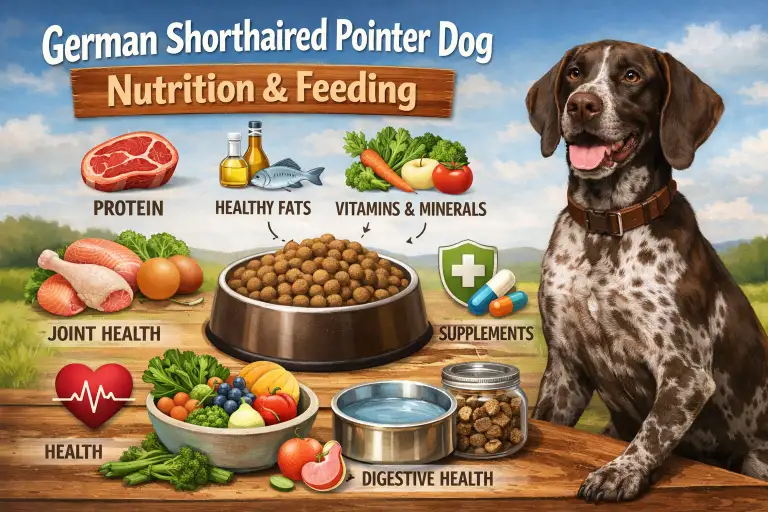
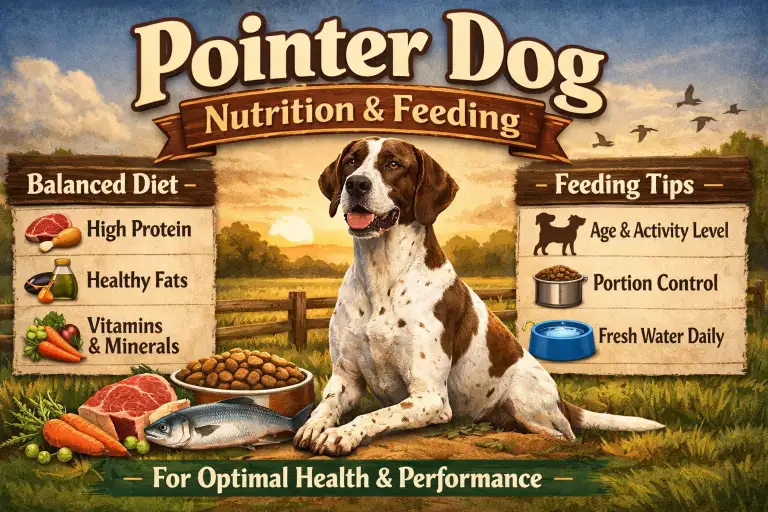
Protein should come primarily from quality animal-based sources. Fat serves as an important energy source, especially for active and working Pointers. Carbohydrates can contribute useful energy but should not replace adequate protein and fat.
Important Vitamins and Minerals
| Nutrient | Primary Benefits |
|---|---|
| Omega-3 Fatty Acids | Joint support, coat health, recovery |
| Calcium | Bone strength |
| Phosphorus | Skeletal development and maintenance |
| Zinc | Skin and immune support |
| Vitamin E | Muscle recovery and antioxidant support |
| Vitamin D | Bone health |
| B Vitamins | Energy metabolism |
Most complete commercial dog foods already contain these nutrients in appropriate amounts.
How to Choose a Good Dog Food for a Pointer
When selecting food, focus on nutritional quality rather than marketing claims.
Look for products labeled:
- Complete and balanced
- Suitable for your dog’s life stage
- Formulated for active or sporting dogs when appropriate
Understanding Common Food Labels
| Label Term | What It Means |
|---|---|
| Complete and Balanced | Meets nutritional requirements for long-term feeding |
| Natural | Marketing term that does not guarantee quality |
| High Protein | Protein quantity only; quality still matters |
| Grain-Free | Not necessary for most healthy Pointers |
| Limited Ingredient | Often used for dogs with sensitivities |
Always evaluate the ingredient list and nutrient analysis rather than relying solely on front-of-package claims.
Grain-Free, Raw, and Homemade Diets
Many Pointer owners consider alternative feeding approaches.
Grain-Free Diets
Grain-free foods are not automatically healthier than grain-inclusive diets. Most healthy Pointers can digest properly formulated grain-containing foods without problems.
Raw Diets
Potential advantages include:
- High protein content
- Minimal processing
Potential concerns include:
- Bacterial contamination
- Nutritional imbalance
- Storage and handling challenges
Homemade Diets
Homemade feeding allows complete ingredient control but requires careful planning to avoid nutritional deficiencies. Homemade diets should be developed with professional nutritional guidance.
How Much Should You Feed a Pointer Dog?
Portion size depends on:
- Body weight
- Age
- Activity level
- Metabolism
- Body condition
- Reproductive status
No feeding chart can perfectly match every dog, so body condition should always guide adjustments.
Estimated Daily Calorie Needs
| Weight | Low Activity | Moderate Activity | High Activity |
|---|---|---|---|
| 40 lbs (18 kg) | 900–1,050 kcal | 1,100–1,300 kcal | 1,400–1,600 kcal |
| 50 lbs (23 kg) | 1,050–1,200 kcal | 1,300–1,500 kcal | 1,600–1,900 kcal |
| 60 lbs (27 kg) | 1,200–1,350 kcal | 1,500–1,700 kcal | 1,900–2,200 kcal |
These figures serve as starting estimates. Individual requirements vary considerably.
Feeding Schedule by Life Stage
| Life Stage | Meals Per Day |
|---|---|
| Puppy | 3–4 meals |
| Adult | 2 meals |
| Senior | 2 smaller meals |
Feeding Pointer Puppies
Growing puppies require:
- Frequent meals
- Higher calorie intake
- Growth-formulated food
- Consistent monitoring of body condition
Feeding Adult Pointers
Most healthy adults thrive on two meals daily. Dividing food into two feedings can help maintain energy and support digestion.
Feeding Senior Pointers
Older dogs may require:
- Fewer calories
- Easily digestible ingredients
- Joint-supporting nutrients
- More frequent monitoring of weight changes

Ata Ur Rehman is the founder of Pet Age in Human Years Calculator, an educational platform that provides age conversion charts and lifespan guides for dogs, cats, birds, and other companion animals. His work focuses on helping pet owners understand how animal ages translate into human years using commonly accepted age conversion formulas and published lifespan averages.
The website compiles breed and species lifespan data from kennel clubs, breed organizations, and general animal lifespan studies to present simple and easy-to-understand guides for pet owners worldwide.
This website was created to centralize animal age conversion charts into one easy reference platform for pet owners.
This article is for general education. For symptoms, medication, diet changes, or health concerns, use a qualified veterinarian who can assess your individual pet.