On this page
The Scottish Terrier dog, often called the Scottie, is a small, confident, and independent breed known for its bold personality, sturdy body, and distinctive bearded face. Although compact in size, the Scottish Terrier has a strong working-dog background and a serious, alert nature that makes it very different from many other small companion breeds.
This guide explains the most important parts of Scottish Terrier ownership, including Scottish Terrier temperament, personality, care needs, lifespan, family suitability, health concerns, grooming, training, and the real pros and cons of a Scottish Terrier. If you are deciding whether this breed fits your home, this page gives you a practical owner-focused overview.
Scottish Terriers usually form a deep bond with their family, but they are not overly clingy dogs. They are affectionate on their own terms, alert around strangers, and often prefer routine, structure, and respectful handling. This makes them best for owners who appreciate an independent dog with strong character.
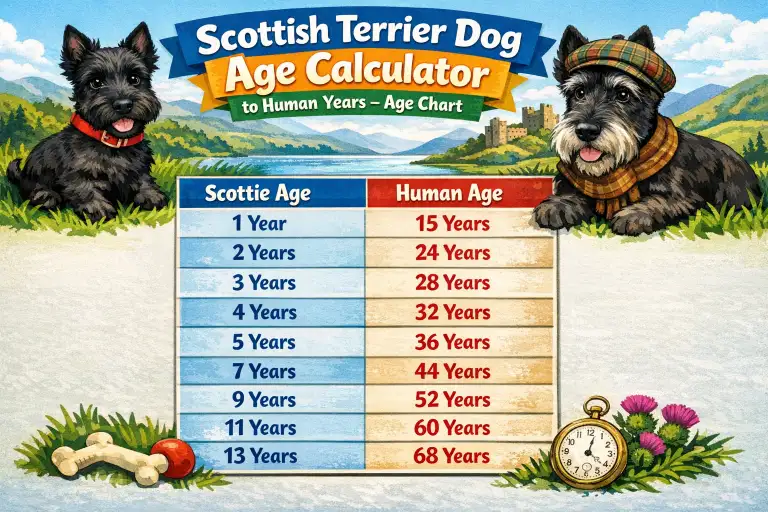
If you already own a Scottie and want to understand your dog’s age in human years, use the Scottish Terrier Dog Age Calculator to estimate life-stage needs and age-related care.
Scottish Terrier Dog Quick Facts
| Category | Scottish Terrier Details |
|---|---|
| Breed Type | Small terrier breed |
| Common Nickname | Scottie |
| Adult Height | About 10 inches at the shoulder |
| Adult Weight | Usually 18-22 pounds |
| Lifespan | About 12-13 years |
| Temperament | Independent, loyal, confident, alert |
| Exercise Needs | Moderate daily activity |
| Grooming Needs | Moderate coat care and regular trimming |
| Best For | Owners who like independent, loyal, strong-willed dogs |
| Not Ideal For | Homes wanting a highly obedient, clingy, or very social small dog |
Scottish Terrier Temperament and Personality
The Scottish Terrier temperament is best described as bold, independent, loyal, and dignified. Scotties are intelligent dogs, but they do not always rush to please people. They often think before responding, which can make them seem stubborn, especially to first-time owners expecting instant obedience.
Scottish Terriers are usually very loyal to their family. Many bond closely with one or two people instead of seeking attention from everyone. Their affection behavior is often calm and selective. A Scottie may sit near you, follow your routine, or quietly watch the household, but it may not enjoy constant cuddling or rough handling.
With strangers, Scotties are often reserved. This alert and cautious nature makes them good watchdogs. They may bark when someone comes to the door or when they hear unusual sounds, but most are not nonstop barkers if they receive enough exercise, training, and structure.
The breed also has a strong prey drive because it was originally bred to hunt vermin. Small animals such as rabbits, rodents, and fast-moving outdoor animals can trigger chasing behavior. For this reason, leash control and secure outdoor areas are important.
Scottish Terrier Temperament Breakdown
| Trait | What Owners May Expect | Real Owner Experience |
|---|---|---|
| Independence | A small dog that follows commands easily | Often makes its own decisions and needs patient training |
| Affection | A cuddly lapdog | Loyal and loving, but usually affectionate on its own terms |
| Watchdog Behavior | Quiet companion | Alert and likely to bark at strangers or unusual sounds |
| Trainability | Easy obedience | Smart but can become stubborn if bored |
| Prey Drive | Mild interest in small animals | Strong chase instinct with rabbits, rodents, and fast-moving pets |
Are Scottish Terriers Good Family Dogs?
Scottish Terriers can be good family dogs, but they are not the easiest small breed for every household. They do best with families who respect boundaries, provide routine, and understand that this breed can be strong-willed. Scotties usually prefer calm, predictable homes over chaotic environments.
With children, Scottish Terriers are usually better suited to homes with older kids who know how to handle dogs gently. They may not tolerate rough play, teasing, or being grabbed suddenly. For families with toddlers, close supervision is important because a Scottie may become stressed if handled roughly.
Scotties can live with other dogs and cats if introductions are careful and consistent. However, their prey drive makes them less reliable around very small pets. Rabbits, hamsters, guinea pigs, and similar animals should not be left loose around a Scottish Terrier.
Apartment living can work well for a Scottish Terrier as long as daily walks, mental stimulation, and barking control are part of the routine. They do not need extreme exercise, but they do need structure and activity to prevent boredom.
Scottish Terrier Suitability Scorecard
| Lifestyle Type | Suitability | Notes |
|---|---|---|
| Families with older children | Good | Best when children understand gentle handling |
| Families with toddlers | Moderate to Low | Needs supervision because rough handling can cause stress |
| Apartment living | Good | Works if daily walks and barking control are consistent |
| First-time owners | Moderate | Possible, but patience and consistency are required |
| Seniors | Moderate to Good | Good size, but stubbornness and grooming needs should be considered |
| Multi-pet homes | Moderate | Best with careful introductions; caution around small pets |
Scottish Terrier Care Requirements
Scottish Terrier care is moderate overall. They are not high-energy dogs, but they need regular exercise, training, grooming, feeding control, and health monitoring. Their independent personality means owners should create a clear routine instead of relying on the dog to self-manage behavior.
Exercise Needs
Scottish Terriers need daily walks and short play sessions to stay healthy. Most do well with moderate activity rather than long, intense exercise. Scent games, puzzle toys, and short training sessions help keep their mind active and reduce boredom-driven behavior.
Training Needs
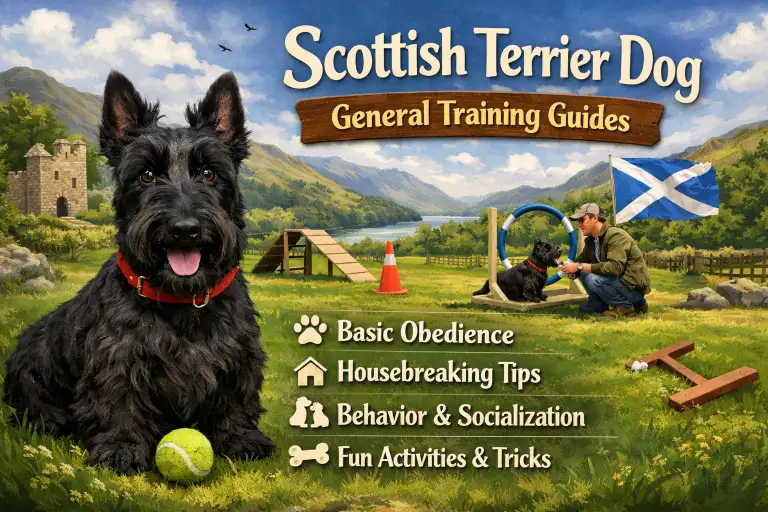
Training a Scottish Terrier requires patience. Scotties are smart, but they can be selective listeners. Short sessions, positive reinforcement, and consistent rules work better than harsh correction. For deeper training support, see the Scottish Terrier Dog General Training Guides.
Grooming Needs
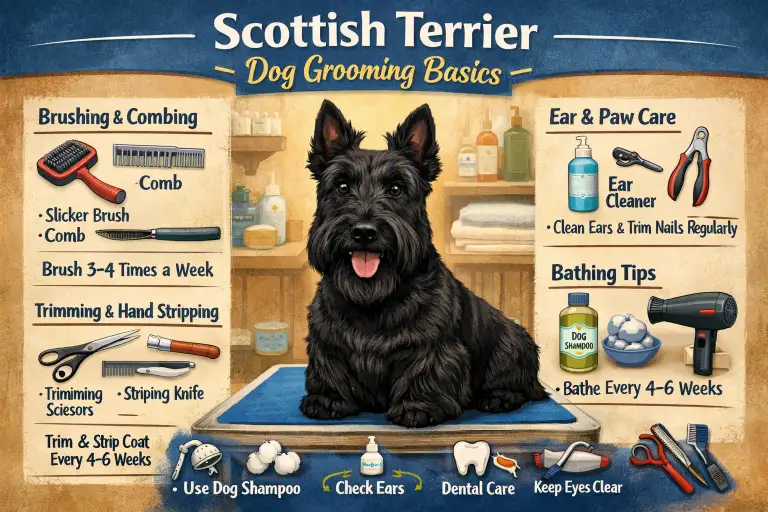
The Scottish Terrier has a wiry coat that needs brushing several times per week to reduce tangles and keep the coat clean. Pet Scotties often receive regular trimming, while show dogs may require hand-stripping. Nails, ears, and teeth should also be checked regularly. For more detail, visit the Scottish Terrier Dog Grooming Basics page.
Feeding Needs
Because Scottish Terriers are small but sturdy, portion control matters. Overfeeding can lead to weight gain, which puts pressure on joints and overall health. A balanced diet, measured meals, and age-appropriate feeding are important. For feeding guidance, read the Scottish Terrier Dog Nutrition & Feeding guide.
Scottish Terrier Care Summary
| Care Category | Level | Owner Notes |
|---|---|---|
| Exercise | Moderate | Daily walks and short play sessions |
| Mental Stimulation | Moderate | Puzzle toys, scent games, and short training |
| Training Difficulty | Moderate to High | Needs patience, consistency, and positive reinforcement |
| Grooming | Moderate | Brush several times weekly and trim regularly |
| Feeding | Moderate | Needs portion control to avoid excess weight |
| Health Monitoring | Moderate | Watch breed-specific conditions and senior changes |
Scottish Terrier Lifespan and Age Care
The average Scottish Terrier lifespan is usually around 12-13 years. With good care, many Scotties remain active and mentally alert into their senior years. As they age, owners should pay closer attention to weight, dental care, mobility, urinary changes, energy levels, and behavior changes.
Scottish Terrier age care should change over time. Puppies need socialization and routine. Adults need exercise, grooming, and weight control. Senior Scotties may need more frequent vet checks, softer exercise, and closer monitoring for age-related health issues.
To understand your dog’s current life stage, use the Scottish Terrier Dog Age Calculator. You can also review the Scottish Terrier Dog Age Calculator to Human Years – Age Chart for age-stage comparisons.
Common Scottish Terrier Health Concerns
Scottish Terriers are generally sturdy dogs, but the breed can be prone to certain health concerns. Owners should not panic about these risks, but they should understand what to watch for and keep routine vet care consistent.
| Health Concern | Why It Matters | Owner Action |
|---|---|---|
| Scottie Cramp | A breed-associated movement condition that may affect coordination during stress or excitement | Ask your vet if you notice unusual movement, stiffness, or episodes after activity |
| Bladder Issues | Scotties can be at higher risk for urinary problems, including serious bladder disease | Watch for frequent urination, blood in urine, straining, or accidents |
| Von Willebrand’s Disease | A bleeding disorder that can affect clotting | Discuss screening with your vet, especially before surgery |
| Dental Disease | Small breeds can develop dental buildup and gum issues | Brush teeth, use dental care routines, and schedule cleanings as needed |
| Weight Gain | Extra weight can affect joints, energy, and long-term health | Measure food portions and maintain daily activity |
Scottish Terrier Cost of Ownership
Owning a Scottish Terrier comes with regular costs beyond the purchase or adoption fee. Puppies from breeders may cost more depending on lineage, location, and breeder reputation. Ongoing expenses include food, grooming, vet care, preventive medication, training supplies, and possible health screening.
Scotties are not usually the most expensive small breed to feed, but grooming and health monitoring can increase total ownership costs. Owners should plan for both routine care and unexpected vet bills. For a deeper cost breakdown, visit the Scottish Terrier Dog Cost of Ownership guide.
Scottish Terrier Pros and Cons
The Scottish Terrier pros and cons are important to understand before choosing this breed. Scotties are loyal, confident, and full of personality, but they can also be stubborn, reserved, and less tolerant of rough handling than some other small breeds.
Pros and Cons of Scottish Terrier Ownership
| Pros | Cons |
|---|---|
| Loyal and deeply devoted to family | Can be stubborn and independent |
| Confident, bold, and alert | May be aloof with strangers |
| Small size but sturdy build | Strong prey drive around small animals |
| Moderate exercise needs | Needs consistent training and boundaries |
| Distinctive appearance and personality | Wiry coat requires regular grooming |
| Can work in apartments with routine | May bark at sounds, visitors, or movement |
A Scottish Terrier is a strong choice for owners who want a small dog with independence, loyalty, and confidence. It is not the best fit for someone who wants an easy, highly obedient, always-social lapdog.
Scottish Terrier vs Similar Breeds
People often compare Scottish Terriers with other small terrier breeds because they share similar size, coat types, and bold personalities. However, the Scottie is usually more serious, independent, and reserved than many other small terriers.
If you are searching for dogs that look like a Scottish Terrier, common comparisons include the West Highland White Terrier, Cairn Terrier, Miniature Schnauzer, and sometimes other sturdy terrier breeds. A large dog that looks exactly like a Scottish Terrier is uncommon, but some wiry-coated breeds may share a similar rugged outline.
Scottish Terrier Compared With Similar Breeds
| Breed | Temperament | Grooming | Trainability | Best For |
|---|---|---|---|---|
| Scottish Terrier | Independent, loyal, confident | Moderate | Moderate to hard | Owners who like strong-willed small dogs |
| West Highland White Terrier | Friendly, lively, social | Moderate | Moderate | Families wanting a more outgoing terrier |
| Cairn Terrier | Playful, curious, energetic | Moderate | Moderate | Active homes wanting a playful small dog |
| Miniature Schnauzer | Smart, alert, trainable | High | Moderate to high | Owners wanting a more trainable small breed |
Scottish Terrier Coat Colors and Shedding
Scottish Terriers are commonly seen in black, but they can also appear in wheaten or brindle coats. A wheaten Scottish Terrier has a lighter cream-to-wheat colored coat, while a brindle Scottish Terrier has a darker mixed pattern that may show striping or blended tones.
Scotties are often described as low-shedding, but that does not mean they require no grooming. Their wiry coat needs brushing, trimming, and regular maintenance. Some people ask whether Scottish Terriers are hypoallergenic. No dog is completely hypoallergenic, but the Scottie’s lower-shedding coat may be easier for some allergy-sensitive homes than heavy-shedding breeds.
Is a Scottish Terrier Right for You?
A Scottish Terrier may be right for you if you want a small dog with confidence, loyalty, watchdog instincts, and a strong personality. This breed works best with owners who are patient, consistent, and comfortable with an independent dog.
A Scottie may not be right for you if you want a highly social, easy-to-train, constantly affectionate dog. They can be loving and entertaining, but they need respect, structure, and regular care to thrive.
Before choosing this breed, consider the dog’s age, training needs, grooming routine, health monitoring, and long-term care. If you already have a Scottie, start by checking your dog’s life stage with the Scottish Terrier Dog Age Calculator.
Scottish Terrier FAQ
Are Scottish Terriers good family dogs?
Scottish Terriers can be good family dogs for calm homes, especially with older children. They are loyal and protective, but they may not enjoy rough play or constant handling.
Do Scottish Terriers bark a lot?
Scottish Terriers can bark when they notice strangers, sounds, or movement. They are alert watchdogs, but they are not usually nonstop barkers when properly exercised and trained.
Are Scottish Terriers hypoallergenic?
Scottish Terriers are not completely hypoallergenic because no dog is. However, their wiry, lower-shedding coat may be easier for some allergy-sensitive people than heavy-shedding breeds.
Are Scottish Terriers affectionate?
Scottish Terriers are affectionate with their family, but they usually show love in a calm and selective way. Many prefer being near their owner rather than being constantly cuddled.
What are the pros and cons of a Scottish Terrier?
The main pros are loyalty, confidence, small size, and watchdog ability. The main cons are stubbornness, prey drive, grooming needs, and possible aloofness with strangers.
Are Scottish Terriers good apartment dogs?
Scottish Terriers can live in apartments if they receive daily walks, mental stimulation, and consistent barking control. They do not need a large yard, but they do need routine.
What dogs look like Scottish Terriers?
Dogs that may look similar to Scottish Terriers include West Highland White Terriers, Cairn Terriers, Miniature Schnauzers, and some other wiry-coated terrier breeds.
How long do Scottish Terriers live?
Scottish Terriers usually live around 12-13 years. Good nutrition, weight control, dental care, exercise, and routine vet visits can support healthier aging.
Who Should Own a Scottish Terrier?
A Scottish Terrier is best for an owner who wants a loyal, alert, and independent small dog rather than a soft, highly obedient lapdog. This breed works well for people who enjoy structure, routine, and a dog with a strong personality. Scotties often do best with owners who are patient, consistent, and willing to earn trust over time.
This breed may be a good match if you want a small dog with watchdog instincts, moderate exercise needs, and a serious but affectionate nature. It is especially suitable for adults, seniors, and families with older children who understand respectful handling.
A Scottish Terrier may not be the best choice if you want a very social dog that greets everyone warmly, follows commands immediately, or enjoys constant cuddling. First-time owners can succeed with this breed, but they need to be ready for stubbornness, prey drive, grooming needs, and consistent training.
Common Scottish Terrier Owner Mistakes
Many Scottish Terrier problems come from misunderstanding the breed’s personality. Scotties are intelligent, but they are not usually eager-to-please dogs. Treating them like a soft toy breed or expecting instant obedience can lead to frustration for both the owner and the dog.
| Owner Mistake | Why It Causes Problems | Better Approach |
|---|---|---|
| Skipping early socialization | Can make the dog more reserved or reactive around strangers | Introduce people, sounds, and places gradually from a young age |
| Using harsh corrections | Can make a Scottie more stubborn or defensive | Use positive reinforcement and short training sessions |
| Ignoring prey drive | Small animals may trigger chasing behavior | Use leash control and secure outdoor spaces |
| Underestimating grooming | The wiry coat can tangle or lose condition | Brush regularly and schedule trims when needed |
| Overfeeding | Extra weight can affect long-term health and mobility | Measure meals and adjust portions by age and activity level |
Explore More Scottish Terrier Guides
Continue building your Scottish Terrier care plan with these related guides:

Ata Ur Rehman is the founder of Pet Age in Human Years Calculator, an educational platform that provides age conversion charts and lifespan guides for dogs, cats, birds, and other companion animals. His work focuses on helping pet owners understand how animal ages translate into human years using commonly accepted age conversion formulas and published lifespan averages.
The website compiles breed and species lifespan data from kennel clubs, breed organizations, and general animal lifespan studies to present simple and easy-to-understand guides for pet owners worldwide.
This website was created to centralize animal age conversion charts into one easy reference platform for pet owners.
This article is for general education. For symptoms, medication, diet changes, or health concerns, use a qualified veterinarian who can assess your individual pet.