On this page
Scottish Terrier grooming tips are important because this breed has a distinctive double coat that needs regular brushing, careful bathing, mat prevention, and occasional trimming to stay healthy. A Scottie’s harsh, wiry outer coat and soft undercoat help create the classic Scottish Terrier look, but they can also trap loose hair, dirt, and moisture if grooming is neglected.
Grooming a Scottish Terrier is not only about appearance. Proper coat care helps prevent painful mats, supports skin health, controls odor, and keeps your dog more comfortable in daily life. Mats often form behind the ears, under the chest, along the legs, in the beard, and around the skirt area. If left untreated, they can pull on the skin and lead to irritation.
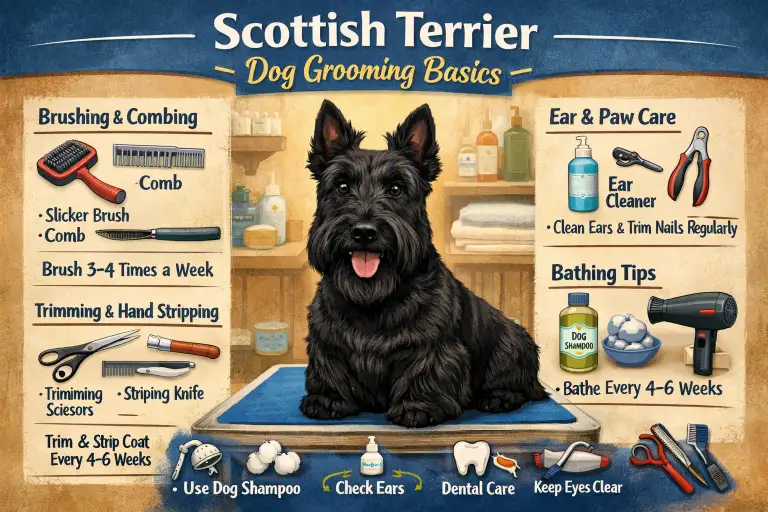
A consistent Scottish Terrier grooming routine should include brushing, comb-checking, beard cleaning, bathing when needed, nail trimming, ear checks, dental care, and skin inspection. With the right routine, you can keep your Scottie clean without damaging the coat’s natural wiry texture.
If you also want to understand how your Scottie’s age affects care needs, visit the Scottish Terrier Dog Age Calculator.
Scottish Terrier Coat Type and Grooming Needs
Scottish Terriers have a double coat. The outer coat is hard, wiry, and weather-resistant, while the undercoat is soft and dense. This coat type gives the breed its classic outline, but it also means Scottish Terrier coat care must be consistent.
Although Scotties are often considered low-shedding compared with many other dogs, they are not maintenance-free. Loose undercoat hair, dirt, and small tangles can build up under the wiry coat. Without regular brushing and combing, those tangles can turn into mats, especially in high-friction areas like the beard, legs, skirt, chest, and behind the ears.
One important rule is to avoid shaving the coat too short unless there is a serious matting or medical reason. Over-shaving can soften the coat texture, reduce the natural wiry feel, and make the coat more likely to tangle later. For many pet Scotties, careful clipping is common, but the coat still needs regular brushing and trimming to stay manageable.
Scottish Terrier Coat Characteristics and Grooming Impact
| Coat Feature | What It Means | Grooming Impact |
|---|---|---|
| Outer coat | Harsh, wiry, and protective | Needs regular brushing and careful trimming to maintain texture |
| Undercoat | Soft and dense | Can trap loose hair, dirt, and debris if not combed out |
| Shedding level | Low to moderate | Still needs brushing to control loose hair and prevent buildup |
| Matting tendency | Higher around beard, legs, skirt, chest, and ears | Requires frequent mat checks and gentle combing |
| Skin sensitivity | Some Scotties may have sensitive or allergy-prone skin | Use gentle products and avoid over-bathing |
Hand Stripping vs Clipping a Scottish Terrier
One of the biggest Scottish Terrier grooming questions is whether the coat should be hand stripped or clipped. Both methods are used, but they create different results.
Hand stripping removes dead outer-coat hairs by hand or with a stripping tool. This helps preserve the traditional wiry texture and is often preferred for show dogs or owners who want the most breed-correct coat. Clipping is more common for pet Scotties because it is faster and easier to maintain, but frequent clipping can gradually soften the coat texture.
| Method | Best For | Pros | Considerations |
|---|---|---|---|
| Hand stripping | Show-style coats and owners who want to preserve wiry texture | Maintains traditional coat feel and natural outline | Requires skill, time, and often a professional groomer |
| Clipping | Pet Scotties and easier home maintenance | Faster, more practical, and easier to schedule | May soften the coat over time if done frequently |
| Shaving very short | Only for severe mats or specific care needs | May be necessary in extreme cases | Can affect coat texture and should not be routine |
For most pet owners, a practical approach is regular brushing at home with professional trimming every few weeks. If you want the classic wiry Scottie coat, ask a groomer experienced with Scottish Terriers whether hand stripping is suitable for your dog.
Step-by-Step Scottish Terrier Grooming Routine at Home
Grooming a Scottie at home works best when you follow the same order each time. A predictable routine keeps the dog calmer and helps you catch mats, skin changes, ear irritation, or nail problems before they become worse.
Step 1: Check the Coat Before Brushing
Before brushing, run your hands gently over your Scottish Terrier’s body. Check behind the ears, under the front legs, along the chest, around the beard, through the skirt, and near the paws. These areas mat faster than the back and sides.
Step 2: Brush the Coat 2–3 Times Per Week
Brush your Scottie 2–3 times per week using a slicker brush or pin brush. Work in small sections and brush gently in the direction of the coat. Do not pull hard through tangles. If you find resistance, use a comb to separate the hair slowly.
Step 3: Comb-Check Hidden Mats
After brushing, use a metal comb to check for hidden mats. If the comb glides through the coat, the area is clear. If it catches, there may be a tangle close to the skin. Small mats can often be loosened carefully, but tight mats should be handled by a groomer to avoid hurting the dog.
Step 4: Clean the Beard and Face
The Scottish Terrier beard can collect food, water, and dirt. Wipe the beard as needed with a damp cloth, especially after meals. Keeping the beard clean helps reduce odor, staining, and skin irritation around the mouth.
Step 5: Trim Carefully When Needed
Light trimming around the paws, sanitary area, and overgrown edges can help keep your Scottie tidy. Use rounded-tip scissors for safer small touch-ups, and leave detailed skirt shaping, face shaping, and coat clipping to an experienced groomer if you are not confident.
Scottish Terrier Grooming Tools and Their Uses
The right tools make Scottish Terrier grooming easier, safer, and more effective. You do not need every tool at once, but a basic grooming kit should cover brushing, combing, bathing, nails, ears, teeth, and drying.
| Tool | Best For | Use |
|---|---|---|
| Slicker brush | Legs, skirt, chest, and tangle-prone areas | Removes tangles and helps prevent mats |
| Pin brush | General coat brushing | Smooths the coat and keeps longer areas neat |
| Metal comb | Beard, ears, legs, and skirt | Checks for hidden mats after brushing |
| Undercoat rake | Dense undercoat areas | Removes loose undercoat hair when used gently |
| Rounded-tip scissors | Small touch-ups around paws or face | Helps trim safely in delicate areas |
| Dog nail clippers or grinder | Nail care | Keeps nails short enough for comfortable walking |
| Dog-friendly shampoo | Bathing | Cleans the coat without harsh drying |
| Vet-approved ear cleaner | Ear care | Helps remove dirt and moisture from outer ear areas |
| Dog toothbrush and toothpaste | Dental care | Supports cleaner teeth and fresher breath |
| Towel or dog dryer | Drying after bath | Helps dry the coat without overheating the skin |
Scottish Terrier Grooming Frequency Schedule
A regular schedule keeps grooming manageable. Waiting too long between sessions allows mats, odor, nail overgrowth, and skin irritation to build up.
| Grooming Task | Recommended Frequency | Why It Matters |
|---|---|---|
| Brushing | 2–3 times per week | Prevents mats and removes loose hair |
| Comb-checking | After each brushing session | Finds hidden mats close to the skin |
| Bathing | Every 4–6 weeks or as needed | Controls dirt and odor without over-drying skin |
| Beard cleaning | 1–2 times per week or after messy meals | Reduces odor, staining, and irritation |
| Nail trimming | Every 3–4 weeks | Supports comfortable walking and posture |
| Ear check | Weekly | Helps catch odor, redness, wax, or irritation early |
| Teeth brushing | 2–3 times per week | Helps reduce plaque and bad breath |
| Professional grooming | Every 6–8 weeks for many pet Scotties | Keeps trimming, shaping, and coat maintenance under control |
| Hand stripping or coat shaping | Depends on coat type and grooming goal | Maintains coat texture and breed outline when done properly |
How Often Should You Bathe a Scottish Terrier?
Scottish Terrier bathing frequency is usually every 4–6 weeks, but this depends on your dog’s activity level, skin condition, coat condition, and odor. Some Scotties may need a bath sooner if they roll in dirt, get muddy, develop a strong smell, or have a skin-care routine recommended by a vet.
Do not over-bathe a Scottish Terrier with harsh shampoo. Too much bathing can dry the skin and soften the wiry coat. Use a gentle dog-friendly shampoo, rinse thoroughly, and avoid leaving product residue in the coat. Residue can cause itching, flaking, and irritation.
After bathing, dry the coat carefully with a towel or dog dryer on a low, warm setting. Avoid high heat, and do not hold the dryer too close to the skin. Make sure the beard, chest, legs, and skirt are not left damp for too long, because moisture can contribute to odor and matting.
Scottish Terrier Grooming Diagram: Key Areas to Check
A Scottish Terrier grooming diagram should focus on the areas most likely to mat, collect dirt, or need regular trimming. If you add an image to this section, use it to label the beard, eyebrows, ears, chest, legs, skirt, paws, and tail area.
| Grooming Area | What to Check | Care Tip |
|---|---|---|
| Beard | Food, water, odor, tangles | Wipe regularly and comb gently |
| Eyebrows | Overgrowth or hair blocking vision | Trim carefully or ask a groomer |
| Behind ears | Hidden mats and irritation | Comb-check during every brushing session |
| Chest | Tangles, dirt, and friction mats | Brush in small sections |
| Legs | Mats and debris | Use slicker brush followed by comb |
| Skirt | Tangles and dirt buildup | Brush regularly and keep trimmed if needed |
| Paws | Overgrown hair and nails | Trim paw hair carefully and keep nails short |
| Tail area | Dirt and hygiene issues | Keep clean and ask groomer for sanitary trimming |
Image SEO recommendation: Add a simple labeled grooming diagram image with the file name scottish-terrier-grooming-diagram.webp, image title Scottish Terrier Grooming Diagram, and alt text Scottish Terrier grooming diagram showing beard, ears, legs, skirt, paws, and coat care areas.
Do Scottish Terriers Shed?
Scottish Terriers are generally low to moderate shedding dogs, but they still lose hair. The loose hair often stays within the wiry coat or soft undercoat instead of falling heavily around the home. That is why brushing and combing are still important.
If you are wondering, “Do Scottish Terriers shed?” or “Do Scottie dogs shed?” the answer is yes, but usually not heavily. Regular brushing helps remove loose undercoat hair, prevents buildup, and keeps the coat cleaner between baths.
Extra Grooming Care: Nails, Ears, Teeth, and Skin Health
Scottish Terrier grooming is not complete without nail, ear, dental, and skin care. These areas affect comfort and health just as much as coat brushing.
| Care Area | What to Do | When to Get Help |
|---|---|---|
| Nails | Trim every 3–4 weeks or when nails click on the floor | If nails are overgrown, painful, cracked, or bleeding |
| Ears | Check weekly and wipe outer ear areas with vet-approved cleaner | If there is strong odor, redness, discharge, swelling, or frequent scratching |
| Teeth | Brush 2–3 times per week with dog-safe toothpaste | If there is severe bad breath, bleeding gums, loose teeth, or eating difficulty |
| Skin | Check during brushing for redness, bumps, flakes, sores, or odor | If irritation is persistent, spreading, painful, smelly, or bleeding |
| Beard and face | Wipe after meals and comb gently to prevent tangles | If skin around the mouth becomes red, wet, smelly, or irritated |
Common Scottish Terrier Skin and Grooming Problems
Because Scottish Terriers can be prone to skin sensitivity, grooming should include regular inspection. The goal is not to diagnose problems at home, but to notice changes early and respond appropriately.
| Problem | Signs to Watch For | What Owners Should Do |
|---|---|---|
| Dry skin | Flaking, dull coat, mild itching | Use gentle shampoo, avoid over-bathing, and monitor changes |
| Allergy-related irritation | Redness, itching, licking, hot spots | Speak with a vet if symptoms continue or worsen |
| Ear irritation | Odor, redness, wax buildup, scratching | Clean only the outer ear area and contact a vet if persistent |
| Mats and tangles | Clumps, pulling hair, sensitive skin underneath | Brush regularly and ask a groomer for tight mats |
| Dental buildup | Bad breath, tartar, gum redness | Brush teeth and schedule vet dental checks when needed |
Scottish Terrier Grooming Tips by Age
A Scottish Terrier’s grooming needs can change with age. Puppies need short, positive grooming sessions so they learn to accept brushing, nail handling, and bath time. Adult Scotties need a consistent routine to control mats and maintain coat shape. Senior Scotties may need gentler handling, shorter sessions, and extra skin checks.
To compare your dog’s current age with human years and understand age-related care better, use the Scottish Terrier Dog Age Calculator.
Related Scottish Terrier Care Guides
Continue building a complete care routine for your Scottie with these related guides:
- Scottish Terrier Dog Full Guide
- Scottish Terrier Dog Age Calculator
- Scottish Terrier Dog General Training Guides
- Scottish Terrier Dog Age Calculator to Human Years – Age Chart
- Scottish Terrier Dog Nutrition & Feeding
- Scottish Terrier Dog Cost of Ownership
Scottish Terrier Grooming FAQs
How often should a Scottish Terrier be groomed?
A Scottish Terrier should usually be brushed 2–3 times per week, bathed every 4–6 weeks, and professionally groomed every 6–8 weeks if you want to maintain a tidy coat shape. Beard cleaning, nail trimming, ear checks, and skin checks should also be part of the routine.
Do Scottish Terriers need professional grooming?
Many Scottish Terriers benefit from professional grooming because their wiry coat, beard, eyebrows, skirt, and leg furnishings require careful trimming. Owners can handle brushing, combing, bathing, and basic care at home, but detailed shaping is often easier with an experienced groomer.
Should Scottish Terriers be hand stripped or clipped?
Hand stripping helps preserve the traditional wiry coat texture, while clipping is more common for pet Scotties because it is easier to maintain. If coat texture is very important to you, ask a groomer experienced with Scottish Terriers about hand stripping.
How often should you bathe a Scottish Terrier?
Most Scottish Terriers can be bathed every 4–6 weeks, or sooner if they get dirty, muddy, or smelly. Avoid over-bathing because it can dry the skin and soften the wiry coat texture.
Do Scottish Terriers shed?
Yes, Scottish Terriers shed, but usually at a low to moderate level. Their loose hair often stays in the coat, so regular brushing and combing are needed to remove buildup and prevent mats.
How do you prevent mats in a Scottish Terrier coat?
Brush your Scottish Terrier 2–3 times per week and use a comb to check high-risk areas like the beard, legs, skirt, chest, and behind the ears. Do not wait until mats become tight, because they can pull on the skin and cause discomfort.
What grooming tools do Scottish Terriers need?
Useful Scottish Terrier grooming tools include a slicker brush, pin brush, metal comb, undercoat rake, rounded-tip scissors, dog shampoo, nail clippers, ear cleaner, toothbrush, dog toothpaste, and a towel or dog dryer.

Ata Ur Rehman is the founder of Pet Age in Human Years Calculator, an educational platform that provides age conversion charts and lifespan guides for dogs, cats, birds, and other companion animals. His work focuses on helping pet owners understand how animal ages translate into human years using commonly accepted age conversion formulas and published lifespan averages.
The website compiles breed and species lifespan data from kennel clubs, breed organizations, and general animal lifespan studies to present simple and easy-to-understand guides for pet owners worldwide.
This website was created to centralize animal age conversion charts into one easy reference platform for pet owners.
This article is for general education. For symptoms, medication, diet changes, or health concerns, use a qualified veterinarian who can assess your individual pet.