On this page
The Brussels Griffon is a small companion dog known for its expressive face, human-like eyes, and two very different coat types: smooth and rough. Because these coats behave differently, Brussels Griffon grooming is not the same for every dog. Smooth-coated Griffons shed more and need regular brushing, while rough-coated Griffons shed less but need more coat maintenance, beard care, and proper trimming.
If you are asking, do Brussels Griffons shed? the answer is yes, but the amount of shedding depends heavily on the coat type. Smooth coat Brussels Griffons shed moderately, especially during seasonal changes. Rough coat Brussels Griffons shed much less because dead hair often stays trapped in the wiry coat until it is brushed, combed, or hand-stripped.
This is why proper grooming matters. Using the wrong brush, bathing too often, ignoring beard care, or clipping a rough coat incorrectly can affect coat texture, increase skin irritation, and make grooming harder over time. A good routine keeps your Brussels Griffon clean, comfortable, and easier to manage.
Grooming also supports your dog’s overall health. Regular brushing helps remove loose hair, dirt, and dander while giving you a chance to check the skin for redness, dryness, bumps, parasites, or irritation. Nail trimming, ear cleaning, and dental care are also important because Brussels Griffons are small dogs that can develop discomfort quickly when these areas are ignored.
Brussels Griffons are also known for their beard, eyebrows, and expressive face, especially in rough-coated dogs. Without regular face and beard cleaning, food, water, and debris can build up around the mouth and eyes, leading to odor, staining, or skin irritation.
If you want broader breed information, including temperament, size, care needs, and personality, you can also read the Brussels Griffon Dog Full Guide. If you want to understand your dog’s age and life stage better, use the Brussels Griffon Dog Age Calculator.
In this guide, you’ll learn how much Brussels Griffons shed, how smooth and rough coats differ, how often grooming is needed, what brushes and grooming methods work best, when haircuts are appropriate, and when professional grooming is the safer choice.
Quick Answer: Do Brussels Griffons Shed?
Yes, Brussels Griffons do shed, but shedding depends on the coat type. Smooth coat Brussels Griffons shed moderately and may shed more in spring and fall. Rough coat Brussels Griffons shed much less, but their wiry coat needs brushing, combing, and sometimes hand-stripping to remove dead hair and keep the coat healthy.
Brussels Griffons are not completely hypoallergenic. Rough-coated dogs may be easier for some allergy-sensitive owners because they shed less, but all dogs can still produce dander, saliva proteins, and skin oils that may trigger allergies.
Brussels Griffon Coat Types and Grooming Frequency: Smooth vs Rough Coat
Brussels Griffons come in two main coat types: smooth and rough. This is the most important thing to understand before choosing a grooming routine. Many grooming problems happen when owners treat both coat types the same.
Smooth coat Brussels Griffon
A smooth coat Brussels Griffon has short, flat hair that lies close to the body. The coat usually feels soft, sleek, and shiny. It does not tangle or mat easily, so it is easier to maintain than a rough coat.
However, smooth coat Brussels Griffons usually shed more than rough-coated dogs. Loose hair can build up around the home, especially during seasonal shedding periods. Brushing once or twice a week helps control shedding and keeps the skin and coat healthy.
Rough coat Brussels Griffon
A rough coat Brussels Griffon has wiry, coarse hair with a fuller beard, eyebrows, legs, and facial furnishings. This coat sheds much less than a smooth coat, but it needs more hands-on grooming. Dead hair can stay trapped in the coat, which is why brushing, combing, and hand-stripping may be needed.
Rough coats can also tangle around the beard, legs, chest, and behind the ears. If brushing is skipped for too long, small tangles can turn into uncomfortable mats. This coat should not be treated like a soft long-haired coat because frequent clipping can slowly change the natural wiry texture.
Smooth coat vs rough coat shedding comparison
| Feature | Smooth Coat Brussels Griffon | Rough Coat Brussels Griffon |
|---|---|---|
| Shedding level | Moderate | Low |
| Seasonal shedding | More noticeable in spring and fall | Less noticeable, but dead hair still needs removal |
| Best grooming method | Regular brushing with a soft brush or rubber grooming brush | Brushing, combing, trimming, and sometimes hand-stripping |
| Matting risk | Very low | Medium, especially around beard, legs, ears, and chest |
| Allergy friendliness | Lower, because more loose hair is released | Better for some owners, but not truly hypoallergenic |
| Professional grooming need | Usually low | Moderate, especially for hand-stripping or coat shaping |
Smooth coat vs rough coat grooming comparison
| Feature | Smooth Coat Brussels Griffon | Rough Coat Brussels Griffon |
|---|---|---|
| Hair length | Short and flat | Wiry, medium length |
| Brushing difficulty | Easy | Moderate |
| Beard care | Usually not needed | Needed several times per week |
| Haircut needs | Minimal | Regular trimming, shaping, or hand-stripping |
| Coat texture risk | Low | Higher if clipped too often |
| Overall grooming effort | Low | Medium |
How often to groom a Brussels Griffon
Grooming frequency depends on coat type, lifestyle, season, and age. A Brussels Griffon that plays outside often, eats messy food, or has a fuller rough coat may need more frequent grooming than a mostly indoor dog with a smooth coat.
| Grooming task | Smooth Coat | Rough Coat |
|---|---|---|
| Brushing | 1-2 times per week | 2-3 times per week |
| Bathing | Every 4-6 weeks | Every 4-6 weeks |
| Beard and face cleaning | Usually not needed | Several times per week |
| Coat trimming or shaping | Rarely needed | Every 6-8 weeks, depending on coat style |
| Nail trimming | Every 3-4 weeks | Every 3-4 weeks |
| Ear cleaning | Once every 1-2 weeks | Once every 1-2 weeks |
| Dental care | Several times per week | Several times per week |
Do Brussels Griffons Shed?
Yes, Brussels Griffons shed, but not all Brussels Griffons shed the same amount. The biggest difference comes from coat type. Smooth-coated Brussels Griffons shed moderately because their short hair naturally releases from the coat. Rough-coated Brussels Griffons shed much less because the dead hair often stays in the wiry coat until it is brushed, combed, trimmed, or hand-stripped.
Smooth coat shedding is usually more noticeable on furniture, clothing, and bedding. Rough coat shedding is usually less visible, but that does not mean the coat needs no care. Without regular grooming, dead hair, dirt, and tangles can build up in the rough coat.
Do Brussels Griffons shed a lot?
Brussels Griffons do not usually shed heavily compared to many other breeds, but smooth-coated Griffons can shed a noticeable amount. Rough-coated Griffons are considered low-shedding, but they still need coat maintenance to remove dead hair and prevent tangles.
If shedding control is your main concern, brushing matters more than bathing. Brushing removes loose hair before it falls around the home, while over-bathing can dry the skin and make coat problems worse.
Are Brussels Griffons hypoallergenic?
Brussels Griffons are not truly hypoallergenic. Rough-coated Brussels Griffons may shed less than smooth-coated dogs, but no coat type removes allergy risk completely. Allergies can come from dander, saliva, and skin oils, not only loose hair.
Regular brushing, proper bathing, clean bedding, and good face care can help reduce loose hair, dander, and odor, but allergy-sensitive owners should spend time around the breed before making a decision.
Brushing, Bathing, and Coat Care for Brussels Griffons
Brushing and bathing keep your Brussels Griffon clean, comfortable, and healthy. These steps also help you spot skin problems early before they become serious. The routine is simple, but it should be adjusted based on whether your dog has a smooth coat or a rough coat.
Brushing basics for smooth coats
Smooth-coated Brussels Griffons have short hair, but they still need regular brushing. Brushing removes loose hair, spreads natural skin oils, and reduces shedding around your home.
Brush a smooth coat once or twice a week. A soft bristle brush or rubber grooming brush usually works best. Brush gently in the direction the hair grows. You do not need to press hard because rough brushing can irritate the skin.
During spring and fall, smooth coat shedding may increase. At that time, brushing a few extra days per week can help control loose hair before it spreads around the home.
Brushing basics for rough coats
Rough-coated Brussels Griffons need more brushing because their wiry hair can hold dead coat, dirt, and small tangles. The beard, legs, chest, and behind the ears are the most common places where tangles form.
Brush a rough coat two to three times per week. Use a slicker brush for the body and a metal comb for the beard, face, legs, and longer areas. Always brush slowly and gently. If you pull too hard, grooming can become painful and your dog may start resisting future sessions.
If you find a small tangle, hold the hair close to the skin and gently work it out with a comb. Do not yank the hair. If the mat is tight, close to the skin, or painful, it is safer to ask a professional groomer for help.
Beard, face, and eye care
Rough-coated Brussels Griffons often collect food, water, and debris in their beard. This can cause odor, staining, and skin irritation if the area stays damp or dirty.
Wipe the beard and face with a damp cloth several times per week, especially after meals. Dry the area after cleaning so moisture does not sit against the skin. Also check around the eyes and gently remove any buildup with a soft, damp cloth.
Smooth-coated dogs usually do not need beard care, but you should still check around the eyes, mouth, and skin folds for dirt or irritation.
Bathing your Brussels Griffon
Brussels Griffons do not need frequent baths. Bathing too often can dry out the skin, increase itching, and make the coat look dull. Most Brussels Griffons do well with a bath every four to six weeks, unless they get dirty sooner.
Always use a gentle dog shampoo instead of human shampoo. Dog skin has different needs, and harsh products can irritate the skin barrier.
When bathing your Brussels Griffon:
- Use warm water, not hot water
- Wet the coat fully before applying shampoo
- Massage shampoo gently into the coat
- Rinse very well so no soap stays on the skin
- Avoid getting water inside the ears
- Dry the coat and beard properly after the bath
After bathing, towel-dry your dog. If you use a dryer, keep it on a low, cool setting and stop if your dog becomes nervous. Never use hot air on a Brussels Griffon’s skin.
Keeping the coat healthy between baths
Good coat care is not only about bathing. Regular brushing, clean bedding, proper nutrition, and routine skin checks all help keep the coat healthy. Diet can also affect skin and coat condition, so the Brussels Griffon Nutrition and Feeding Guide may be helpful if your dog has dull coat, dry skin, or sudden coat changes. Also look for redness, flakes, bumps, sores, excessive scratching, or irritation, as these signs may mean your dog needs a grooming adjustment or a vet check.
For Brussels Griffons, the best grooming routine is consistent but gentle. Smooth coats need regular shedding control, while rough coats need more coat management, beard care, and careful trimming to keep their natural texture and signature look.
Best grooming tools for Brussels Griffons
The best grooming tools for a Brussels Griffon depend on whether your dog has a smooth coat or a rough coat. Smooth-coated Brussels Griffons usually need simple shedding-control tools, while rough-coated Brussels Griffons need tools that can manage wiry hair, beard tangles, and dead coat buildup.
| Tool | Best for | Why it helps |
|---|---|---|
| Soft bristle brush | Smooth coat Brussels Griffons | Removes loose hair gently and helps spread natural skin oils. |
| Rubber grooming brush | Smooth coats and light shedding control | Helps lift loose hair without irritating the skin. |
| Slicker brush | Rough coat Brussels Griffons | Helps manage wiry coat areas and remove small tangles. |
| Metal comb | Beard, face, legs, and longer rough coat areas | Helps find and loosen tangles before they become mats. |
| Dog nail clippers or grinder | Both coat types | Keeps nails short enough for comfortable walking. |
| Soft damp cloth | Face, beard, and eye cleaning | Removes food, moisture, staining, and debris from sensitive areas. |
Avoid harsh brushes, human shampoo, and tools that pull aggressively on the coat. Brussels Griffons are small dogs with sensitive skin, so grooming tools should be gentle, controlled, and matched to the coat type.
Brussels Griffon Haircuts, Grooming Styles, and Coat Maintenance
Brussels Griffon haircuts depend strongly on coat type. Smooth-coated Brussels Griffons and rough-coated Brussels Griffons should not be groomed the same way. A smooth coat usually needs little to no haircutting, while a rough coat may need trimming, shaping, or hand-stripping to keep the coat healthy and natural-looking.
The main goal is not only appearance. The right grooming method helps control shedding, prevent matting, protect the skin, and maintain the coat’s natural texture. Choosing the wrong method, especially frequent clipping on a rough coat, can slowly change how the coat looks and feels.
Haircuts for smooth coat Brussels Griffons
Smooth coat Brussels Griffons usually do not need full haircuts. Their short hair grows close to the body and stays fairly even on its own. Most smooth coat grooming focuses on brushing, bathing, nail trimming, ear cleaning, and basic hygiene.
Some owners choose light trimming around the paws, sanitary area, or stray hairs for cleanliness. This is optional. Shaving or clipping the full body is not normally needed and does not reduce shedding in a healthy way.
Haircuts for rough coat Brussels Griffons
Rough coat Brussels Griffons need more coat maintenance because their wiry hair can hold dead coat, dirt, and tangles. A rough coat may be shaped around the face, beard, paws, legs, and body to keep the dog neat while still protecting the breed’s natural look.
For many rough-coated Brussels Griffons, the best grooming method is hand-stripping or careful trimming rather than frequent full-body clipping. Hand-stripping removes dead hair from the wiry coat and helps maintain the firm texture. Trimming can also be used for pet dogs when the goal is comfort and easier maintenance.
Brussels Griffon grooming styles
Common Brussels Griffon grooming styles are usually based on how natural or low-maintenance the owner wants the coat to look. The right style depends on coat type, lifestyle, matting risk, and whether the dog is groomed at home or by a professional.
| Grooming style | Best for | What it means |
|---|---|---|
| Natural rough coat | Rough-coated Brussels Griffons | The coat keeps its wiry texture with regular brushing, combing, and hand-stripping when needed. |
| Neat pet trim | Rough-coated pet Brussels Griffons | The body, face, paws, and beard are lightly shaped for easier maintenance without removing the breed’s look. |
| Face and beard shaping | Rough-coated Brussels Griffons | The beard, eyebrows, and hair around the eyes are cleaned and shaped while keeping the expressive face. |
| Sanitary trim | Smooth and rough coats | Small areas are trimmed for cleanliness, especially around the rear, belly, or paws. |
| Smooth coat maintenance | Smooth-coated Brussels Griffons | No full haircut is needed; grooming focuses on brushing, bathing, nail care, and shedding control. |
Hand-stripping vs clipping a Brussels Griffon
Hand-stripping and clipping are two different grooming methods. Hand-stripping removes dead hair from a rough coat by hand or with a stripping tool. This helps keep the coat wiry, firm, and closer to its natural texture.
Clipping cuts the hair shorter with clippers. It can be easier and faster, especially for pet dogs, but frequent clipping may soften a rough coat over time. This is why rough-coated Brussels Griffons are often better maintained with hand-stripping, careful trimming, or a balanced pet-grooming approach.
Smooth-coated Brussels Griffons do not need hand-stripping because their coat is short and flat. Their grooming routine should focus on brushing out loose hair and keeping the skin healthy.
Can you shave a Brussels Griffon?
Shaving a Brussels Griffon is generally not recommended as a routine grooming choice. Smooth-coated Brussels Griffons do not need shaving because their short coat already sits close to the body. Shaving does not stop shedding and may irritate the skin.
For rough-coated Brussels Griffons, shaving or frequent clipping can soften the coat and reduce its natural wiry texture. If the coat is severely matted, a professional groomer may need to trim it shorter for comfort, but routine shaving should not be the default grooming method.
Beard, face, and eye shaping
Rough-coated Brussels Griffons are known for their beard, eyebrows, and expressive face. These areas need regular care because food, water, and debris can collect around the mouth and eyes. If the beard stays damp or dirty, it may cause odor, staining, or skin irritation.
Hair around the eyes can be lightly trimmed so it does not block vision. The beard should usually be shaped, not shaved off completely, because it is part of the Brussels Griffon’s signature look. Face grooming should always be gentle because the skin around the eyes, nose, and mouth is sensitive.
How often are Brussels Griffon haircuts needed?
Rough-coated Brussels Griffons usually need coat shaping or professional grooming every six to eight weeks, depending on coat growth, lifestyle, and the grooming style you prefer. Dogs with fuller beards, longer leg hair, or more active outdoor routines may need maintenance sooner.
Smooth-coated Brussels Griffons rarely need haircuts. They may only need small hygiene trims around the paws or sanitary areas. For both coat types, brushing, nail care, ear checks, and dental care should continue between grooming appointments.
Extra Grooming Care: Nails, Ears, Teeth, and Age-Based Needs
Brussels Griffon grooming is not only about shedding, brushing, and haircuts. Nails, ears, teeth, and age-based care are just as important. These small grooming tasks affect comfort, movement, breath, skin health, and long-term quality of life.
Nail trimming for Brussels Griffons
Brussels Griffons have small feet, and long nails can quickly cause discomfort. Nails that grow too long may affect how your dog stands, walks, and places weight on the feet.
Trim the nails every three to four weeks. If you hear clicking on the floor, the nails are likely too long. Use dog nail clippers or a nail grinder made for small dogs, and trim only a little at a time to avoid cutting the quick.
If your dog is nervous or you are unsure where to cut, ask a professional groomer or veterinarian for help. Nail trimming should be calm, slow, and safe.
Ear cleaning and ear health
Brussels Griffons can still develop wax buildup, odor, or irritation even though their ears allow airflow. Regular ear checks help you notice problems early.
Check the ears once a week. Clean them every one to two weeks if needed using a dog ear cleaner. Gently wipe the outer ear with a cotton pad and avoid pushing anything deep into the ear canal. Do not use cotton swabs inside the ear canal.
If you notice redness, swelling, strong odor, dark discharge, repeated head shaking, or scratching, contact your vet before continuing home cleaning.
Dental care for Brussels Griffons
Dental care is very important for Brussels Griffons because small breeds often have crowded teeth and a higher risk of plaque buildup. Bad dental care can lead to pain, bad breath, gum issues, and trouble eating.
Brush your Brussels Griffon’s teeth several times per week using dog toothpaste. Never use human toothpaste. Dental chews may help support oral care, but they should not replace brushing.
Bad breath, red gums, loose teeth, bleeding gums, or trouble chewing are signs that your dog may need a dental check.
Grooming needs by age
Grooming needs change as a Brussels Griffon gets older. Puppies need short, gentle grooming sessions so they can get used to being touched, brushed, bathed, and handled. This makes grooming easier when they become adults.
Adult Brussels Griffons usually follow a steady grooming routine based on coat type. Smooth coats need regular brushing for shedding control, while rough coats need more attention to beard care, tangles, coat shaping, and dead hair removal.
Senior Brussels Griffons may need slower and shorter grooming sessions because older dogs can develop sensitive skin, joint stiffness, dental issues, or lower patience during grooming. A softer brush, gentle handling, and more breaks can help.
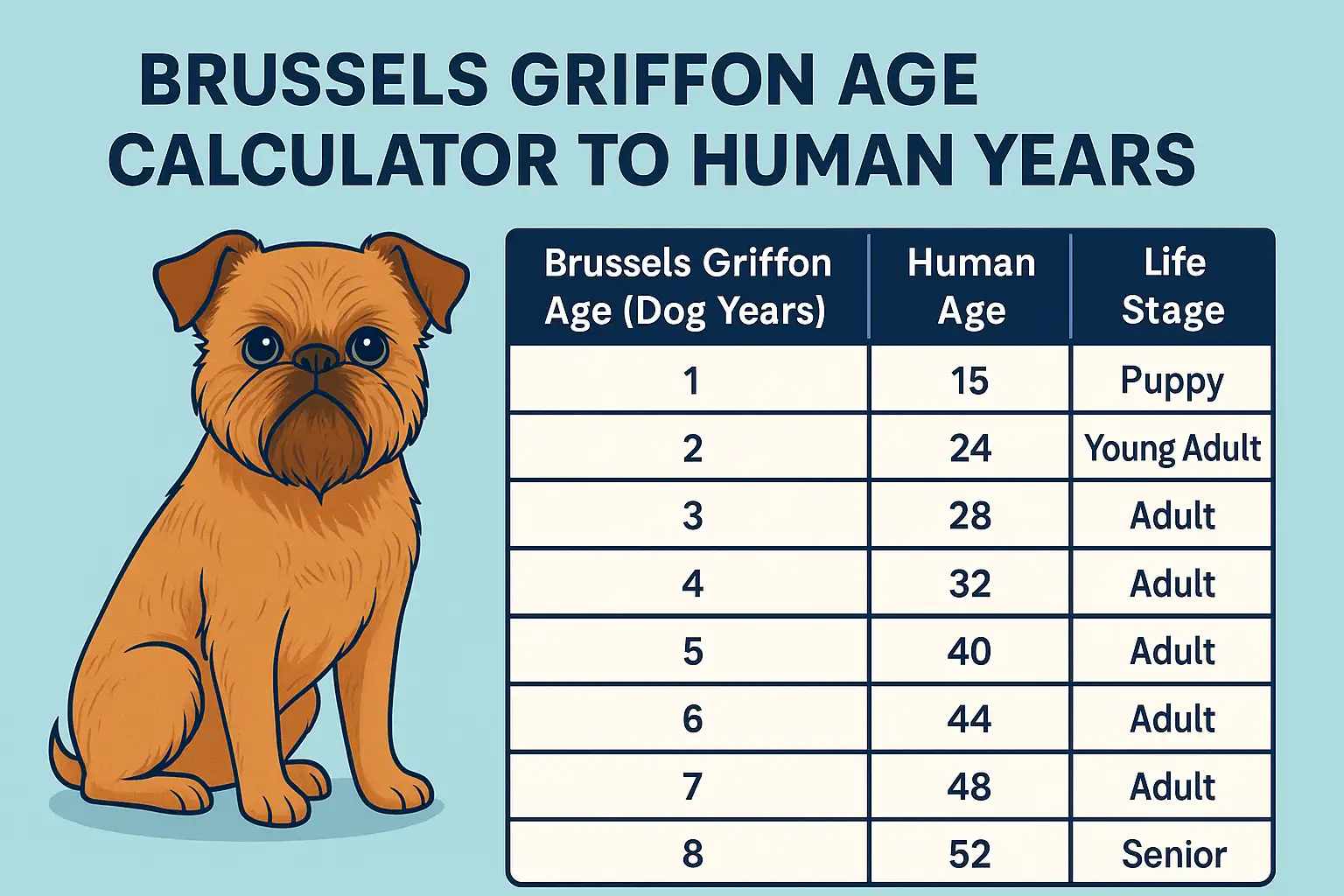
Age can also affect how often grooming support is needed. To better understand your dog’s life stage, you can use the Brussels Griffon Dog Age Calculator and compare it with the Brussels Griffon Age Chart to Human Years.
Professional Grooming, Seasonal Shedding, and Routine Summary
Some Brussels Griffon grooming tasks are easy to manage at home, while others are better handled by a professional groomer. The right choice depends on coat type, grooming style, matting risk, age, and your dog’s comfort level.
Home grooming vs professional grooming
Many owners can handle brushing, bathing, basic face cleaning, nail checks, ear checks, and simple coat maintenance at home. These regular tasks help control shedding, prevent tangles, and make it easier to notice skin or coat changes early.
Professional grooming is especially helpful for:
- Rough coat Brussels Griffon haircuts and coat shaping
- Hand-stripping wire coats
- Fixing tight mats or heavy tangles
- Face, beard, paw, and sanitary trimming
- Nail trimming for nervous dogs
- Senior dogs that need slower, gentler handling
If your Brussels Griffon becomes scared, stiff, reactive, or uncomfortable during grooming, a professional groomer is usually the safer choice. Grooming should never feel painful or forced.
Seasonal grooming and shedding
Brussels Griffon shedding can become more noticeable during spring and fall, especially in smooth-coated dogs. Smooth coats release loose hair more visibly, while rough coats may hold dead hair inside the wiry coat until it is brushed, combed, or hand-stripped.
During shedding seasons:
- Brush smooth coats more often to remove loose hair
- Comb rough coats carefully to remove dead hair and prevent tangles
- Check the beard, legs, chest, and behind the ears for mats
- Avoid bathing too often because it can dry the skin
- Wash bedding more often to reduce loose hair, odor, and dander
Cold weather does not mean grooming should stop. Mats, dirty beards, long nails, wax buildup, and dental issues can happen year-round.
Common Brussels Griffon grooming mistakes to avoid
Many grooming problems come from small mistakes repeated over time. Avoiding these mistakes can protect your Brussels Griffon’s coat, skin, and comfort.
- Bathing too often and drying out the skin
- Using human shampoo instead of dog shampoo
- Ignoring the beard and face on rough-coated dogs
- Pulling hard on tangles or mats
- Shaving a rough coat without understanding the texture change
- Skipping dental care
- Waiting too long between nail trims
- Using the same grooming routine for smooth and rough coats
A good Brussels Griffon grooming routine should be consistent, gentle, and matched to the dog’s coat type. Slow handling builds trust and makes future grooming easier.
Step-by-step Brussels Griffon grooming routine
- Brush the coat based on coat type: 1-2 times per week for smooth coats and 2-3 times per week for rough coats.
- Comb the beard, face, legs, and longer areas on rough-coated Brussels Griffons to prevent tangles.
- Clean the beard and face several times per week for rough coats, especially after meals.
- Check the eyes and mouth area for staining, moisture, odor, or trapped debris.
- Trim the nails every 3-4 weeks to prevent discomfort and posture issues.
- Check and clean the ears every 1-2 weeks if needed to prevent wax buildup and irritation.
- Brush the teeth several times per week using dog toothpaste.
- Bathe every 4-6 weeks using a gentle dog shampoo, unless your dog gets dirty sooner.
- Schedule professional grooming every 6-8 weeks for rough coats if trimming, shaping, or hand-stripping is needed.
Following this routine helps control Brussels Griffon shedding, protect the skin, prevent matting, maintain the beard and face, and keep your dog clean, comfortable, and healthy.
Brussels Griffon Grooming FAQ
Are Brussels Griffons high maintenance?
Brussels Griffons are moderately high maintenance compared to some small breeds. Smooth-coated dogs are easier to maintain but may shed more. Rough-coated dogs shed less but need more brushing, beard care, coat shaping, and professional grooming every six to eight weeks.
Do Brussels Griffons shed a lot?
Brussels Griffons do not usually shed heavily, but smooth-coated Brussels Griffons can shed a noticeable amount, especially during seasonal changes. Rough-coated Brussels Griffons shed much less, but their coat still needs brushing, combing, and dead hair removal.
Are Brussels Griffons hypoallergenic?
Brussels Griffons are not truly hypoallergenic. Rough-coated Brussels Griffons may shed less than smooth-coated dogs, but all dogs can produce dander, saliva proteins, and skin oils that may trigger allergies.
How often should a Brussels Griffon be professionally groomed?
Rough-coated Brussels Griffons usually need professional grooming every six to eight weeks, especially if they need hand-stripping, coat shaping, beard trimming, or mat removal. Smooth-coated Brussels Griffons rarely need professional haircuts but may still benefit from nail trimming or ear cleaning support.
What brush is best for a Brussels Griffon?
A soft bristle brush or rubber grooming brush works well for smooth-coated Brussels Griffons. Rough-coated Brussels Griffons usually need a slicker brush for the body and a metal comb for the beard, face, legs, and longer coat areas.
How often should I bathe my Brussels Griffon?
Most Brussels Griffons only need a bath every four to six weeks unless they get dirty sooner. Bathing too often can dry the skin, increase itching, and make the coat look dull. Always use a gentle dog shampoo.
Can you shave a Brussels Griffon?
Routine shaving is not recommended for Brussels Griffons. Smooth-coated dogs do not need shaving, and shaving rough-coated dogs can soften the natural wiry texture. If the coat is severely matted, a professional groomer may trim it shorter for comfort.
What is the best grooming style for a Brussels Griffon?
The best grooming style depends on coat type and lifestyle. Smooth-coated Brussels Griffons usually need simple coat maintenance, while rough-coated dogs often do best with a natural rough coat, neat pet trim, face shaping, beard care, and hand-stripping or trimming when needed.
Final Thoughts on Brussels Griffon Shedding and Grooming
Brussels Griffon grooming is easier when you understand the difference between smooth and rough coats. Smooth-coated Brussels Griffons usually shed more and need regular brushing, while rough-coated Brussels Griffons shed less but need more coat care, beard cleaning, trimming, and sometimes hand-stripping.
The best routine is simple, gentle, and consistent: brush based on coat type, bathe only when needed, keep the beard and face clean, trim the nails, check the ears, and care for the teeth. As your dog gets older, grooming needs may also change, so using the Brussels Griffon Dog Age Calculator can help you better understand your dog’s life stage and care needs.
More Brussels Griffon Resources
Use these related Brussels Griffon guides for topics that are covered in more detail on their dedicated pages:

Ata Ur Rehman is the founder of Pet Age in Human Years Calculator, an educational platform that provides age conversion charts and lifespan guides for dogs, cats, birds, and other companion animals. His work focuses on helping pet owners understand how animal ages translate into human years using commonly accepted age conversion formulas and published lifespan averages.
The website compiles breed and species lifespan data from kennel clubs, breed organizations, and general animal lifespan studies to present simple and easy-to-understand guides for pet owners worldwide.
This website was created to centralize animal age conversion charts into one easy reference platform for pet owners.
This article is for general education. For symptoms, medication, diet changes, or health concerns, use a qualified veterinarian who can assess your individual pet.