On this page
Bringing home a new puppy is exciting, but it can also feel overwhelming. One day your puppy seems to understand something, and the next day they forget it completely. That is normal. Puppies are still learning how to live in a home, follow a routine, control their body, and understand what you expect from them.
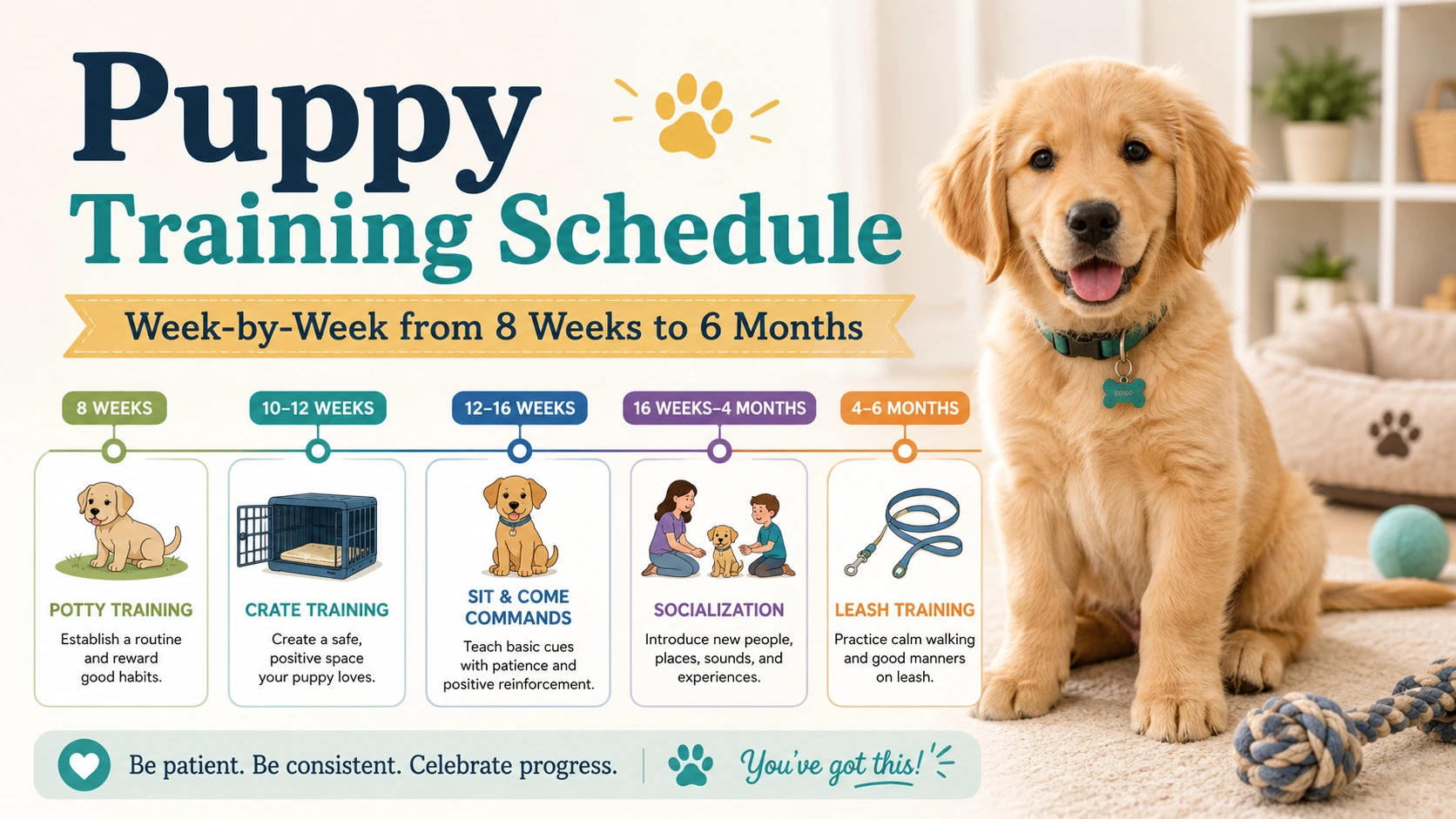
This puppy training schedule gives you a simple week-by-week guide from 8 weeks to 6 months. It shows what to focus on at each age, including potty training, crate comfort, basic commands, socialization, leash practice, bite control, and daily routines.
The goal is not to make your puppy perfectly trained by 6 months. The goal is to build strong habits slowly, without confusing or overwhelming your puppy. Use this schedule as a practical roadmap, and adjust it based on your puppy’s confidence, energy level, and progress.
Quick Puppy Training Schedule at a Glance
A good puppy training schedule should match your puppy’s age. An 8-week-old puppy cannot focus like a 5-month-old puppy, and a new puppy should not be expected to understand house rules immediately.
Here is a simple puppy schedule by age to help you know what to teach first.
| Puppy Age | Main Training Focus | What to Teach |
|---|---|---|
| 8–10 weeks | Settling in and routine | Potty routine, crate comfort, name response, gentle handling, short play sessions |
| 10–12 weeks | Basic habits | Sit, come, short leash introduction, alone-time practice, better potty timing |
| 12–16 weeks | Socialization and manners | Safe exposure to people, sounds, places, bite control, leash basics, wait, leave it |
| 4–5 months | Building consistency | Stay, drop it, stronger recall, calm greetings, loose leash walking |
| 5–6 months | Distraction training | Longer stays, better leash manners, more reliable commands, routine around distractions |
This schedule works best when training is built into your puppy’s daily routine. You do not need long training sessions. In fact, short and repeated practice usually works better for a young puppy.
For example, instead of trying to train for 30 minutes at once, you can practice “sit” before meals, “come” during play, crate comfort during nap time, and potty training after sleep, food, and play. This makes training feel natural instead of forced.
The most important thing in the first few months is consistency. Your puppy learns faster when the same rules, words, and routines are repeated every day.
Before You Start: What a New Puppy Can Realistically Learn
Before following any puppy training schedule, it helps to understand what a young puppy can and cannot do yet.
A new puppy is not being stubborn when they have accidents, bite your hands, cry in the crate, or forget a command. Most puppies are still developing bladder control, attention span, confidence, and impulse control. They need repetition, patience, and a predictable routine.
At 8 to 12 weeks old, your puppy can start learning simple habits, but they should not be expected to behave perfectly. Training at this age should focus on small wins.
Your puppy can begin learning:
- Where to go potty
- Their name
- How to feel safe in the crate
- That gentle handling is normal
- Simple commands like sit and come
- That biting people ends play
- That good behavior brings rewards
Your puppy is probably not ready for:
- Long training sessions
- Perfect leash walking
- Being left alone for long periods
- Full potty control
- Ignoring exciting distractions
- Reliable recall outdoors
- Advanced obedience
A helpful puppy routine should include potty breaks, meals, naps, play, training, and calm time. Sleep is especially important because tired puppies often bite more, listen less, and become harder to manage.
Keep training sessions short. A few minutes at a time is enough for young puppies. You can repeat these short sessions several times throughout the day, especially before meals, after potty breaks, and during play.
The best mindset is this: your puppy is not just learning commands. They are learning how your home works.
8 to 10 Weeks Puppy Training Schedule
At 8 to 10 weeks, your puppy is still very young. This stage is mostly about helping them feel safe, learn the home routine, and begin simple habits. Do not worry about perfect obedience yet. Your main goal is to create a calm foundation.
This is usually the age when many puppies first come home, so everything is new: the people, smells, rooms, crate, sounds, and daily routine. A new puppy may cry at night, have potty accidents, chew things, or follow you everywhere. That does not mean training is failing. It means your puppy is adjusting.
Main Training Goals at 8 to 10 Weeks
The first part of your puppy training schedule should focus on simple daily habits.
Start with potty training. Take your puppy out often, especially after waking up, eating, drinking, playing, and before bedtime. At this age, puppies cannot hold their bladder for long, so frequent potty breaks are more helpful than expecting them to “tell you” when they need to go.
Crate training should also begin gently. The crate should feel like a safe resting space, not a punishment. Let your puppy explore it with the door open. Add a soft bed or blanket if safe for your puppy, and use treats or meals to create a positive feeling around the crate.
Name recognition is another important early skill. Say your puppy’s name in a happy voice, and reward them when they look at you. This is the first step toward better focus and recall later.
You can also begin gentle handling. Touch your puppy’s paws, ears, collar, mouth area, and body calmly for short moments. Reward them when they stay relaxed. This helps prepare them for grooming, vet checks, and everyday care.
At this age, your puppy may bite hands, clothes, or feet during play. Instead of punishing them, redirect them to a toy. If biting continues, pause play for a moment so they learn that biting people ends the fun.
Focus on these skills:
- Potty routine
- Crate comfort
- Name response
- Gentle handling
- Calm feeding routine
- Redirecting biting and chewing
- Very short sit and come practice
Training should feel light and positive. One or two minutes at a time is enough.
Simple Daily Routine for an 8 to 10 Week Old Puppy
A young puppy needs a predictable puppy routine. The routine does not have to be strict by the minute, but the order of the day should stay similar.
A simple day may look like this:
| Time of Day | Routine |
|---|---|
| Morning | Wake up, potty break, breakfast, potty again |
| After breakfast | Short play, 1–2 minutes of training, nap |
| Midday | Potty break, meal if feeding multiple times, gentle play, crate rest |
| Afternoon | Potty break, short training, safe chewing, nap |
| Evening | Dinner, potty break, calm play, gentle handling |
| Night | Final potty break, crate or sleep area, quiet bedtime routine |
The key pattern is simple: sleep, potty, eat, potty, play, potty, nap.
Many potty accidents happen because owners wait too long. At this age, take your puppy out before they make a mistake. Praise them immediately after they potty in the right place.
What Not to Expect Yet
At 8 to 10 weeks, your puppy will not be fully trained. They may understand something one day and forget it the next day. That is normal.
Do not expect your puppy to:
- Sleep through every night immediately
- Hold potty for long periods
- Walk nicely on a leash
- Stop biting completely
- Stay calm around every person or sound
- Follow commands when distracted
- Understand all house rules
This stage is about building trust and routine. If your puppy feels safe and starts learning where to potty, where to sleep, and how to respond to their name, you are already making good progress.
10 to 12 Weeks Puppy Training Schedule
From 10 to 12 weeks, your puppy may start becoming more confident. They may explore more, play harder, and test boundaries. This is a good time to build on the basics without making training too serious or too long.
Your puppy is still young, so the main focus should be consistency. Keep using the same words, same potty routine, same crate habits, and same house rules. Repetition is what helps your puppy understand what you want.
Skills to Teach at 10 to 12 Weeks
At this stage, you can begin adding simple commands into your puppy training schedule. These commands should be taught in short, easy sessions.
Start with sit. This is usually one of the easiest commands for puppies to learn. You can ask for a sit before meals, before opening doors, or before giving a toy. This teaches your puppy that calm behavior gets rewards.
Practice come in easy situations. Call your puppy in a happy voice when they are already near you or moving toward you. Reward them with praise, treats, or play. Do not use “come” when you are about to do something your puppy dislikes, such as ending play or giving a bath.
You can also begin teaching down, but keep expectations low. Some puppies learn it quickly, while others need more time.
Leash introduction can start indoors or in a quiet yard. Let your puppy wear a lightweight collar or harness for short periods. Attach the leash and allow them to walk around while you gently guide them. The goal is not perfect walking yet. The goal is helping your puppy feel comfortable with the leash.
Alone-time practice is also important. Leave your puppy safely in the crate or puppy area for very short periods while you are nearby. Gradually increase the time. This helps reduce clingy behavior and builds confidence.
Useful skills at this age include:
- Sit
- Come
- Down
- Short leash practice
- Crate confidence
- Calm alone-time practice
- Waiting briefly before meals
- Redirecting chewing to toys
Keep rewards simple and immediate. Puppies learn best when the reward happens right after the behavior.
Potty Training Progress at This Age
By 10 to 12 weeks, your puppy may start showing a more predictable potty pattern. You may notice they need to go after certain activities, such as waking, eating, drinking, or playing.
This is the time to become more observant. Watch for signs like sniffing, circling, whining, walking toward the door, or suddenly leaving play. These may mean your puppy needs a potty break.
Still, accidents can happen. If your puppy has an accident indoors, clean it properly and adjust the routine. Do not punish your puppy after the accident. They usually will not understand why you are upset, especially if the accident happened even a few minutes earlier.
Instead, focus on prevention:
- Take your puppy out often
- Reward outdoor potty immediately
- Keep your puppy supervised indoors
- Use a crate or safe area when you cannot watch them
- Learn your puppy’s usual potty timing
Potty training is not only about teaching the puppy. It is also about building a routine that makes success easier.
Sample Puppy Routine for 10 to 12 Weeks
At 10 to 12 weeks, your puppy may be ready for slightly more structure, but they still need plenty of sleep and frequent potty breaks.
A simple puppy routine at this age may include:
| Time of Day | Routine |
|---|---|
| Morning | Potty, breakfast, potty again, short training |
| Late morning | Nap or crate rest, potty after waking |
| Midday | Meal, potty, play, short leash practice |
| Afternoon | Nap, potty, short command practice |
| Evening | Dinner, potty, calm play, gentle handling |
| Night | Final potty break, quiet crate routine |
Training can happen in small moments throughout the day. For example, ask for “sit” before putting the food bowl down. Call your puppy with “come” during play. Practice leash walking for a few minutes before a nap.
This stage is not about doing more. It is about repeating the right things often enough that they become normal.
12 to 16 Weeks Puppy Training Schedule
From 12 to 16 weeks, your puppy is entering an important learning stage. They are usually more curious, more playful, and more aware of the world around them. This is the right time to continue basic training while also helping your puppy experience new people, places, sounds, and surfaces in a safe and positive way.
This part of the puppy training schedule should focus on confidence, manners, and socialization. Your puppy does not need to meet every dog or visit every busy place. The goal is to help them learn that normal life is not scary.
Main Training Goals at 12 to 16 Weeks
At this age, your puppy can start practicing more useful everyday skills. Keep training short, but begin asking for better focus.
Continue practicing the basics:
- Sit
- Down
- Come
- Name response
- Crate comfort
- Potty routine
Then slowly add new skills like wait, leave it, and better leash manners.
“Wait” is useful before meals, doors, and getting out of the crate. Start with only one or two seconds. Ask your puppy to pause, reward them, and then release them. Do not expect a long wait yet.
“Leave it” can help with unsafe objects, dropped food, and things your puppy should not chew. Start with easy practice at home. Reward your puppy when they look away from the item and back toward you.
Leash training should still be gentle. Your puppy may pull, stop, jump, or bite the leash. This is normal. Practice in quiet places first. Reward your puppy when they walk near you, look at you, or follow your movement.
Bite control also remains important. Puppies at this age often bite during excitement, tiredness, or play. Keep redirecting to toys, pause play when biting gets too hard, and make sure your puppy is getting enough naps.
Safe Socialization During This Stage
Socialization does not mean forcing your puppy into busy or stressful situations. It means giving your puppy positive experiences with the world at a pace they can handle.
Your puppy can be gently exposed to:
- Different people
- Household sounds
- Car rides
- Doorbells
- Vacuum sounds from a distance
- Different floor surfaces
- People wearing hats, bags, or sunglasses
- Calm dogs that are safe and healthy
- New outdoor sights and sounds
Keep each experience short and positive. If your puppy seems nervous, increase distance and reward calm behavior. Do not drag them toward something that scares them.
For public places, follow your vet’s guidance, especially if your puppy has not completed vaccinations yet. You can still socialize safely by carrying your puppy, sitting in the car near a new place, inviting trusted visitors, or exposing them to sounds at home.
The aim is not to make your puppy fearless. The aim is to teach them, “New things can be safe.”
Building Better Manners at Home
By 12 to 16 weeks, your puppy may start becoming more active in the home. They may jump on people, steal socks, chew furniture, or bark for attention. This is where your daily puppy routine becomes very important.
Start teaching simple house manners:
- Sit before meals
- Sit before greeting people
- Wait before going through doors
- Chew toys instead of furniture
- Calm behavior before attention
- Four paws on the floor before being greeted
Do not only correct bad behavior. Show your puppy what to do instead.
For example, if your puppy jumps, ask for a sit and reward calm greeting. If your puppy chews a shoe, trade it for a toy. If your puppy barks for attention, wait for a quiet moment before giving attention.
This stage is where many owners accidentally teach bad habits without realizing it. If jumping, biting, barking, or stealing items gets attention every time, your puppy may repeat those behaviors. Stay consistent and reward the behavior you want to see more often.
4 to 5 Months Puppy Training Schedule
At 4 to 5 months, your puppy may look more grown up, but they are still very much in training. They may have more energy, more confidence, and a stronger desire to explore. This is the time to strengthen the skills they already know and begin practicing them in slightly more distracting places.
Your puppy may also start testing limits. They might ignore a command they used to follow, pull more on the leash, or get excited around people and dogs. This does not mean your puppy has forgotten everything. It usually means they need more practice in real-life situations.
Skills to Strengthen at 4 to 5 Months
This stage of the puppy training schedule should focus on making basic skills more reliable.
Keep practicing:
- Sit
- Down
- Come
- Stay
- Leave it
- Drop it
- Loose leash walking
- Calm greetings
“Stay” can now become a little longer, but increase slowly. Start with a few seconds, then add distance only after your puppy understands the idea. Do not make it too hard too quickly.
“Drop it” is useful for toys, stolen items, and anything unsafe your puppy picks up. Practice with toys first, not only during emergencies. Offer a treat or another toy in exchange, then give the original toy back sometimes so your puppy does not think “drop it” always means losing something.
Recall should still be practiced in easy, positive ways. Call your puppy when you are confident they will come. Reward them well. Avoid calling them only when fun is ending, or they may start ignoring the word.
Leash walking should also improve at this age, but do not expect perfect walks yet. Reward your puppy when they walk near you, check in with you, or return to your side after pulling ahead.
Increasing Distractions Slowly
A common mistake at this age is moving too fast. A puppy may sit perfectly in the kitchen but ignore you outside. That does not mean they are being stubborn. It means the outside world is harder.
Training should move through levels.
Start in a quiet room. Then practice in another room. Then try the yard. Then a quiet street. Then a slightly busier place.
When distractions increase, make the task easier. For example, if your puppy can stay for 10 seconds indoors, ask for only 2 seconds outside. If they can come from across the room, practice from a shorter distance outdoors.
Good distraction training includes:
- Practicing commands in different rooms
- Rewarding eye contact outside
- Using treats during walks
- Asking for simple commands near mild distractions
- Keeping distance from exciting triggers
- Ending sessions before your puppy becomes overwhelmed
The goal is not to force your puppy to obey in every situation immediately. The goal is to slowly teach them that your cues still matter, even when life is exciting.
Adjusting the Daily Puppy Routine
At 4 to 5 months, your puppy may be able to handle slightly longer walks and more structured activity, but they still need rest. A tired puppy is often harder to train, not easier.
Your daily puppy routine may now include:
- Regular potty breaks
- Two or three short training sessions
- Short walks
- Playtime
- Chew time
- Crate or rest time
- Calm evening routine
You can also begin adding more real-life training into the day. Ask for a sit before clipping the leash. Practice wait before opening the door. Reward calm behavior when guests arrive. Ask for drop it during toy play.
This is the stage where training should become part of normal life. Your puppy should not only listen when you are holding treats in a quiet room. They should slowly learn that the same rules apply during meals, walks, play, greetings, and daily routines.
5 to 6 Months Puppy Training Schedule
At 5 to 6 months, your puppy may start looking more mature, but their behavior may still feel unpredictable. Some puppies become more confident, more distracted, and more interested in testing boundaries. This is normal, and it is one reason consistency matters so much at this stage.
This part of the puppy training schedule should focus on strengthening what your puppy already knows. Instead of adding too many new commands, work on making the important skills more reliable in daily life.
Main Training Goals at 5 to 6 Months
By this age, your puppy should keep practicing basic commands, but with slightly more difficulty.
Focus on:
- Coming when called
- Longer stays
- Better leash manners
- Calm greetings
- Waiting before doors and meals
- Settling quietly
- Dropping items when asked
- Ignoring mild distractions
Recall is especially important. Practice “come” in safe spaces first, such as inside the house, in a fenced yard, or on a long training leash. Reward your puppy well when they come to you. A strong recall should feel exciting and worth it for your puppy.
Leash walking may also need more attention at this age. Your puppy may pull because they are stronger, faster, and more interested in the outside world. When they pull, avoid turning the walk into a constant battle. Stop, change direction, or reward them when they come back near you.
You can also begin teaching your puppy to settle. This means they learn how to relax when nothing exciting is happening. Practice this after exercise or play, when your puppy is more ready to calm down. Give them a chew toy, reward quiet behavior, and keep the environment calm.
Preparing for Puppy Adolescence
Around this stage, some puppies begin entering early adolescence. This can make training feel harder for a while. Your puppy may ignore cues, become more distracted, or act like they have forgotten things they already learned.
Do not panic and do not stop training.
This is the time to go back to basics. If your puppy stops listening outside, practice indoors again. If they pull too much on walks, return to shorter, easier walks. If they forget “stay,” reduce the time and distance.
Puppy adolescence does not mean your training has failed. It means your puppy needs more repetition and clearer boundaries.
Keep these rules simple:
- Reward good behavior often
- Keep commands consistent
- Do not repeat cues again and again
- Practice in easier places before harder places
- Avoid letting bad habits become daily habits
- Keep sessions short enough that your puppy can succeed
At this age, consistency is more important than intensity. Ten small training moments in a day can be more useful than one long session.
What Your Puppy Should Be Improving by 6 Months
By 6 months, your puppy does not need to be perfect, but you should see progress.
Your puppy should be improving in areas like:
- Fewer potty accidents
- Better response to their name
- More comfort in the crate or rest area
- Basic commands like sit, down, come, and stay
- Walking on a leash with less pulling
- Better bite control
- More predictable daily routine
- Calmer behavior before meals, doors, and greetings
Some puppies will be ahead in certain areas and behind in others. That is normal. For example, one puppy may be great with potty training but still struggle with leash walking. Another may learn commands quickly but get too excited around visitors.
Use the 6-month mark as a progress checkpoint, not a final exam.
Sample Daily Puppy Routine by Age
A puppy routine helps your puppy understand what happens next. This can reduce accidents, biting, restlessness, and attention-seeking behavior because your puppy is not guessing all day.
The exact routine depends on your schedule, but the pattern should stay consistent: potty, meals, play, training, naps, walks, and calm time.
Daily Routine for 8 to 12 Week Old Puppies
At 8 to 12 weeks, your puppy needs frequent potty breaks, short play sessions, and lots of sleep. Training should be very short and built into normal activities.
A simple routine may look like this:
| Time of Day | What to Do |
|---|---|
| Early morning | Wake up and go straight outside for potty |
| Breakfast | Feed, then take puppy out again |
| Morning | Short play, 1–2 minutes of training, then nap |
| Midday | Potty, meal if needed, gentle play, crate rest |
| Afternoon | Potty, short command practice, chew toy, nap |
| Evening | Dinner, potty, calm play, handling practice |
| Before bed | Final potty break, quiet crate or sleep routine |
At this age, your puppy should go out after waking, eating, drinking, and playing. Waiting too long often leads to accidents.
Daily Routine for 3 to 4 Month Old Puppies
At 3 to 4 months, your puppy may be ready for slightly more training and safe socialization. They still need naps, but they may stay awake longer than before.
A routine at this age may include:
| Time of Day | What to Do |
|---|---|
| Morning | Potty, breakfast, potty, short training |
| Mid-morning | Walk or safe outdoor exposure, then nap |
| Midday | Potty, play, command practice, rest |
| Afternoon | Socialization activity or leash practice |
| Evening | Dinner, potty, calm house manners practice |
| Night | Quiet time, final potty break, bedtime |
This is a good age to practice sit, come, wait, leave it, leash basics, and calm greetings. Keep each session short and positive.
Daily Routine for 5 to 6 Month Old Puppies
At 5 to 6 months, your puppy may need more structured exercise and training, but they still need calm periods. Without rest, many puppies become mouthy, jumpy, or difficult to manage.
A routine may look like this:
| Time of Day | What to Do |
|---|---|
| Morning | Potty, breakfast, short walk or training |
| Mid-morning | Rest or crate time |
| Midday | Potty, play, recall practice, chew time |
| Afternoon | Walk, leash practice, or mild distraction training |
| Evening | Dinner, calm greetings, stay or settle practice |
| Night | Quiet time, final potty break, bedtime routine |
At this stage, the puppy routine should support real-life behavior. Practice commands during daily moments, not only during formal training sessions. For example, ask for wait before opening the door, sit before meals, and drop it during play.
Common Puppy Training Mistakes to Avoid
Even a good puppy training schedule can become harder to follow if the daily habits are inconsistent. Most training problems do not happen because the puppy is “bad.” They usually happen because the puppy is confused, overtired, under-supervised, or rewarded for the wrong behavior by accident.
Training for Too Long
Young puppies do not need long training sessions. When sessions are too long, puppies lose focus and may start biting, jumping, barking, or walking away.
Keep training short and successful. For many puppies, a few minutes is enough. You can repeat short sessions several times a day instead of forcing one long session.
Expecting Perfect Potty Training Too Early
Potty training takes time. Puppies have small bladders, and accidents are part of the process.
If your puppy keeps having accidents, the routine may need adjusting. Take them out more often, supervise them more closely, and reward outdoor potty immediately. Punishing accidents usually creates fear and confusion instead of better potty habits.
Skipping Socialization
Some owners focus only on commands and forget socialization. But a puppy also needs to learn how to feel calm around normal life.
Socialization should be safe, gentle, and positive. Your puppy should experience different people, sounds, surfaces, and environments without being overwhelmed. A confident puppy is often easier to train because they are not reacting fearfully to everything around them.
Being Inconsistent With House Rules
If your puppy is allowed to jump sometimes but corrected other times, they will not understand the rule. If one person allows couch chewing and another person stops it, the puppy becomes confused.
Choose simple house rules and keep them the same. Everyone in the home should use the same cues and reward the same behaviors.
Punishing Instead of Redirecting
Puppies need to be taught what to do, not just what not to do.
If your puppy bites your hand, redirect to a toy. If they jump, reward sitting. If they chew furniture, guide them to an approved chew. If they bark for attention, reward quiet behavior instead.
Redirecting does not mean ignoring bad behavior. It means showing your puppy the correct behavior in a way they can understand.
How to Adjust the Schedule for Your Puppy
A puppy training schedule is a guide, not a strict rule. Some puppies learn quickly in one area and slowly in another. That does not always mean something is wrong. It usually means the schedule needs to match your puppy’s age, confidence, energy level, and home environment.
If your puppy is struggling, do not rush to the next skill. Go back to the easier version of the lesson and help your puppy succeed.
For example, if your puppy can sit inside but ignores you outside, practice in a quiet room again, then the yard, then a quiet outdoor area. If your puppy keeps having potty accidents, increase potty breaks instead of assuming they understand the routine.
Small puppies may need more frequent potty breaks. Nervous puppies may need slower socialization. High-energy puppies may need more structured play, training, and rest. Some puppies become too excited when they are tired, so more naps can sometimes improve behavior more than more exercise.
You may need to adjust the puppy routine if:
- Your puppy is having frequent potty accidents
- Your puppy becomes bitey or wild in the evening
- Your puppy cannot focus during training
- Your puppy seems scared during socialization
- Your puppy is pulling too much on walks
- Your puppy is ignoring commands in new places
When this happens, make the training easier. Shorten the session, reduce distractions, use better rewards, or return to a familiar place.
The best schedule is one your puppy can actually follow. Progress should feel steady, not forced.
Final Puppy Training Checklist from 8 Weeks to 6 Months
By the time your puppy reaches 6 months, the goal is not perfection. The goal is a strong foundation.
Use this checklist to see what you should be working on during the first few months.
Potty Training
Your puppy should be learning where to potty and following a more predictable potty routine. Accidents may still happen, but they should become less frequent with consistency.
Focus on:
- Taking your puppy out after sleep, meals, water, and play
- Rewarding outdoor potty immediately
- Supervising indoors
- Using a crate or safe area when needed
- Learning your puppy’s potty signals
Crate Comfort and Rest Time
Your puppy should see the crate or rest area as a safe place, not a punishment. Crate training also helps with naps, bedtime, travel, and short alone-time practice.
Focus on:
- Feeding meals or treats near the crate
- Keeping crate time positive
- Using the crate for naps
- Building alone time slowly
- Avoiding the crate as punishment
Basic Commands
Your puppy should be practicing simple commands that help in daily life.
Useful commands include:
- Name response
- Sit
- Down
- Come
- Stay
- Wait
- Leave it
- Drop it
These commands should first be taught in easy places before being practiced around distractions.
Leash Basics
Your puppy does not need perfect leash walking by 6 months, but they should be getting more comfortable walking with you.
Focus on:
- Wearing a collar or harness calmly
- Walking on a leash without fear
- Checking in with you during walks
- Reducing pulling step by step
- Practicing in quiet areas before busy places
Socialization
Your puppy should be having safe, positive exposure to normal life. This does not mean overwhelming them or forcing them into every situation.
Focus on:
- Different people
- New sounds
- Different surfaces
- Car rides
- Calm dogs when safe
- Household noises
- Outdoor environments from a safe distance
Good socialization builds confidence. It should help your puppy feel safer in the world, not more stressed.
Bite Control and Chewing
Puppy biting and chewing are normal, but your puppy should be learning what is allowed.
Focus on:
- Redirecting biting to toys
- Ending play briefly when biting gets too hard
- Giving safe chew options
- Keeping shoes, socks, and unsafe items away
- Rewarding calm play
Calm Manners
By 6 months, your puppy should be practicing better manners around the home.
Focus on:
- Sitting before meals
- Waiting before doors
- Greeting people more calmly
- Settling after play
- Not jumping for attention
- Following the same house rules every day
A good puppy training schedule is not about doing everything perfectly. It is about repeating simple habits until they become normal.
FAQs About Puppy Training Schedules
What is a good training schedule for a new puppy?
A good training schedule for a new puppy includes potty breaks, meals, naps, short training sessions, crate practice, playtime, and calm socialization. The schedule should be simple and repeated daily so your puppy knows what to expect.
For young puppies, training should happen in short moments throughout the day. Practice sit before meals, come during play, and potty breaks after waking, eating, drinking, and playing.
What should I teach my puppy first?
The first things to teach a puppy are potty routine, name response, crate comfort, gentle handling, and simple commands like sit and come.
Do not start with difficult obedience. A new puppy first needs to learn where to potty, where to sleep, how to feel safe, and how to respond to you.
How long should puppy training sessions be?
Puppy training sessions should be short. A few minutes at a time is usually enough for young puppies.
Instead of one long session, train several times during the day. Short, successful practice helps your puppy stay focused and prevents frustration.
What should a puppy know by 12 weeks?
By 12 weeks, a puppy may be starting to understand their name, potty routine, crate time, sit, come, and simple house habits. They may also be learning gentle handling and early leash comfort.
Your puppy will not be perfect at this age. Accidents, biting, and short attention spans are still normal.
What should a puppy know by 6 months?
By 6 months, your puppy should be improving with potty habits, crate comfort, basic commands, leash walking, recall, bite control, and daily routine.
They may still get distracted, excited, or inconsistent, especially in new places. Keep practicing and make training part of everyday life.
Is it too late to train a 6 month old puppy?
No, it is not too late to train a 6 month old puppy. Many puppies are still learning at this age, and some may be entering a more distracted stage.
Start with the basics, keep sessions short, reward good behavior, and practice in easy places before adding distractions. Consistency matters more than speed.

Ata Ur Rehman is the founder of Pet Age in Human Years Calculator, an educational platform that provides age conversion charts and lifespan guides for dogs, cats, birds, and other companion animals. His work focuses on helping pet owners understand how animal ages translate into human years using commonly accepted age conversion formulas and published lifespan averages.
The website compiles breed and species lifespan data from kennel clubs, breed organizations, and general animal lifespan studies to present simple and easy-to-understand guides for pet owners worldwide.
This website was created to centralize animal age conversion charts into one easy reference platform for pet owners.
This article is for general education. For symptoms, medication, diet changes, or health concerns, use a qualified veterinarian who can assess your individual pet.