On this page
Bringing home a new puppy is exciting, but the first week can feel stressful if you are not prepared. You may start wondering what to buy, where your puppy should sleep, how often they need to eat, and what to do when accidents happen in the house.
This new puppy checklist will help you focus only on what matters during the first week. You do not need every puppy product in the store. You need the right puppy supplies, a safe home setup, a simple routine, and a few health steps to make your puppy’s first days easier.
The goal is simple: help your puppy feel safe, help you stay organized, and avoid last-minute panic after your puppy arrives.
New Puppy Checklist: Quick First-Week Essentials
Before your puppy comes home, it helps to divide your checklist into two parts: things you need to buy and things you need to prepare.
A new puppy needs food, water, sleep, potty breaks, safety, comfort, and basic care. If you cover those areas first, you will already have the most important new puppy essentials ready.
Must-Have Puppy Supplies
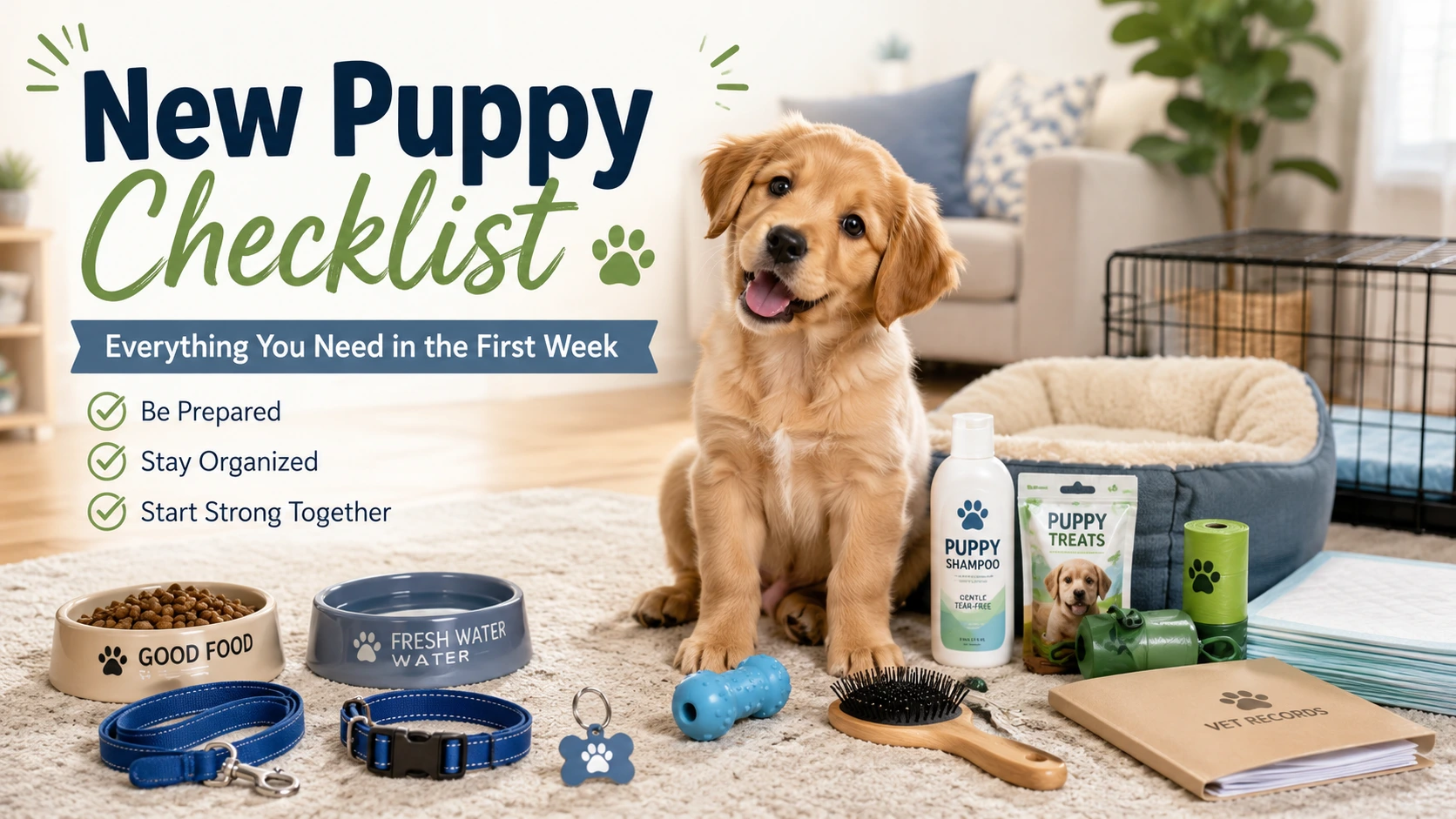
Here are the basic puppy supplies you should have before bringing your puppy home:
- Puppy food
- Food and water bowls
- Collar or harness
- Leash
- ID tag
- Crate, puppy bed, or safe sleeping area
- Puppy pads, if you plan to use them
- Poop bags
- Puppy-safe chew toys
- Soft training treats
- Enzymatic cleaner for accidents
- Paper towels or cleaning cloths
- Grooming brush
- Puppy-safe shampoo
- Blanket or comfort item
- Baby gate or playpen, if needed
You do not need to buy everything at once. Start with the items that support your puppy’s first-week needs: eating, sleeping, potty training, cleaning, safety, and comfort.
For example, a fancy toy basket can wait. But food bowls, a leash, cleaning spray, and a safe place to sleep should be ready from day one.
First-Week Care Essentials
Some of the most important items on a new puppy checklist are not products. They are simple things you need to arrange or plan before your puppy arrives.
During the first week, you should have:
- A feeding schedule
- A potty routine
- A safe sleeping spot
- A puppy-proofed room or area
- A vet appointment booked
- A plan for the first night
- A calm space where your puppy can rest
- Important puppy records kept in one place
The first week is not about perfect training. It is about helping your puppy adjust. Your puppy has just left a familiar place, so the routine should be simple and predictable.
Feed your puppy at regular times. Take them to the potty area often. Keep their sleeping area quiet. Give them time to rest instead of overwhelming them with too many visitors, loud sounds, or constant handling.
A simple first-week routine will help your puppy settle faster and make daily care easier for you.
Puppy Supplies You Should Buy Before Bringing Your Puppy Home
The best time to buy puppy supplies is before your puppy arrives. Once your puppy is home, you will be busy managing feeding, potty breaks, sleep, and accidents. Having the basics ready saves stress.
Focus on practical supplies first. A new puppy does not care about expensive accessories. They need safe food, fresh water, a comfortable sleeping space, potty supplies, and things that help them chew, play, and adjust.
Feeding Supplies
Start with the food your puppy is already eating, if possible. A sudden food change can upset your puppy’s stomach, so it is better to continue the same food at first and change gradually later if needed.
For feeding, you will need:
- Puppy food suitable for your puppy’s age and size
- Two bowls: one for food and one for water
- Soft training treats
- Measuring cup or scoop
- Safe chew items made for puppies
Choose bowls that are easy to clean and stable enough that your puppy cannot easily tip them over. Stainless steel bowls are usually a practical choice because they are durable and simple to wash.
Treats are useful for early training, but keep them small. In the first week, treats can help with name recognition, crate introduction, potty rewards, and simple commands.
Avoid giving random human foods unless you are sure they are safe for puppies. The first week is not the time to experiment with your puppy’s diet.
Sleeping and Crate Supplies
Your puppy needs a safe place to sleep from the first night. This could be a crate, puppy bed, playpen, or a small puppy-safe area.
A crate can be helpful because it gives your puppy a secure space and can support potty training. But it should never feel like punishment. Make it comfortable with a soft blanket or bed, and place it somewhere calm.
For sleeping, you may need:
- Puppy crate or playpen
- Puppy bed or washable blanket
- Soft comfort toy
- Crate mat, if using a crate
- Baby gate, if you are blocking off an area
Do not give your puppy full access to the whole house at night. Too much freedom can lead to accidents, chewing, and stress. A smaller safe area helps your puppy understand where to rest.
The first few nights may be difficult. Your puppy may cry because they are in a new place. Keep the sleeping setup simple, safe, and consistent. Avoid changing the sleeping spot every night, because that can make settling harder.
Cleaning and Potty Supplies
Accidents are normal during the puppy first week. Even if your puppy has started potty training, they are still learning. Having cleaning supplies ready will make accidents easier to handle.
For potty and cleaning, prepare:
- Puppy pads, if you plan to use them
- Poop bags
- Enzymatic cleaner
- Paper towels
- Washable blankets or mats
- Small trash bags
An enzymatic cleaner is especially useful because it helps remove the smell from accidents. If the smell stays, your puppy may return to the same spot again.
Decide early where your puppy should go potty. If you have outdoor access, take your puppy to the same area often. If you are using puppy pads, place them in one consistent location.
During the first week, take your puppy to the potty area after waking up, after eating, after playing, and before bedtime. This simple routine matters more than any product you buy.
How to Prepare Your Home for a New Puppy
A good first week starts before your puppy walks through the door. Puppies are curious, fast, and likely to chew things they should not. Preparing your home early helps prevent accidents, protects your belongings, and makes your puppy feel less overwhelmed.
You do not need to prepare the entire house at once. In fact, it is usually better to start with one safe area and slowly give your puppy more freedom as they learn the routine.
Create a Safe Puppy Area
Choose one main area where your puppy will spend most of their time during the first week. This could be a corner of the living room, a small room, a crate and playpen setup, or a gated area.
This space should include:
- A bed or crate
- Fresh water
- Safe chew toys
- Puppy pads, if you are using them
- Enough room to move around
- No loose wires or unsafe objects
A smaller space helps your puppy settle because they are not trying to explore the whole house at once. It also makes it easier for you to watch them, notice potty signs, and stop chewing before it becomes a habit.
Avoid placing your puppy’s main area somewhere too noisy or isolated. The goal is to keep them near family activity without overwhelming them.
Puppy-Proof Dangerous Areas
Before your puppy arrives, look around your home from their level. Anything on the floor or low shelves may become something to chew, pull, lick, or swallow.
Move or secure:
- Electrical cords
- Shoes and socks
- Small toys or objects
- Cleaning products
- Trash bins
- Houseplants
- Bags, medicines, and cosmetics
- Loose rugs or anything easy to chew
- Food items within reach
If there are stairs, balconies, or rooms you do not want your puppy entering, use baby gates or closed doors. Puppies do not understand danger yet, so it is your job to make the environment safe before problems happen.
This step also protects you from frustration. If your puppy chews your shoes because they were left on the floor, the puppy is not being “bad.” They are being a puppy. Good preparation makes the first week easier for both of you.
Set Up Food, Sleep, and Potty Zones
Your puppy will learn faster when daily areas stay consistent. Try to decide these zones before the first day:
- Where your puppy will eat
- Where your puppy will sleep
- Where your puppy should go potty
- Where your puppy can safely play
Keep the food and water area easy to clean. Keep the sleeping area calm and comfortable. Keep the potty area consistent so your puppy starts building a habit.
If you keep changing these areas, your puppy may become confused. For example, moving puppy pads from one room to another can make accidents more likely. A clear setup helps your puppy understand what is expected.
What to Do During Your Puppy’s First Week at Home
The first week is about adjustment, routine, and trust. Your puppy does not need advanced training right away. They need to learn where they are safe, who takes care of them, when they eat, where they potty, and where they sleep.
Keep the first week simple. Too many changes, visitors, outings, and rules can make your puppy anxious or overstimulated.
Start a Simple Feeding Schedule
Ask the breeder, shelter, rescue, or previous owner what food your puppy has been eating and how often they have been fed. Keeping the food the same for the first few days can help reduce stomach upset.
Set meal times instead of leaving food out all day. A regular feeding schedule also makes potty training easier because you can predict when your puppy may need to go.
A simple feeding routine may look like this:
- Morning meal
- Midday meal
- Evening meal
- Fresh water available throughout the day
The exact number of meals depends on your puppy’s age, size, and vet advice. Young puppies often need more frequent meals than older puppies, so do not guess if you are unsure. Ask your vet what is right for your puppy.
After meals, take your puppy to the potty area. Many puppies need to go soon after eating, so this habit can reduce indoor accidents.
Begin Potty Training Immediately
Potty training starts on the first day, not after your puppy “settles in.” This does not mean you need to be strict or frustrated. It simply means you should start showing your puppy where to go from the beginning.
Take your puppy to the potty area:
- After waking up
- After eating
- After drinking
- After playing
- After naps
- Before bedtime
- Anytime they start sniffing, circling, or looking restless
When your puppy goes in the right place, praise them calmly and reward them quickly. The reward should happen right after they potty, so they understand what they did right.
If your puppy has an accident indoors, clean it properly and move on. Do not shout, punish, or rub their nose in it. That can make puppies scared and confused. Instead, watch more closely next time and take them out sooner.
Potty training takes consistency. The first week is mostly about building the habit.
Keep the First Week Calm
It is natural to want everyone to meet your new puppy, but the first week should not feel like a party. Your puppy is adjusting to a new home, new smells, new people, and a new routine.
Keep things calm by limiting:
- Too many visitors
- Loud noises
- Long outings
- Constant picking up and handling
- Too much play without rest
- Introducing too many new places at once
Puppies need a lot of sleep. If your puppy becomes bitey, wild, or restless, they may be tired rather than naughty. Give them quiet time in their safe area.
A calm first week helps your puppy feel secure. Once they are more comfortable, you can slowly introduce more people, places, and experiences.
Start Gentle Name and Crate Training
You can begin basic training during the puppy first week, but keep it short and positive. The goal is not to teach everything. The goal is to help your puppy connect with you and understand simple routines.
Start with name recognition. Say your puppy’s name in a happy voice. When they look at you, reward them with praise or a small treat. Keep sessions short.
If you are using a crate, introduce it gently. Let your puppy explore it with the door open. Place a treat or toy inside. Feed near the crate or inside it if your puppy is comfortable. Do not force your puppy in or use the crate as punishment.
In the first week, focus on small wins:
- Responding to their name
- Entering the crate calmly
- Following you to the potty area
- Settling in their safe space
- Learning the daily routine
These basics create a strong foundation for future training.
First Vet Visit and Health Items to Check
Puppy supplies are important, but your puppy’s health should also be part of your first-week checklist. Even if your puppy looks active and happy, a vet visit helps confirm that they are growing well and have the right care plan.
Try to book the first vet appointment soon after bringing your puppy home. If your puppy came from a breeder, shelter, or rescue, they may already have some health records. Bring those records with you so the vet can check what has already been done and what still needs to be scheduled.
Book a Vet Appointment
During the first visit, the vet can check your puppy’s weight, general health, teeth, ears, eyes, coat, and overall condition. They can also guide you on vaccines, deworming, flea and tick prevention, and feeding.
This visit is especially important if you are unsure about your puppy’s health history. Do not wait for a visible problem before contacting a vet. The first week is the right time to ask basic questions and make sure your puppy’s care is on track.
Before the appointment, write down anything you want to ask, such as:
- What food should my puppy eat?
- How much should I feed my puppy?
- When are the next vaccines due?
- Does my puppy need deworming?
- What signs of illness should I watch for?
- When can my puppy safely meet other dogs?
- What flea, tick, or parasite protection is recommended?
This makes the visit more useful and helps you avoid forgetting important questions.
Ask About Food, Vaccines, and Parasite Prevention
Your vet can help you confirm whether your puppy’s current food is suitable. If you want to change the food, ask how to do it gradually. Sudden food changes can cause digestive problems, so it is better to transition slowly.
Vaccines are another key part of your puppy first week planning. Your puppy may already have started their vaccine schedule, but they may still need more doses. The timing depends on your puppy’s age and health records, so follow your vet’s guidance instead of guessing.
Also ask about parasite prevention. Puppies can be affected by worms, fleas, ticks, and other parasites. Your vet can recommend safe options based on your puppy’s age, weight, and location.
Keep Important Puppy Records Together
Create one place for all puppy records. This can be a folder, envelope, or digital file on your phone.
Keep these records together:
- Vaccination records
- Deworming records
- Microchip information
- Adoption, breeder, or shelter paperwork
- Vet contact details
- Medication details, if any
- Food brand and feeding notes
Having everything in one place makes vet visits, grooming appointments, boarding, travel, and future care much easier.
New Puppy Checklist Printable Summary
Use this quick new puppy checklist as a simple first-week guide. You can save it, print it, or screenshot it before your puppy comes home.
Feeding
- Puppy food suitable for age and size
- Food bowl
- Water bowl
- Measuring cup or scoop
- Soft training treats
- Safe puppy chews
- Fresh water available daily
- Simple feeding schedule
Sleeping
- Crate, puppy bed, or playpen
- Washable blanket or crate mat
- Quiet sleeping area
- Comfort toy, if needed
- Same sleeping spot each night
- Calm bedtime routine
Potty Training
- Puppy pads, if using them
- Poop bags
- Outdoor potty spot or indoor potty area
- Potty breaks after meals, naps, play, and waking up
- Praise or small treats for successful potty breaks
- Patience with accidents
Cleaning
- Enzymatic cleaner
- Paper towels or cleaning cloths
- Small trash bags
- Washable bedding
- Extra blankets or mats
- Safe storage for cleaning products
Safety
- Collar or harness
- Leash
- ID tag
- Baby gate or playpen, if needed
- Covered electrical cords
- Removed small objects
- Secured trash bins
- No toxic plants or unsafe items within reach
Health
- First vet appointment booked
- Vaccination records
- Deworming records
- Microchip details
- Vet contact number
- Notes about food, appetite, and behavior
- Questions prepared for the vet
Comfort and Basic Training
- Puppy-safe toys
- Chew toys
- Calm safe area
- Short name-training sessions
- Gentle crate introduction
- Simple daily routine
- Quiet rest time
- Limited visitors during the first few days
The first week with a new puppy does not need to be perfect. Focus on the basics: food, sleep, potty breaks, safety, cleaning, health, and comfort. Once those are in place, you can build the rest of your puppy’s routine slowly.
FAQs
What do I need before bringing a new puppy home?
Before bringing a new puppy home, you need puppy food, food and water bowls, a collar or harness, leash, ID tag, crate or bed, potty supplies, cleaning products, safe toys, treats, and a puppy-proofed area.
You should also prepare a feeding schedule, potty routine, sleeping space, and first vet appointment.
What should I do on the first day with a new puppy?
On the first day, keep things calm and simple. Show your puppy where they will eat, sleep, and go potty. Offer fresh water, take them to the potty area often, and give them time to rest.
Avoid too many visitors or loud activity on the first day. Your puppy needs time to adjust to the new home.
How do I prepare my house for a new puppy?
Prepare your house by creating one safe puppy area first. Remove wires, shoes, small objects, toxic plants, cleaning products, trash bins, and anything your puppy may chew or swallow.
Set up clear food, sleep, and potty zones before your puppy arrives.
Should I take my puppy to the vet in the first week?
Yes, it is a good idea to take your puppy to the vet during the first week. The vet can check your puppy’s health, review vaccination records, discuss deworming, and guide you on feeding and parasite prevention.
How many supplies does a new puppy really need?
A new puppy does not need every product in the store. Start with the essentials: food, water, a safe sleeping area, potty supplies, cleaning products, leash or harness, ID tag, toys, and basic health records.
You can buy extra items later once you understand your puppy’s needs better.

Ata Ur Rehman is the founder of Pet Age in Human Years Calculator, an educational platform that provides age conversion charts and lifespan guides for dogs, cats, birds, and other companion animals. His work focuses on helping pet owners understand how animal ages translate into human years using commonly accepted age conversion formulas and published lifespan averages.
The website compiles breed and species lifespan data from kennel clubs, breed organizations, and general animal lifespan studies to present simple and easy-to-understand guides for pet owners worldwide.
This website was created to centralize animal age conversion charts into one easy reference platform for pet owners.
This article is for general education. For symptoms, medication, diet changes, or health concerns, use a qualified veterinarian who can assess your individual pet.