On this page
Dachshund training works best when you understand the breed first. Dachshunds are intelligent, independent, scent-driven dogs, so they usually respond better to short, consistent, reward-based training than long or repetitive sessions. If your Dachshund seems stubborn, distracted, or selective, the problem is often the training method – not the dog.
This Dachshund training guide explains how to train a Dachshund using simple, breed-specific steps for obedience, potty training, barking, leash walking, recall, and everyday behavior. It is written for puppy owners, adult Dachshund owners, rescue adopters, and anyone struggling with a Dachshund that listens only when it wants to.
The goal is not to force perfect obedience. The goal is to build a Dachshund that listens more reliably, feels secure, and behaves calmly at home, on walks, and around daily distractions.
Dachshund Training: Quick Answer
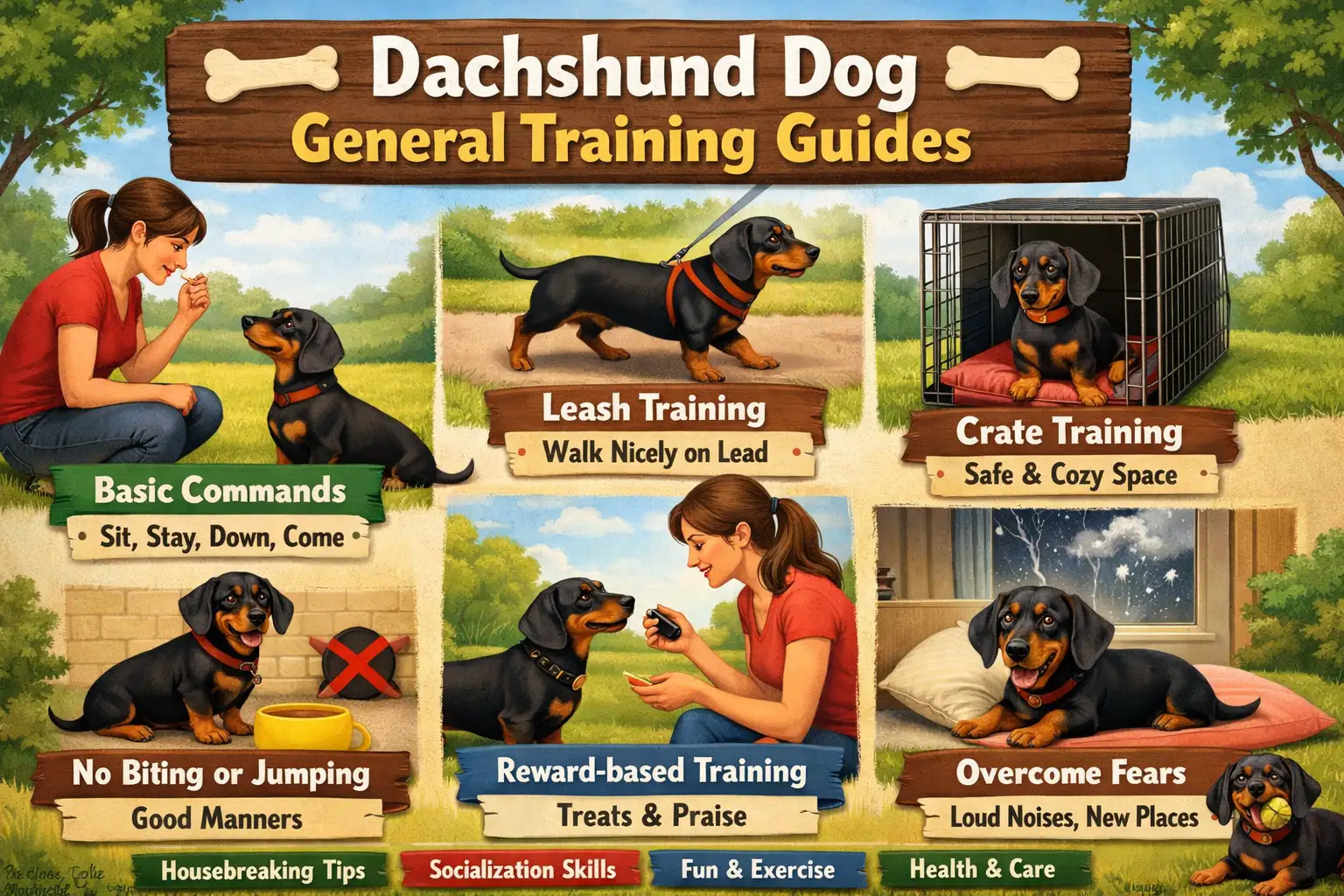
To train a Dachshund, use short 5-10 minute sessions, high-value treats, clear commands, and consistent daily routines. Start in a quiet indoor space, reward the exact behavior you want, and slowly add distractions once your Dachshund understands the command. Dachshunds can be trained well, but they need patience, repetition, and motivation that feels worth it to them.
Are Dachshunds Hard to Train?
Dachshunds are not impossible to train, but they can be challenging for owners who expect instant obedience. They were bred to hunt, follow scent, and make decisions independently. That independence can look like stubbornness, especially outdoors or when the reward is not interesting enough.
The best dog training for Dachshunds focuses on motivation, structure, and consistency. Harsh correction usually makes training worse because many Dachshunds become defensive, anxious, or more resistant when pressured.
Understanding Dachshund Behavior and Temperament
Before training Dachshunds, it helps to understand how they think. Many behavior problems happen because owners treat them like a generic small dog. Dachshunds have a specific temperament shaped by hunting instincts, alertness, confidence, and strong scent motivation.
Common Dachshund traits include:
- Strong sense of smell: outdoor scents can overpower voice commands.
- Independent thinking: Dachshunds often decide whether a task is worth doing.
- Alert barking: barking is often communication, warning, or excitement.
- Fast learning: they learn patterns quickly, including bad habits.
- Low tolerance for boring repetition: short sessions usually beat long drills.
Age also changes the training approach. Dachshund puppies need very short sessions and frequent potty breaks. Adult Dachshunds may need habit correction. Rescue Dachshunds may need confidence-building before obedience training works well.
Your home environment also affects progress. Busy homes, loud noises, other pets, and inconsistent rules can make learning harder. Calm routines, clear boundaries, and short sessions give this breed the best chance to succeed.
How to Train a Dachshund Step by Step
If you want to know how to train a Dachshund successfully, start with focus and routine before expecting advanced obedience. A Dachshund that does not pay attention cannot reliably sit, stay, come, or walk calmly on leash.
Step 1: Keep Training Sessions Short
Dachshunds learn better in short, focused sessions. Train for 5-10 minutes at a time, 2-4 times per day. Puppies may only manage 3-5 minutes before losing focus.
Step 2: Use High-Value Rewards
Most Dachshunds are food-motivated, but the reward must be valuable enough to compete with smells, movement, and distractions. Use tiny soft treats, praise, or toys your dog truly enjoys.
Step 3: Start Indoors Before Training Outside
Begin in a quiet indoor space where your Dachshund can focus. Once the command is reliable inside, practice in the yard, then on quiet walks, then around more distractions.
Step 4: Teach Name Response First
Say your Dachshund’s name once. When they look at you, reward immediately. This teaches your dog that paying attention to you is valuable before you ask for sit, stay, come, or leave it.
Step 5: Use the Same Commands Every Time
Choose one word for each command and use it consistently. Do not switch between “come,” “come here,” “get over here,” and “let’s go” if you expect one reliable behavior.
Step 6: Reward the Exact Behavior You Want
Timing matters. Reward your Dachshund immediately after the correct behavior. If the reward comes too late, your dog may not understand what earned it.
Dachshund Training Schedule
| Dog Age | Session Length | Sessions Per Day | Main Focus | Best Training Area |
|---|---|---|---|---|
| Puppy | 3-5 minutes | 3-4 | Name response, potty routine, crate comfort | Quiet indoor space |
| Adult Dachshund | 5-10 minutes | 2-3 | Obedience, leash manners, barking control | Low-distraction area |
| Rescue Dachshund | 3-8 minutes | 2-3 | Trust, routine, confidence | Calm familiar space |
Basic Commands Every Dachshund Should Learn
Once your Dachshund understands name response and focus, begin teaching basic commands. These commands help with obedience, safety, impulse control, and daily behavior at home and outside.
| Command | Why It Matters | How to Teach It | Common Mistake |
|---|---|---|---|
| Name response | Builds attention before training | Say your dog’s name once and reward eye contact | Repeating the name too many times |
| Sit | Improves impulse control | Use a treat lure and reward when your Dachshund sits | Pushing the dog into position |
| Stay | Helps with patience and safety | Start with one second, then increase slowly | Making the duration too long too soon |
| Come | Supports recall and safety | Use a happy voice and high-value reward | Calling your dog only when fun ends |
| Leave it | Prevents unsafe chewing or eating | Reward when your Dachshund looks away from the item | Pulling items away without teaching the behavior |
| Quiet | Helps manage barking | Reward a pause in barking and pair it with the word “quiet” | Shouting while the dog is barking |
Teach one command at a time. Dachshunds learn faster when the lesson is simple, the reward is clear, and the session ends before they lose interest.
Dachshund Puppy Training
Dachshund puppy training should focus on routine, confidence, potty habits, crate comfort, and simple obedience. Puppies have short attention spans and small bladders, so training should happen in short sessions throughout the day instead of one long lesson.
Start with the basics: name response, potty routine, gentle handling, short crate sessions, and calm exposure to normal household sounds. At this stage, prevention matters more than correction because puppies quickly repeat behaviors that get attention or rewards.
- Take your Dachshund puppy outside after waking, eating, drinking, playing, and napping.
- Reward potty success immediately while your puppy is still outside.
- Practice name response for a few minutes each day.
- Introduce the crate with treats, calm praise, and short positive sessions.
- Keep obedience lessons simple: sit, come, and gentle leash introduction.
- Prevent chewing, jumping, and barking habits before they become routine.
The biggest goal with a Dachshund puppy is to create predictable habits. A puppy that understands routine early is easier to train as an adult.
Adult and Rescue Dachshund Training
Adult Dachshunds and rescue Dachshunds can still be trained successfully, but the process may be slower because they may already have learned habits. Some dogs also need time to feel safe before obedience training works well.
Start with trust and structure before expecting perfect behavior. Use consistent feeding times, calm walks, predictable potty breaks, and short training sessions. Avoid correcting every mistake at once because too many new rules can overwhelm the dog.
- Begin with name response, focus, and simple rewards.
- Use a calm routine for meals, walks, potty breaks, and rest.
- Work on one behavior problem at a time.
- Reward calm behavior instead of only reacting to bad behavior.
- Give rescue Dachshunds extra time to adjust before increasing training difficulty.
- Use patience with habits like barking, pulling, accidents, or poor recall.
For adult and rescue Dachshunds, consistency matters more than speed. The dog needs to learn that the rules are clear, rewards are predictable, and training is safe.
Realistic Dachshund Training Progress Timeline
Dachshund training progress depends on age, consistency, distractions, and past habits. Some Dachshunds respond quickly indoors but struggle outside because scents, sounds, and movement are more exciting than commands.
| Time Period | What Usually Improves | What Is Still Normal | What to Focus On |
|---|---|---|---|
| Week 1-2 | Name response, focus, simple routines | Ignoring commands sometimes | Short indoor sessions and rewards |
| Week 3-4 | Basic commands and calmer responses | Outdoor distractions and barking | Practice in low-distraction areas |
| Week 5-6 | More reliable listening and better leash manners | Strong scent distractions | Add controlled distractions slowly |
| Month 2-3 | Better obedience, recall, and household manners | Occasional testing of rules | Keep routines consistent |
If training feels slow, that does not mean it is failing. Dachshunds learn in small steps, and steady progress matters more than speed. The biggest mistake is stopping training too early because the dog seems stubborn.
Common Dachshund Training Problems and How to Fix Them
Most Dachshund training problems come from unclear rules, weak routines, boredom, or distractions. The solution is usually not stricter punishment. It is better timing, better rewards, and more consistent structure.
Here are the most common problems owners face when training Dachshunds and what usually works better.
Common Dachshund Training Problems and Practical Fixes
| Problem | Why It Happens | What Not to Do | What Works Better |
|---|---|---|---|
| Not listening | Strong scent drive or unclear reward | Repeat the command many times | Train in quiet areas and reward focus |
| Excessive barking | Alert behavior, boredom, or excitement | Shout back at the dog | Reward quiet moments and teach “quiet” |
| House training accidents | Weak schedule or too much freedom | Scold after the accident | Use a strict potty routine and supervision |
| Pulling on leash | Following smells | Use harsh leash corrections | Stop walking, reset focus, reward loose leash |
| Poor recall | Outdoor distractions feel more rewarding | Call repeatedly without reward | Use a long line and high-value treats |
| Digging | Instinct, boredom, or excess energy | Only block access | Add enrichment and supervised digging outlets |
Dachshund Potty Training Tips
Dachshund potty training depends on routine and supervision. Because Dachshunds are small and can develop habits quickly, accidents should be prevented instead of punished after they happen.
- Take your Dachshund outside after waking, eating, drinking, playing, and napping.
- Use the same potty spot when possible.
- Reward immediately after your Dachshund goes outside.
- Limit unsupervised freedom indoors until the routine is reliable.
- Clean accidents fully so the smell does not trigger repeat accidents.
- Use crates, gates, or a small supervised area to prevent hidden accidents.
Dachshund Barking Training
Dachshunds are naturally alert, so barking cannot always be removed completely. The goal is to teach your dog when to stop and what calm behavior should replace the barking.
When your Dachshund barks, avoid shouting. Wait for a pause, say “quiet,” and reward the silence. If barking happens because of boredom, add short walks, scent games, puzzle toys, and structured training sessions.
Dachshund Leash Training
Leash training a Dachshund can be challenging because outdoor smells are highly rewarding. Start in quiet areas and reward your dog for walking near you with a loose leash before expecting good leash manners in busy places.
- Use a comfortable harness instead of putting pressure on the neck.
- Stop walking when the leash becomes tight.
- Reward your Dachshund when they return attention to you.
- Allow planned sniff breaks so walks still feel rewarding.
- Keep early walks short, calm, and successful.
Dachshund Recall and Listening Training
Recall is one of the hardest parts of Dachshund training because scent distractions are powerful. Practice indoors first, then move to a fenced area or use a long line outside.
Never punish your Dachshund after they finally come to you, even if they took too long. Coming back should always feel rewarding. Use special treats only for recall practice so your Dachshund has a strong reason to respond.
What Not to Do When Training a Dachshund
Some owner mistakes make Dachshunds more stubborn, anxious, or resistant. Avoid these common training errors:
- Do not yell or repeat commands over and over.
- Do not punish potty accidents after they already happened.
- Do not use long, boring training sessions.
- Do not change rules from day to day.
- Do not expect outdoor obedience before indoor training is reliable.
- Do not use fear-based methods to force compliance.
- Do not train only when your Dachshund is already overexcited.
Fixing these habits can improve Dachshund dog training quickly because the dog gets clearer rules and better timing.
When to Get Professional Help With Dachshund Training
Most Dachshund training problems can improve at home with time, patience, and consistency. However, some behavior signs need professional support. Getting help early can prevent fear, aggression, or anxiety from becoming harder to manage.
Consider professional help if your Dachshund shows:
- Growling, snapping, or biting
- Strong fear of people, dogs, sounds, or handling
- Severe separation anxiety
- No improvement after 6-8 weeks of consistent training
- Stress, shutdown, or panic during basic training
- Sudden behavior changes that feel unusual for your dog
DIY Training vs Professional Help
| Behavior Issue | How Long to Try at Home | Risk if Ignored | Who Can Help |
|---|---|---|---|
| Basic obedience delays | 4-6 weeks | Low | Positive reinforcement dog trainer |
| Excessive barking | 4-6 weeks | Medium | Dog trainer |
| Leash pulling | 4-6 weeks | Medium | Dog trainer |
| Potty training setbacks | 4-8 weeks | Medium | Trainer or veterinarian if sudden |
| Fear or anxiety | 2-3 weeks | High | Certified trainer or behavior specialist |
| Aggression signs | Do not wait | Very high | Veterinary behavior professional |
Choose a professional who uses positive reinforcement and understands small breeds. Avoid anyone who recommends fear, pain, intimidation, or harsh tools as the main training method.
Asking for help is not failure. It means you are protecting your Dachshund’s safety, confidence, and long-term behavior.
Dachshund Training FAQs
Can Dachshunds be trained to behave?
Yes, Dachshunds can be trained to behave well. They need short sessions, clear rules, strong rewards, and consistent practice. Because they are independent and scent-driven, they usually respond better to calm reward-based training than harsh correction.
Why are Dachshunds hard to train?
Dachshunds can seem hard to train because they were bred to hunt, follow scent, and make decisions independently. This can make them appear stubborn, especially outdoors. Better rewards, shorter sessions, and consistent routines usually improve training results.
How long does it take to train a Dachshund?
Basic Dachshund training can show progress within a few weeks, but reliable obedience often takes several months of consistent practice. Potty training, barking control, leash manners, and recall may take longer depending on age, routine, and past habits.
What is the best way to train a Dachshund puppy?
The best way to train a Dachshund puppy is to use short daily sessions, frequent potty breaks, crate comfort, name response, and immediate rewards. Keep lessons simple and focus on preventing bad habits before they become routine.
Are Dachshunds easy to potty train?
Dachshunds are not always easy to potty train because they are small, can form habits quickly, and may hide accidents if unsupervised. A strict routine, frequent outdoor breaks, immediate rewards, and limited indoor freedom help improve potty training success.
How do you stop a Dachshund from barking so much?
To reduce Dachshund barking, identify the trigger, avoid shouting, reward quiet moments, and teach a calm “quiet” command. Exercise, scent games, puzzle toys, and consistent routines can also reduce boredom and alert barking.
How do you train a Dachshund to listen?
To train a Dachshund to listen, start with name response and focus before teaching commands. Practice indoors first, use high-value rewards, say each command once, and slowly add distractions after your Dachshund responds reliably in quiet areas.
Should you punish a Dachshund during training?
No, punishment is not the best way to train a Dachshund. Harsh correction can make Dachshunds anxious, defensive, or more resistant. Reward-based training works better because it teaches your dog what to do instead of only reacting after mistakes.
More Dachshund Resources
Use these related Dachshund resources for topics that are covered in more detail on their dedicated pages:
- Dachshund Dog Age Calculator
- Dachshund Dog Breed Guide
- Dachshund Age Chart
- Dachshund Grooming Guide
- Dachshund Nutrition and Feeding Guide
- Dachshund Cost of Ownership Guide

Ata Ur Rehman is the founder of Pet Age in Human Years Calculator, an educational platform that provides age conversion charts and lifespan guides for dogs, cats, birds, and other companion animals. His work focuses on helping pet owners understand how animal ages translate into human years using commonly accepted age conversion formulas and published lifespan averages.
The website compiles breed and species lifespan data from kennel clubs, breed organizations, and general animal lifespan studies to present simple and easy-to-understand guides for pet owners worldwide.
This website was created to centralize animal age conversion charts into one easy reference platform for pet owners.
This article is for general education. For symptoms, medication, diet changes, or health concerns, use a qualified veterinarian who can assess your individual pet.