On this page
The Siberian Husky dog is a high-energy working breed known for endurance, independence, thick double coat, friendly personality, and strong exercise needs. Originally developed by the Chukchi people of northeastern Siberia, this breed was built to pull light loads across long frozen distances while living closely with families.
This guide explains the Siberian Husky’s temperament, lifespan, grooming needs, exercise requirements, health concerns, ownership costs, and age-related care so you can decide whether this breed is the right fit for your home.
Want to understand your Husky’s real age? Use our Siberian Husky Dog Age Calculator to estimate your dog’s age in human years based on breed size and life stage.
Want to understand your Siberian Husky’s age in human years? Because Huskies are medium-sized working dogs, their aging pattern is different from small toy breeds and giant breeds. Use our Siberian Husky age calculator to estimate your dog’s human-age equivalent based on breed size and life stage.
Use the Siberian Husky Dog Age Calculator
Siberian Husky Quick Facts
| Trait | Details |
|---|---|
| Breed Group | Working dog |
| Origin | Siberia |
| Height | 20–23.5 inches |
| Weight | 35–60 pounds |
| Body Type | Lean, athletic, endurance-built |
| Coat Type | Dense double coat |
| Common Colors | Black and white, gray and white, red and white, white |
| Eye Colors | Brown, blue, or bi-colored |
| Average Lifespan | 12–14 years |
| Best For | Active owners, families, experienced dog owners |
Physically, the Siberian Husky is built for balance, stamina, and efficient movement. Unlike heavier hauling breeds, Huskies were selected for endurance rather than brute strength. This is why a healthy Siberian Husky often looks lean compared to many pet dogs.
The breed’s double coat is one of its most recognizable features. The soft undercoat provides insulation, while the outer coat helps protect against weather. This coat helps Huskies tolerate cold climates, but it also means owners must be prepared for heavy seasonal shedding.
Eye color is another distinctive trait. Blue eyes, brown eyes, and heterochromia are all normal in Siberian Huskies and are part of the breed’s natural appearance.
Siberian Husky Temperament, Personality, and Behavior
The Siberian Husky temperament is friendly, social, energetic, and independent. These dogs usually enjoy people, but they are not naturally obedient in the same way as some companion breeds. They were bred to think and move independently, which still shapes their behavior today.
A Husky may understand a command but still decide whether it is worth following. This does not mean the dog lacks intelligence. It means the breed has a strong independent streak.
Siberian Husky Temperament Overview
| Trait | What This Means in Daily Life |
|---|---|
| Friendliness | Usually very social with people |
| Independence | May ignore commands without motivation |
| Intelligence | Smart, curious, and problem-solving |
| Guarding Ability | Low; usually friendly with strangers |
| Prey Drive | Moderate to high around small animals |
| Vocal Behavior | Known for howling and “talking” |
| Energy Level | High and consistent |
With family members, Siberian Huskies are usually playful and affectionate without being overly clingy. They often enjoy children, but supervision is important because of their energy, speed, and strength.
Most Huskies are not good guard dogs. They are more likely to welcome strangers than protect the home. This friendliness is one reason many people enjoy the breed, but it also means they should not be chosen for protection work.
Around other dogs, Huskies are often social when properly introduced. Around cats, rabbits, or smaller pets, caution is needed because the breed can have a strong prey drive.
Siberian Husky Exercise, Training, and Mental Stimulation Needs
Siberian Huskies need a lot of daily exercise. This is one of the most important ownership factors. A short walk is rarely enough for this breed. Without enough activity, a Husky may chew, dig, escape, howl, or become difficult to manage indoors.
Daily Exercise Needs
| Activity Type | Minimum Needed | Best Amount |
|---|---|---|
| Physical exercise | 60 minutes | 90–120 minutes |
| Mental stimulation | 20 minutes | 30–45 minutes |
| Training time | 10 minutes | 15–20 minutes |
Good exercise options include long walks, running, hiking, structured play, pulling sports, and controlled outdoor activity. Mental stimulation is just as important. Puzzle toys, scent games, obedience practice, and short training sessions can help reduce boredom.
Training a Siberian Husky requires patience and consistency. Positive reinforcement works better than harsh correction. Common training challenges include leash pulling, poor recall, jumping, escaping, and selective listening.
Common Problems When Exercise Is Too Low
| Behavior | Why It Happens |
|---|---|
| Escaping | Looking for movement or stimulation |
| Chewing | Boredom, stress, or unused energy |
| Howling | Communication or excess energy |
| Ignoring commands | Low motivation or distraction |
| Digging | Instinct, boredom, or temperature regulation |
For deeper training help, visit our Siberian Husky Dog General Training Guides.
Siberian Husky Grooming, Shedding, Health, and Lifespan
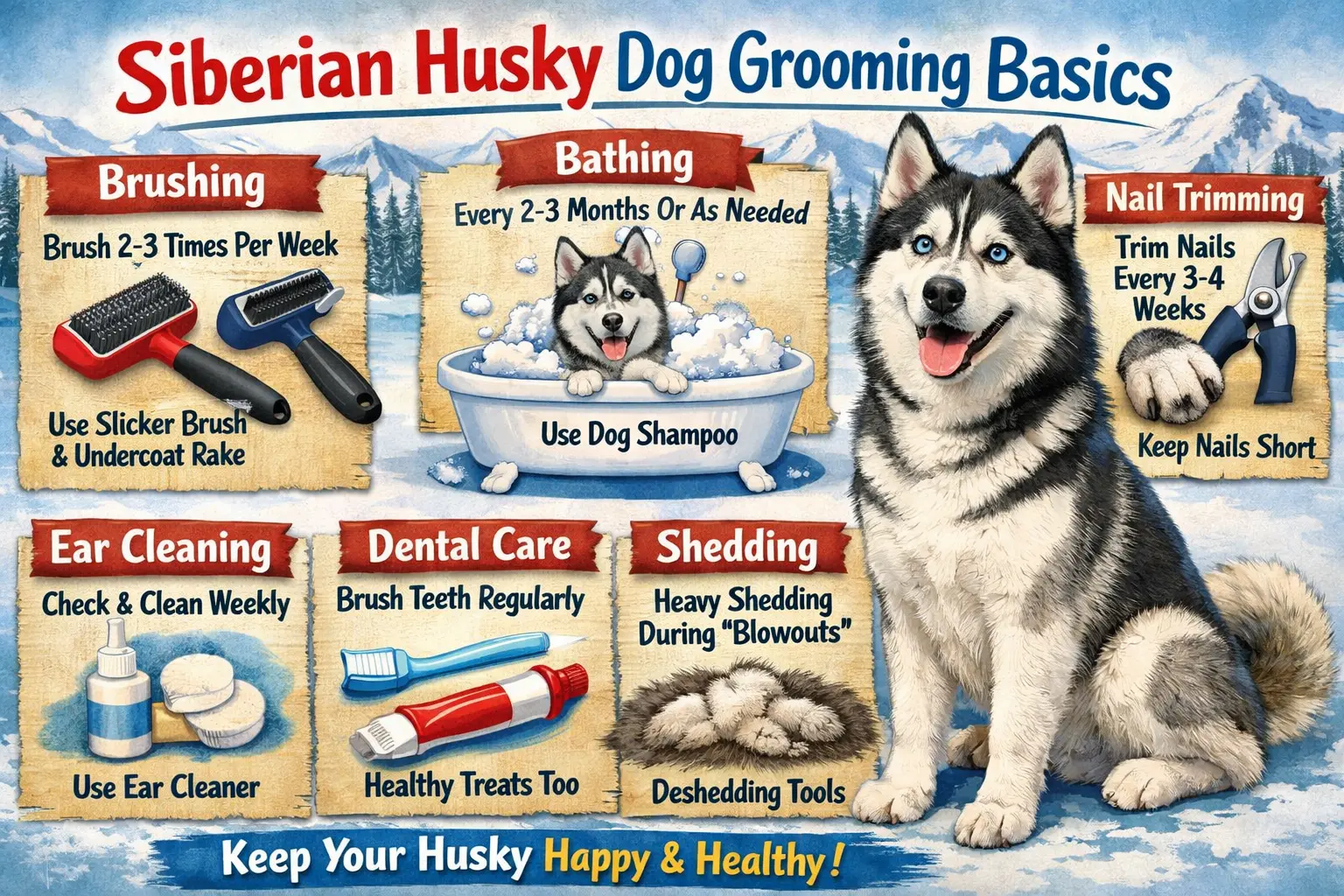
Siberian Huskies have moderate grooming needs but heavy shedding. They shed throughout the year and usually blow their coat heavily once or twice a year. During these shedding periods, loose fur can come out in large clumps.
The double coat should not be shaved. It helps protect the dog from cold, sun, and heat regulation problems. Regular brushing is the safest way to manage shedding.
Grooming and Shedding Expectations
| Care Area | What to Expect |
|---|---|
| Shedding | Heavy during seasonal coat blow |
| Brushing | 2–3 times weekly; daily during shedding |
| Bathing | Only when dirty or needed |
| Shaving | Not recommended |
| Coat Smell | Usually low compared to many breeds |
Health-wise, Siberian Huskies are generally sturdy dogs, but they can still be affected by breed-related issues. Common concerns include eye problems, hip dysplasia, and zinc-responsive skin issues.
Common Health Considerations
| Condition | What Owners Should Know |
|---|---|
| Eye problems | May include cataracts or other vision concerns |
| Hip dysplasia | Less common than in some large breeds, but possible |
| Zinc deficiency | Can affect skin and coat condition |
| Dental issues | Regular dental care supports long-term health |
The average Siberian Husky lifespan is usually 12 to 14 years. Diet, exercise, weight control, dental care, and regular vet visits can all affect how well a Husky ages.
For grooming-specific help, visit our Siberian Husky Dog Grooming Basics.
Siberian Husky Age in Human Years
Siberian Huskies are medium-sized dogs, so their age does not convert to human years using the old “multiply by 7” rule. Breed size, maturity rate, and life stage all matter. A Husky grows quickly in the first two years, then ages more gradually through adulthood.
Siberian Husky Age Chart
| Siberian Husky Age | Estimated Human Age | Life Stage |
|---|---|---|
| 1 year | About 15 human years | Adolescent |
| 2 years | About 24 human years | Young adult |
| 3 years | About 28 human years | Adult |
| 5 years | About 36 human years | Adult |
| 7 years | About 44 human years | Mature adult |
| 10 years | About 60 human years | Senior |
| 12 years | About 69 human years | Senior |
| 14 years | About 78 human years | Advanced senior |
For a more specific estimate, use the Siberian Husky Dog Age Calculator or read the full Siberian Husky Dog Age Calculator to Human Years Age Chart.
Is the Siberian Husky Right for You? Cost, Suitability, Pros and Cons
A Siberian Husky can be a great dog for the right owner, but this breed is not ideal for everyone. Huskies need time, exercise, training, secure fencing, and consistent structure. Many ownership problems happen when people choose the breed for appearance without understanding its daily needs.
Siberian Husky Suitability Snapshot
| Lifestyle Type | Is This a Good Match? |
|---|---|
| Active owners | Yes, very good fit |
| Families with children | Yes, with supervision |
| First-time dog owners | Possible, but challenging |
| Apartment living | Only with serious daily exercise |
| Seniors | Usually not ideal |
| Multi-pet homes | Possible with training and management |
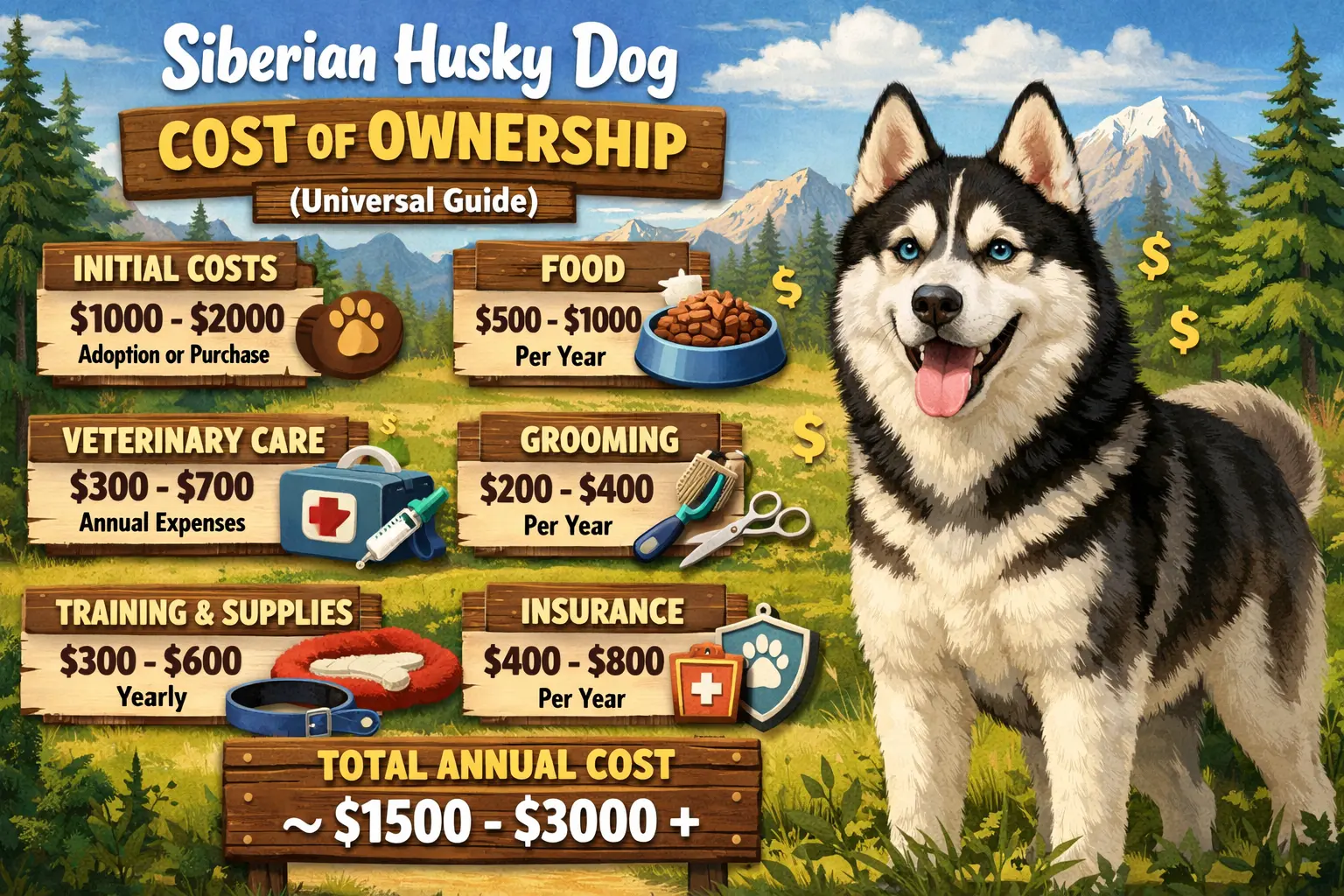
Cost is another important factor. Siberian Husky puppies, food, vet care, grooming tools, training, fencing, and long-term health care can all add up over time.
Typical Cost Factors to Expect
| Expense Type | What to Know |
|---|---|
| Puppy or adoption cost | Varies by breeder, rescue, location, and health testing |
| Food | Medium monthly cost for an active dog |
| Grooming tools | Needed for heavy shedding |
| Vet care | Routine exams, vaccines, dental care, and possible eye checks |
| Training | Often helpful due to independence and pulling behavior |
For a deeper breakdown, visit our Siberian Husky Dog Cost of Ownership Guide.
Siberian Husky Pros and Cons
| Pros | Cons |
|---|---|
| Friendly and social | Can escape easily |
| Very athletic | Needs lots of exercise |
| Smart and curious | Can ignore commands |
| Usually low aggression toward people | Not a guard dog |
| Beautiful double coat | Heavy shedding |
| Playful family companion | Can be difficult for inactive owners |
Siberian Huskies are best for active owners who enjoy outdoor routines and can provide daily structure. They are usually not the best choice for people who want a low-energy dog, strong guard dog, or easy off-leash companion.
For deeper breed-specific guidance, see the Siberian Husky Nutrition & Feeding Guide.
Siberian Husky Dog FAQ
Are Siberian Huskies good family dogs?
Yes, Siberian Huskies can be good family dogs for active households. They are usually friendly, playful, and social, but they need supervision around small children because of their energy and strength.
Are Siberian Huskies good for first-time owners?
Siberian Huskies can be challenging for first-time owners. Their exercise needs, independence, escaping behavior, and training difficulty make them better suited to owners who are prepared for a high-energy breed.
Do Siberian Huskies shed a lot?
Yes, Siberian Huskies shed heavily, especially during seasonal coat blows. Regular brushing helps control loose fur and keeps the double coat healthy.
How much exercise does a Siberian Husky need?
Most Siberian Huskies need at least 60 minutes of exercise per day, but many do better with 90 to 120 minutes plus mental stimulation.
How long do Siberian Huskies live?
The average Siberian Husky lifespan is about 12 to 14 years. Healthy weight, exercise, diet, dental care, and regular vet visits can support better aging.
Are Siberian Huskies easy to train?
Siberian Huskies are smart, but they are not always easy to train. They can be independent and easily distracted, so short positive training sessions work best.
Can Siberian Huskies live in apartments?
A Siberian Husky can live in an apartment only if the owner provides serious daily exercise, mental stimulation, and routine. Without enough activity, apartment living can lead to noise, chewing, and frustration.

Ata Ur Rehman is the founder of Pet Age in Human Years Calculator, an educational platform that provides age conversion charts and lifespan guides for dogs, cats, birds, and other companion animals. His work focuses on helping pet owners understand how animal ages translate into human years using commonly accepted age conversion formulas and published lifespan averages.
The website compiles breed and species lifespan data from kennel clubs, breed organizations, and general animal lifespan studies to present simple and easy-to-understand guides for pet owners worldwide.
This website was created to centralize animal age conversion charts into one easy reference platform for pet owners.
This article is for general education. For symptoms, medication, diet changes, or health concerns, use a qualified veterinarian who can assess your individual pet.