On this page
The Bull Terrier dog is one of the most distinctive and recognizable dog breeds in the world. Famous for its unique egg-shaped head, muscular body, and energetic personality, the Bull Terrier combines strength, intelligence, loyalty, and playfulness into one unforgettable companion.
Originally developed in England during the 19th century, Bull Terriers were bred by crossing Bulldogs with various terrier breeds to create a strong, agile, and determined dog. Over time, breeders refined the breed’s temperament, transforming it from a working and sporting dog into a loyal family companion that thrives on human interaction.
Today, Bull Terriers are known for their clown-like behavior, affectionate nature, and unwavering devotion to their families. While they can be stubborn and independent at times, proper training and socialization help them become well-mannered and loving household pets.
Whether you’re considering adopting a Bull Terrier puppy or simply researching the breed, this guide covers everything you need to know about their appearance, temperament, exercise needs, health concerns, grooming requirements, and ownership costs.
Bull Terrier Quick Facts
| Trait | Details |
|---|---|
| Breed | Bull Terrier |
| Breed Group | Terrier |
| Size | Medium |
| Height (Male) | 21–22 inches (53–56 cm) |
| Height (Female) | 20–21 inches (51–53 cm) |
| Weight (Male) | 50–70 pounds (23–32 kg) |
| Weight (Female) | 45–60 pounds (20–27 kg) |
| Lifespan | 10–14 years |
| Coat Type | Short, dense, and smooth |
| Shedding Level | Moderate |
| Energy Level | High |
| Trainability | Moderate |
| Good with Children | Yes, with supervision |
| Good with Other Pets | Can be, with early socialization |
| Best For | Active families, experienced dog owners, and homes with secure outdoor space |
History and Origin of the Bull Terrier
The Bull Terrier originated in England during the early 1800s. Breeders sought to combine the courage and strength of Bulldogs with the speed and determination of terriers.
James Hinks is widely credited with refining the modern Bull Terrier breed. His goal was to create a more elegant and balanced dog while preserving the breed’s athletic abilities. Through selective breeding, the distinctive white Bull Terrier became popular among gentlemen and dog enthusiasts throughout England.
Over the years, colored Bull Terriers were introduced to improve genetic diversity and overall health. Today, both white and colored Bull Terriers are recognized and admired worldwide.
Despite their historical association with bull-baiting and sporting activities, modern Bull Terriers are affectionate companions that thrive as family pets when properly trained and socialized.
Appearance, Size and Distinctive Traits
Few breeds are as instantly recognizable as the Bull Terrier. The breed’s most defining feature is its unique egg-shaped head, which curves smoothly from the top of the skull to the tip of the nose without a pronounced stop.
Their small triangular eyes create an alert and intelligent expression that is unique among dog breeds. Combined with their upright ears and muscular build, Bull Terriers project confidence, strength, and determination.
Bull Terrier Size
| Gender | Height | Weight |
|---|---|---|
| Adult Male Bull Terrier | 21–22 inches (53–56 cm) | 50–70 pounds (23–32 kg) |
| Adult Female Bull Terrier | 20–21 inches (51–53 cm) | 45–60 pounds (20–27 kg) |
Although classified as medium-sized dogs, Bull Terriers are heavily built and often feel stronger than many larger breeds due to their muscular structure.
Coat and Colors
Bull Terriers have short, flat, dense coats that are relatively easy to maintain.
| Coat Color | Description |
|---|---|
| White | The most recognizable Bull Terrier color, often seen in the breed’s original lines. |
| Brindle | Dark stripes over a lighter base coat, creating a distinctive tiger-striped appearance. |
| Fawn | A light tan or beige color that gives the dog a softer look. |
| Red | Rich reddish-brown coloring that highlights the breed’s muscular build. |
| Black Brindle | A darker variation of brindle with prominent black striping. |
| Tri-Color | A combination of black, tan, and white markings. |
White Bull Terriers remain especially popular due to their historical significance within the breed.
| Age Stage | Weight (lbs) | Height (inches) |
|---|---|---|
| Puppy (2–4 Months) | 10–20 lbs | 8–12 in |
| Puppy (4–6 Months) | 20–35 lbs | 12–16 in |
| Juvenile (6–12 Months) | 35–55 lbs | 16–20 in |
| Adult Male | 50–70 lbs | 21–22 in |
| Adult Female | 45–60 lbs | 20–21 in |
Bull Terrier Temperament and Personality
The Bull Terrier temperament is one of the main reasons people fall in love with this breed.
They are often described as:
Loyal
Playful
Fearless
Energetic
Affectionate
Strong-willed
Confident
Bull Terriers form incredibly strong bonds with their families and prefer to be involved in daily activities. Many owners describe them as “people-oriented dogs” that crave attention and companionship.
Unlike some independent breeds, Bull Terriers rarely enjoy being left alone for long periods. Extended isolation can lead to boredom, destructive behavior, and separation anxiety.
Are Bull Terriers Good Family Dogs?
Yes.
When properly trained and socialized, Bull Terriers can make excellent family pets.
They are known for:
Strong loyalty to family members
Playful interaction with children
Protective instincts
High levels of affection
However, due to their strength and enthusiasm, supervision is recommended when interacting with small children.
Are Bull Terriers Good with Other Dogs?
This depends heavily on socialization.
Bull Terriers that are introduced to other dogs early often develop healthy relationships. However, some individuals may display same-sex aggression or dominant behavior if socialization is neglected.
Puppy training classes and regular exposure to other dogs can significantly improve social behavior.
Are Bull Terriers Good with Cats?
Bull Terriers possess a moderate prey drive.
When raised alongside cats, many coexist peacefully. However, introductions should be supervised, especially during puppyhood.
Pros and Cons of Owning a Bull Terrier
Pros
Extremely loyal and affectionate
Unique appearance
Excellent family companion
Low grooming requirements
Intelligent and entertaining personality
Strong bond with owners
Cons
Can be stubborn during training
Needs significant daily exercise
May become destructive when bored
Can develop separation anxiety
Requires early socialization
Not ideal for inactive households
Bull Terrier Suitability Scorecard
| Trait | Rating | Assessment |
|---|---|---|
| Family Friendliness | 9/10 | Forms strong bonds with family members and enjoys being involved in daily activities. |
| Trainability | 7/10 | Intelligent but can be stubborn; responds best to consistent positive reinforcement. |
| Exercise Needs | 9/10 | Requires daily physical activity and mental stimulation to stay happy and healthy. |
| Grooming Requirements | 3/10 | Short, low-maintenance coat that only needs weekly brushing. |
| Apartment Living | 6/10 | Can adapt to apartment life if exercise needs are fully met. |
| Good with Children | 8/10 | Playful and affectionate with children, though supervision is recommended due to strength and energy. |
| Good with Other Dogs | 6/10 | Early socialization is important; some Bull Terriers may show dominant tendencies toward other dogs. |
| First-Time Owner Friendly | 6/10 | Better suited to owners who are committed to training and providing consistent leadership. |
| Adaptability | 8/10 | Adjusts well to different living situations when given adequate exercise and attention. |
| Affection Level | 10/10 | Extremely loyal, people-oriented, and known for forming deep connections with their owners. |
Exercise Requirements
Bull Terriers are highly energetic dogs that require consistent physical and mental stimulation.
Most adults need between 60 and 120 minutes of activity daily.
| Activity | Benefits |
|---|---|
| Daily Walks | Helps maintain physical fitness, supports weight management, and provides mental stimulation through new sights and smells. |
| Running | A great outlet for the breed’s high energy levels and athletic nature. |
| Fetch | Encourages exercise while strengthening the bond between dog and owner. |
| Tug-of-War | Satisfies the Bull Terrier’s playful and energetic personality when played with proper rules and supervision. |
| Agility Training | Improves obedience, coordination, confidence, and mental engagement. |
| Obstacle Courses | Provides both physical exercise and problem-solving challenges. |
| Interactive Toys | Keeps the mind occupied and helps prevent boredom-related behaviors. |
| Puzzle Games | Stimulates intelligence and encourages healthy mental enrichment. |
Without sufficient exercise, Bull Terriers may develop unwanted behaviors such as excessive chewing, digging, jumping, or barking.
Training a Bull Terrier
Bull Terriers are intelligent dogs, but their independent nature means training requires patience and consistency.
The most effective training methods include:
Positive reinforcement
Reward-based training
Short training sessions
Consistency in commands
Early socialization
Confidence-building exercises
Avoid harsh punishment-based methods, as they often reduce trust and make training more difficult.
Early obedience training is strongly recommended, especially during puppyhood.
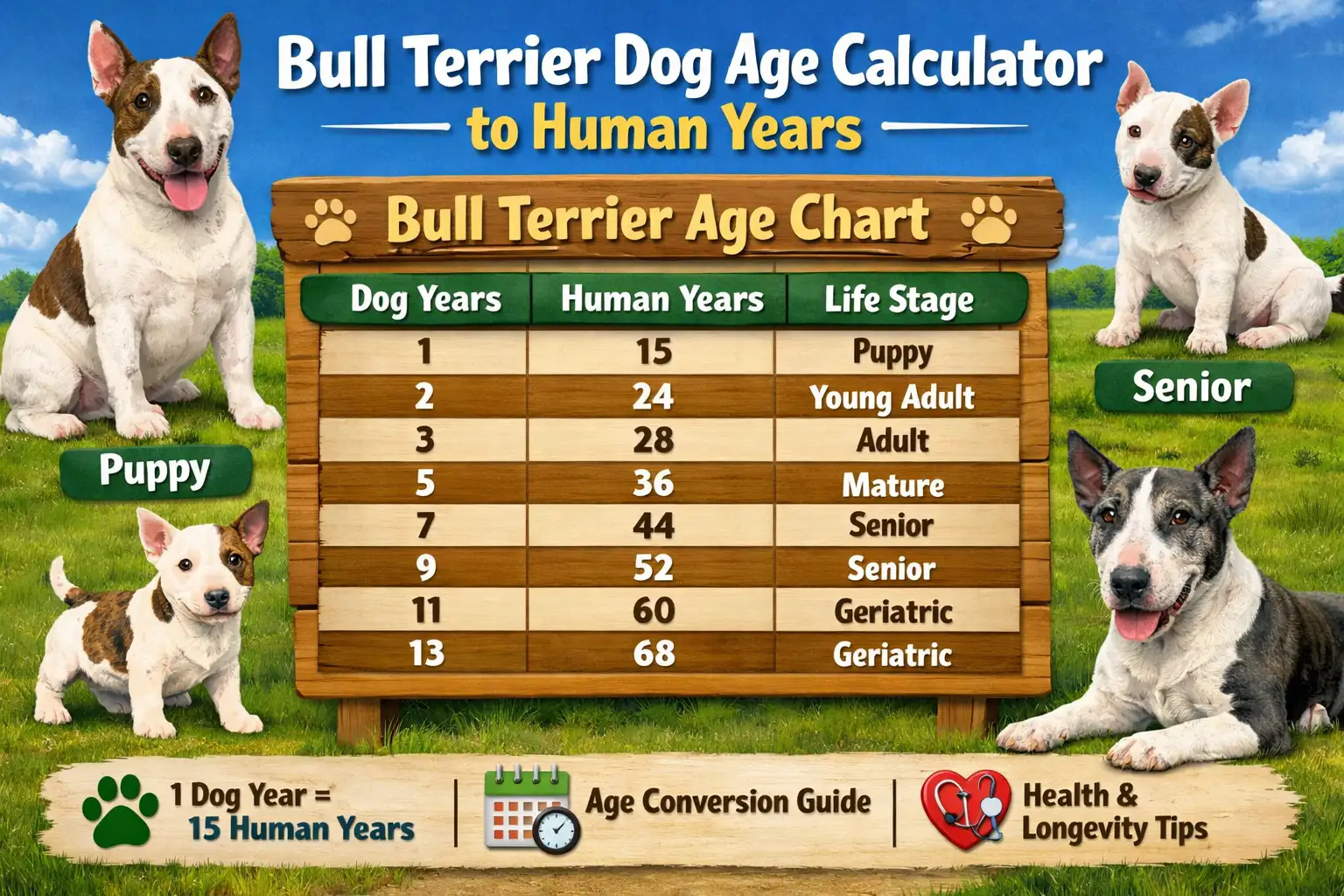
To understand your dog's current life stage, use the Bull Terrier Dog Age Calculator.
For deeper breed-specific guidance, see the Bull Terrier Training Guide, Bull Terrier Age Chart, Bull Terrier Grooming Guide, Bull Terrier Nutrition & Feeding Guide, and Bull Terrier Cost of Ownership Guide.

Ata Ur Rehman is the founder of Pet Age in Human Years Calculator, an educational platform that provides age conversion charts and lifespan guides for dogs, cats, birds, and other companion animals. His work focuses on helping pet owners understand how animal ages translate into human years using commonly accepted age conversion formulas and published lifespan averages.
The website compiles breed and species lifespan data from kennel clubs, breed organizations, and general animal lifespan studies to present simple and easy-to-understand guides for pet owners worldwide.
This website was created to centralize animal age conversion charts into one easy reference platform for pet owners.
This article is for general education. For symptoms, medication, diet changes, or health concerns, use a qualified veterinarian who can assess your individual pet.