On this page
Cane Corso grooming is relatively simple compared to many long-haired breeds, but it should never be overlooked. While their short, dense coat does not require frequent haircuts or professional styling, Cane Corsos still need regular brushing, bathing, nail trimming, ear cleaning, and dental care to remain healthy and comfortable. A consistent grooming routine reduces shedding, prevents skin problems, minimizes odor, and allows owners to identify health concerns before they become serious.
Many first-time Cane Corso owners mistakenly assume that a short coat means no maintenance. In reality, Cane Corsos shed throughout the year and experience heavier seasonal shedding during spring and fall. Without routine grooming, loose hair, dirt, natural oils, and dead skin accumulate quickly, leading to dull coats, unpleasant odors, and an increased risk of skin irritation.
Beyond keeping your dog looking clean, grooming strengthens the bond between owner and dog. Because Cane Corsos are large, muscular, and powerful guardians, introducing grooming from puppyhood helps them become comfortable with handling. Dogs that learn to tolerate brushing, nail trimming, ear cleaning, and bathing at an early age are generally easier to manage throughout adulthood.
This complete Cane Corso grooming guide explains everything you need to know, including coat care, shedding, brushing frequency, bathing schedules, grooming tools, nail care, ear cleaning, dental hygiene, seasonal grooming, puppy grooming, common mistakes, and answers to the most frequently asked questions.
Quick Answer
If you’re looking for a quick summary:
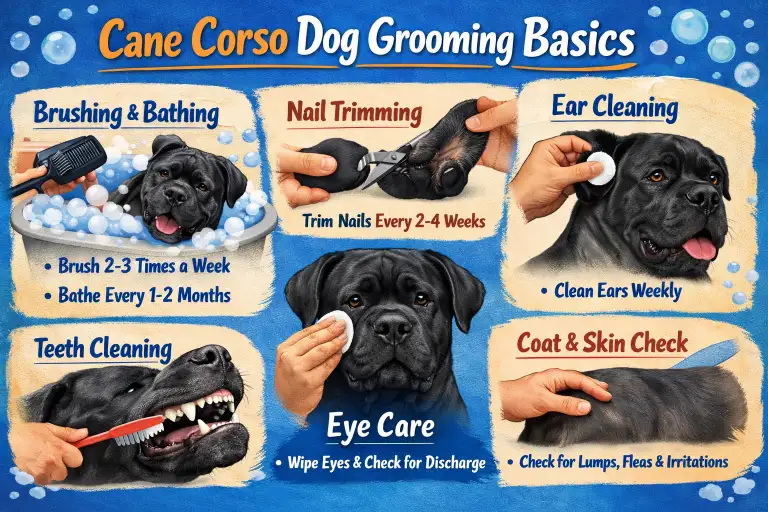
| Grooming Task | Recommended Frequency | Notes |
|---|---|---|
| Brushing | 2–3 times per week | Daily during heavy shedding seasons |
| Bathing | Every 6–8 weeks | Earlier only when dirty |
| Nail trimming | Every 2–4 weeks | Prevents joint stress |
| Ear cleaning | Every 2–4 weeks | Check ears weekly |
| Teeth brushing | 3–7 times per week | Daily is ideal |
| Skin inspection | Weekly | Check for allergies, bumps, and parasites |
Following this schedule keeps your Cane Corso’s coat healthy while preventing many common skin and grooming problems.
Understanding the Cane Corso Coat
The Cane Corso has a short, dense double coat consisting of a protective outer layer of guard hairs and a softer insulating undercoat. Although the coat appears sleek and low maintenance, it is specifically designed to protect the dog from changing weather conditions, dirt, and minor injuries.
The outer coat repels moisture and debris while the undercoat helps regulate body temperature. During seasonal changes, particularly in spring and autumn, much of the undercoat sheds naturally. This process, commonly known as “blowing coat,” explains why many owners suddenly notice much more hair around the house.
Unlike breeds with continuously growing coats, Cane Corsos do not require haircuts or clipping. Instead, regular brushing removes dead hair before it falls throughout your home while distributing natural oils across the skin, resulting in a healthier and shinier coat.
Healthy Cane Corso coats should feel smooth, dense, and slightly glossy. Excessive dandruff, bald patches, persistent scratching, redness, or a greasy appearance may indicate allergies, parasites, infections, or underlying medical conditions that require veterinary attention.
Do Cane Corsos Shed?
Yes. Cane Corsos shed throughout the year despite their short coat.
Many people are surprised by the amount of hair these dogs lose because individual hairs are short but stiff, making them noticeable on furniture, clothing, carpets, and vehicle seats.
Shedding occurs for several reasons:
- Seasonal coat changes
- Natural hair replacement
- Diet and nutrition
- Hormonal changes
- Stress
- Allergies
- Skin conditions
Most healthy Cane Corsos experience moderate shedding year-round and heavier shedding twice annually. During these periods, increasing brushing frequency significantly reduces loose hair around the home.
| Season | Shedding Level | Recommended Brushing |
|---|---|---|
| Spring | Heavy | Daily or every other day |
| Summer | Moderate | 2–3 times weekly |
| Fall | Heavy | Daily or every other day |
| Winter | Light to Moderate | 1–2 times weekly |
Proper nutrition also affects shedding. Diets rich in omega-3 and omega-6 fatty acids support healthy skin and stronger hair follicles, reducing excessive hair loss caused by dry skin.
Essential Grooming Supplies
Having the proper grooming tools makes maintenance faster, easier, and more comfortable for both you and your dog.
| Tool | Purpose |
|---|---|
| Rubber curry brush | Removes loose hair while massaging the skin |
| Soft bristle brush | Smooths the coat and distributes natural oils |
| Deshedding mitt | Removes seasonal undercoat |
| Dog shampoo | Cleans without stripping protective oils |
| Conditioner (optional) | Moisturizes dry coats |
| Nail grinder or clippers | Maintains proper nail length |
| Ear cleaner | Removes wax and debris safely |
| Dog toothbrush | Maintains oral hygiene |
| Dog toothpaste | Prevents plaque and tartar |
| Microfiber towels | Speeds drying after bathing |
Avoid using human shampoos because canine skin has a different pH level. Human products frequently cause dryness, itching, and irritation.
How Often Should You Groom a Cane Corso?
Although every dog has unique needs, most Cane Corsos benefit from a predictable grooming routine.
| Grooming Activity | Frequency |
|---|---|
| Brushing | 2–3 times weekly |
| Bathing | Every 6–8 weeks |
| Nail trimming | Every 2–4 weeks |
| Ear inspection | Weekly |
| Ear cleaning | Every 2–4 weeks |
| Teeth brushing | Daily if possible |
| Skin check | Weekly |
| Paw inspection | Weekly |
Dogs that swim regularly, spend significant time outdoors, or have allergies may require adjustments to this schedule.
Step-by-Step Cane Corso Grooming Routine
Brush the Coat
Always begin with brushing.
Use a rubber curry brush or grooming mitt to remove loose hair while stimulating blood circulation. Work from the neck toward the tail using long strokes in the direction of hair growth.
Pay extra attention to:
- Neck
- Chest
- Shoulders
- Back
- Hindquarters
- Tail
During seasonal shedding, brush daily to minimize loose hair indoors.
Inspect the Skin
As you brush, examine your dog’s skin for:
- Fleas
- Ticks
- Cuts
- Dry patches
- Redness
- Lumps
- Hot spots
- Excessive dandruff
Early detection often prevents minor issues from becoming expensive veterinary problems.
Bathing
Bathing should be performed every six to eight weeks unless your Cane Corso becomes exceptionally dirty.
Use lukewarm water and thoroughly wet the coat before applying shampoo. Massage gently into the skin rather than simply washing the hair. Rinse extremely well because leftover shampoo residue commonly causes itching.
After rinsing, dry the dog completely using absorbent towels or a pet dryer on a low-heat setting.
Never allow moisture to remain trapped beneath the coat, especially around the neck, chest, and skin folds.
Nail Care
Nail care is one of the most overlooked aspects of Cane Corso grooming, yet it has a significant impact on your dog’s comfort, posture, and joint health. Because Cane Corsos are large, heavy dogs, overgrown nails place extra pressure on their toes and alter the way they walk. Over time, this can contribute to discomfort in the feet, legs, shoulders, and hips.
Most Cane Corsos require nail trimming every 2–4 weeks, although dogs that regularly walk on concrete may naturally wear their nails down more than dogs living primarily on grass or soft surfaces.
A simple way to tell if your dog’s nails are too long is to listen while they walk. If you hear clicking sounds on hard floors, it’s time for a trim.
If your Cane Corso has black nails, trim small amounts at a time to avoid cutting the quick. A nail grinder can also be a safer alternative for owners who are less experienced.
Ear Cleaning
Cane Corsos have naturally floppy ears that reduce airflow compared to upright ears. Moisture, wax, and dirt can accumulate more easily, increasing the risk of ear infections if ears are ignored.
Inspect your dog’s ears every week.
Healthy ears should be:
- Light pink
- Odor-free
- Free of excessive wax
- Free from swelling
Clean the ears every 2–4 weeks using a veterinarian-approved ear cleaner. Never insert cotton swabs into the ear canal, as they can push debris deeper and damage sensitive tissue.
Contact your veterinarian if you notice:
- Strong odor
- Thick discharge
- Persistent scratching
- Head shaking
- Redness
- Pain when touched
Dental Care
Dental health affects much more than your Cane Corso’s breath. Poor oral hygiene allows bacteria to accumulate beneath the gums, potentially affecting the heart, liver, and kidneys over time.
Brush your dog’s teeth at least three to four times each week using dog-safe toothpaste and a soft toothbrush. Daily brushing provides the best protection against plaque and tartar buildup.
Dental chews and toys can help reduce plaque, but they should never replace brushing.
Signs that dental care is overdue include:
- Bad breath
- Yellow or brown tartar
- Swollen gums
- Bleeding gums
- Loose teeth
- Difficulty chewing
Paw Care
Your Cane Corso’s paws should be inspected weekly.
Check for:
- Cracked paw pads
- Embedded stones
- Grass seeds
- Cuts
- Splinters
- Excessively long hair between pads
During winter, wipe paws after walks to remove salt or de-icing chemicals. During summer, inspect for burns caused by hot pavement.
Applying a dog-safe paw balm helps prevent cracked, dry paw pads in harsh weather.
Seasonal Grooming
Your Cane Corso’s grooming routine should change with the seasons.
| Season | Grooming Focus |
|---|---|
| Spring | Increase brushing to remove winter undercoat |
| Summer | Check for ticks, fleas, overheating, and sun exposure |
| Fall | Remove loose coat before winter growth |
| Winter | Moisturize dry skin and reduce bathing frequency if possible |
Spring and fall usually require the most brushing because these are the primary shedding seasons.
Puppy Grooming
Grooming should begin as early as possible.
Young Cane Corsos learn quickly, and early positive experiences create cooperative adult dogs.
Puppies do not require extensive grooming, but they should become comfortable with:
- Brushing
- Paw handling
- Ear touching
- Mouth inspection
- Bathing
- Nail trimming
Keep grooming sessions short, calm, and reward-based.
Professional Grooming
Most healthy Cane Corsos can be groomed entirely at home.
However, professional groomers can be helpful for:
- Heavy seasonal shedding
- Difficult nail trimming
- Deep bathing
- Ear cleaning
- First-time owners
- Senior dogs with mobility issues
Professional grooming appointments typically cost between $50 and $120, depending on your location and services included.
Common Cane Corso Grooming Mistakes
| Mistake | Why It Is a Problem | Better Alternative |
|---|---|---|
| Bathing too frequently | Dries the skin | Bathe every 6–8 weeks |
| Using human shampoo | Causes skin irritation | Use dog shampoo only |
| Skipping brushing | Increases shedding and odor | Brush 2–3 times weekly |
| Ignoring nails | Causes pain and posture problems | Trim every 2–4 weeks |
| Shaving the coat | Damages coat protection | Brush instead of shaving |
| Forgetting ear checks | Can lead to infections | Inspect weekly |
| Ignoring dental care | Leads to gum disease | Brush several times weekly |
Signs Your Cane Corso Needs Grooming
Your dog may need grooming if you notice:
- Excessive shedding
- Strong body odor
- Dull coat
- Greasy fur
- Long nails
- Ear odor
- Bad breath
- Dirty paws
- Visible dandruff
- Matted loose undercoat
Addressing these issues early keeps grooming quick and prevents more serious health problems.
Frequently Asked Questions
How often should you groom a Cane Corso?
Most Cane Corsos should be brushed two to three times each week, bathed every six to eight weeks, have their nails trimmed every two to four weeks, and receive regular ear cleaning and dental care.
Do Cane Corsos shed a lot?
Yes. Cane Corsos shed throughout the year and experience heavier seasonal shedding during spring and fall. Regular brushing helps control loose hair and keeps the coat healthy.
Can you shave a Cane Corso?
No. Shaving is generally not recommended because the Cane Corso has a double coat that helps regulate body temperature and protects the skin. Regular brushing is a much better way to manage shedding.
What is the best brush for a Cane Corso?
A rubber curry brush or grooming mitt works best for removing loose hair, while a soft bristle brush helps distribute natural oils and maintain a healthy shine.
How often should a Cane Corso be bathed?
Most Cane Corsos only need a bath every six to eight weeks unless they become particularly dirty, muddy, or develop an unpleasant odor.
Why does my Cane Corso smell bad?
Persistent odor may result from infrequent grooming, skin infections, ear infections, allergies, or poor dental health. Regular grooming and veterinary care help identify the underlying cause.
Are Cane Corsos hypoallergenic?
No. Cane Corsos are not considered hypoallergenic because they shed throughout the year and produce dander that can trigger allergies.
How long does it take to groom a Cane Corso?
A complete grooming session typically takes 45 to 90 minutes, depending on bathing, drying, nail trimming, and brushing requirements.
Can I groom my Cane Corso at home?
Yes. Most owners can successfully groom their Cane Corso at home using quality grooming tools and a consistent routine. Professional grooming is optional rather than necessary for most healthy dogs.
How can I reduce Cane Corso shedding?
Regular brushing, a balanced diet rich in omega fatty acids, routine bathing, and proper hydration all help minimize excessive shedding.
Final Thoughts
Although the Cane Corso has a short coat, maintaining that coat requires consistency rather than complexity. Regular brushing, sensible bathing, routine nail trimming, ear cleaning, dental care, and weekly skin inspections help keep your dog comfortable while reducing shedding, odor, and preventable health problems.
Establishing a predictable grooming routine from puppyhood also creates a calmer, more cooperative adult dog that is easier to handle during veterinary visits and routine care. With just a few grooming sessions each month, your Cane Corso can maintain a healthy coat, healthier skin, cleaner teeth, and an overall better quality of life.

Ata Ur Rehman is the founder of Pet Age in Human Years Calculator, an educational platform that provides age conversion charts and lifespan guides for dogs, cats, birds, and other companion animals. His work focuses on helping pet owners understand how animal ages translate into human years using commonly accepted age conversion formulas and published lifespan averages.
The website compiles breed and species lifespan data from kennel clubs, breed organizations, and general animal lifespan studies to present simple and easy-to-understand guides for pet owners worldwide.
This website was created to centralize animal age conversion charts into one easy reference platform for pet owners.
This article is for general education. For symptoms, medication, diet changes, or health concerns, use a qualified veterinarian who can assess your individual pet.