On this page
Scottish Terriers may be small, but they need a diet that supports their compact body, strong appetite, skin health, and long-term mobility. This Scottish Terrier dog nutrition and feeding guide explains the best food for Scottish Terriers, how much to feed a Scottie, what nutrients matter most, and how to avoid common feeding mistakes.
The right Scottish Terrier diet should do more than fill a bowl. It should help maintain a healthy weight, support lean muscle, protect the skin and coat, and provide steady energy without overfeeding calories. Because Scotties are sturdy and low to the ground, even small weight gain can affect movement, joints, and comfort as they age.
One of the biggest nutrition challenges for Scottish Terriers is weight management. Their naturally strong appetite can make overfeeding easy, especially when treats, table scraps, or oversized portions are added on top of regular meals. Proper portion control and calorie awareness are essential for keeping a Scottish Terrier healthy.
Scottish Terriers are also known for skin, coat, and digestive sensitivities. Low-quality food, poor fat balance, sudden diet changes, or unnecessary fillers may contribute to itching, dull coat, gas, soft stool, or inconsistent appetite. A simple, digestible food with quality animal protein and balanced fats is usually the best starting point.
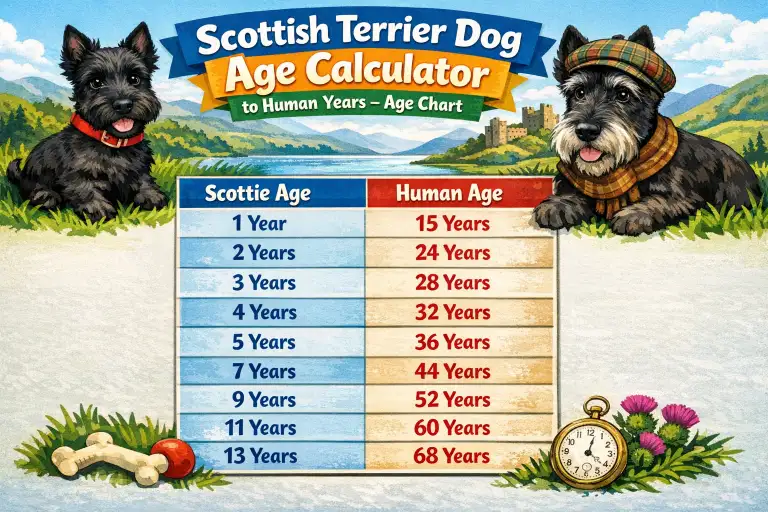
As your Scottie gets older, feeding needs can change. Puppies need more frequent meals, adults need balanced maintenance portions, and seniors may need fewer calories with better weight control. You can also check your dog’s age stage using the Scottish Terrier Dog Age Calculator to better understand when feeding adjustments may be needed.
What Should a Scottish Terrier Eat?
A Scottish Terrier should eat a complete and balanced dog food built around quality animal protein, moderate fat, digestible carbohydrates, essential vitamins, and minerals. The best dog food for Scottish Terriers should support muscle tone, skin health, digestion, and weight control without adding unnecessary calories.
Protein is the foundation of a good Scottish Terrier food. Look for meals where animal protein is the first major ingredient, such as chicken, turkey, lamb, beef, fish, or another named meat source. Protein helps maintain lean muscle, supports immune health, and contributes to healthy skin and coat condition.
Fat is also important, but it must be controlled. Healthy fats, especially omega-3 and omega-6 fatty acids, support coat shine, skin comfort, brain function, and energy. However, foods that are too high in fat can contribute to weight gain if your Scottie is not very active.
Carbohydrates can be useful when they come from digestible sources such as rice, oats, barley, peas, pumpkin, or sweet potato. The goal is not to overload the diet with carbohydrates, but to provide steady energy and support digestion without causing excess weight gain.
Scottish Terriers may do better on simple formulas instead of foods with long ingredient lists, artificial colors, heavy fillers, or frequent recipe changes. If your Scottie has itching, stomach upset, or recurring ear issues, discuss diet changes with your veterinarian before switching foods repeatedly.
General nutritional needs for Scottish Terriers:
| Nutrient | Recommended Focus | Why It Matters |
|---|---|---|
| Animal Protein | Primary ingredient | Supports lean muscle, skin, coat, and immune health |
| Moderate Fat | Controlled, not excessive | Provides energy and supports coat health without unnecessary weight gain |
| Omega Fatty Acids | Balanced omega-3 and omega-6 | Helps support skin comfort, coat shine, and inflammation control |
| Digestible Carbs | Rice, oats, barley, pumpkin, sweet potato | Provides steady energy and supports digestion |
| Fiber | Moderate fiber level | Helps stool quality, digestion, and fullness |
| Vitamins & Minerals | Complete and balanced formula | Supports bones, metabolism, immune health, and overall wellness |
| Calories | Matched to age and activity | Prevents overfeeding and weight gain |
How Much Should You Feed a Scottish Terrier?
How much to feed a Scottish Terrier depends on age, weight, activity level, metabolism, and the calorie density of the food. Most adult Scottish Terriers do best with measured meals instead of free-feeding because this breed can gain weight easily.
As a general rule, adult Scotties are usually fed two measured meals per day. Puppies need smaller, more frequent meals, while seniors may need slightly reduced portions if they are less active. Always check the feeding guide on your dog food bag and adjust based on your Scottie’s body condition.
You should be able to feel your Scottish Terrier’s ribs without pressing hard, and your dog should have a visible waist when viewed from above. If the ribs are hard to feel or the waist disappears, the daily food amount may be too high.
Scottish Terrier feeding chart by weight and activity:
| Scottie Weight | Low Activity | Moderate Activity | Higher Activity |
|---|---|---|---|
| 8 lbs | ½ cup daily | ½–⅔ cup daily | ⅔–¾ cup daily |
| 10 lbs | ⅔ cup daily | ¾ cup daily | ¾–1 cup daily |
| 12 lbs | ¾ cup daily | ¾–1 cup daily | 1–1⅛ cups daily |
| 14 lbs | ¾–1 cup daily | 1–1⅛ cups daily | 1⅛–1¼ cups daily |
| 16 lbs | 1 cup daily | 1⅛ cups daily | 1¼ cups daily |
These are only starting estimates. Cup amounts vary because one food may contain far more calories per cup than another. If your Scottish Terrier is gaining weight, reduce treats first, then adjust meals slowly. If your dog is losing weight or seems hungry all the time, review calories, activity level, and health status with your veterinarian.
Scottish Terrier Feeding Schedule by Life Stage
A good Scottish Terrier feeding schedule should match your dog’s age and energy needs. Puppies need more frequent meals to support growth, adults need consistent portions, and seniors often need careful calorie control.
| Life Stage | Meals Per Day | Feeding Focus |
|---|---|---|
| Puppy: 2–6 months | 3–4 meals | Growth support, steady energy, small meals |
| Puppy: 6–12 months | 2–3 meals | Gradual transition toward adult schedule |
| Adult: 1–7 years | 2 meals | Weight control, muscle support, steady energy |
| Senior: 7+ years | 2 smaller meals | Calorie control, digestion, joint-friendly weight |
Avoid leaving food out all day unless your veterinarian recommends it. Free-feeding makes it harder to track how much your Scottie is eating and can increase the risk of gradual weight gain.
Best Dog Food Types for Scottish Terriers
The best food for Scottish Terriers is not always one specific type of food. It is the food that fits your dog’s age, weight, digestion, skin condition, and activity level. Some Scotties do well on high-quality kibble, while others may need wet food, a limited-ingredient diet, or a carefully planned fresh diet.
Dry food: High-quality kibble is often the easiest daily option for Scottish Terriers. It is convenient, easy to measure, and usually works well for adult maintenance. Choose dry food with named animal protein, moderate fat, controlled calories, and no unnecessary artificial additives.
Wet food: Wet food can help picky eaters and senior Scotties because it is softer, more aromatic, and higher in moisture. It can be used alone or mixed with dry food, but portions must be measured carefully because extra calories can add up quickly.
Fresh or homemade food: Fresh food may work well for some Scotties, especially dogs with picky eating habits or ingredient sensitivities. Homemade diets should not be guessed. They need proper balance, including protein, fat, calcium, phosphorus, vitamins, and minerals.
Limited-ingredient food: This may be useful for Scottish Terriers with suspected food sensitivities, itchy skin, recurring ear problems, or digestive upset. A limited-ingredient diet should be introduced carefully and monitored over several weeks.
Weight-control food: If your Scottie is overweight, a lower-calorie food with good protein and fiber may help your dog feel full while reducing total calories. Weight loss should be gradual, not sudden.
Comparison of Scottish Terrier food types:
| Food Type | Best For | Watch Out For |
|---|---|---|
| Dry Food | Daily feeding, easy measuring, adult maintenance | Low-quality fillers, too many calories per cup |
| Wet Food | Picky eaters, seniors, hydration support | Overfeeding when mixed with kibble |
| Fresh Food | Digestibility, picky eaters, controlled ingredients | Unbalanced homemade recipes |
| Limited-Ingredient Food | Sensitive stomach, skin issues, food trials | Switching too often without tracking results |
| Weight-Control Food | Overweight Scotties, low-activity adults | Cutting calories too aggressively |
Scottish Terrier Food Allergies, Sensitive Stomach, and Weight Problems
Some Scottish Terriers need extra care with food because of allergies, sensitive digestion, weight gain, or picky eating. These problems should be handled carefully because changing foods too often can make symptoms harder to understand.
Food allergies or sensitivities may show up as itchy skin, recurring ear problems, paw licking, soft stools, gas, or digestive upset. If food is suspected, a limited-ingredient or novel-protein diet may help, but it should be used consistently instead of switching foods every few days.
Sensitive stomach issues may improve with highly digestible food, moderate fat, steady fiber, and slow diet transitions. When changing food, mix the new food with the old food gradually over several days to reduce stomach upset.
Weight gain is one of the most important feeding problems in Scottish Terriers. Because they are short, sturdy dogs, extra weight can place more stress on the spine, legs, and joints. Measure meals, count treats, avoid table scraps, and use body condition instead of guessing by appearance alone.
Picky eating can happen when dogs receive too many treats, table food, or frequent food changes. Try keeping a consistent feeding routine, removing uneaten food after a short time, and using small amounts of wet food as a topper if needed.
Common Scottish Terrier feeding problems and solutions:
| Problem | Common Signs | What to Do |
|---|---|---|
| Food Sensitivity | Itching, ear issues, soft stool | Use a simple diet and discuss food trials with a vet |
| Sensitive Stomach | Gas, vomiting, inconsistent stool | Switch food slowly and choose digestible ingredients |
| Weight Gain | No waist, hard-to-feel ribs, low stamina | Measure food, reduce treats, increase safe activity |
| Picky Eating | Refuses meals, waits for treats | Keep a routine and avoid constant food switching |
| Overfeeding Treats | Gradual weight gain | Count treats as part of daily calories |
If your Scottish Terrier has sudden appetite loss, repeated vomiting, diarrhea, rapid weight change, severe itching, or signs of pain, speak with your veterinarian. Diet can support health, but it should not replace professional care when symptoms are ongoing or severe.
Foods Scottish Terriers Should Avoid
Scottish Terriers should avoid unsafe human foods and high-calorie extras that can cause illness or weight gain. Even small amounts of the wrong food can create problems, especially in a small breed.
- Chocolate
- Grapes and raisins
- Onions and garlic
- Xylitol or sugar-free foods
- Alcohol or caffeine
- Cooked bones
- Very fatty table scraps
- Excess cheese, processed meat, or salty snacks
For daily treats, choose low-calorie options and keep them limited. Treats should not replace balanced meals or push your Scottie over its daily calorie needs.
Related Scottish Terrier Guides
To build a stronger Scottish Terrier care plan, use these related guides:
- Scottish Terrier Dog Age Calculator
- Scottish Terrier Dog Full Guide
- Scottish Terrier Dog Grooming Basics
- Scottish Terrier Dog General Training Guides
- Scottish Terrier Dog Cost of Ownership
Scottish Terrier Nutrition and Feeding FAQs
What is the best dog food for Scottish Terriers?
The best dog food for Scottish Terriers is a complete and balanced food with named animal protein, moderate fat, digestible carbohydrates, healthy omega fatty acids, and controlled calories. Scotties often do best on simple formulas that support skin, coat, digestion, and weight control.
How much should I feed a Scottish Terrier?
Most adult Scottish Terriers need measured meals twice daily, with the total amount based on body weight, activity level, and food calories. Many adult Scotties eat around ⅔ to 1¼ cups daily, but the exact amount depends on the specific food and your dog’s body condition.
How often should Scottish Terriers eat?
Adult Scottish Terriers usually do best with two meals per day. Puppies may need three to four smaller meals daily, while seniors often benefit from two smaller, controlled meals to help prevent weight gain.
Can Scottish Terriers eat wet food?
Yes, Scottish Terriers can eat wet food if it is complete and balanced. Wet food may help picky eaters, older dogs, or dogs that need more moisture in their diet. If mixing wet food with kibble, reduce the dry food amount to avoid overfeeding.
Are Scottish Terriers prone to weight gain?
Yes, Scottish Terriers can gain weight easily because they are compact, sturdy dogs with strong appetites. Measured meals, limited treats, regular walks, and body condition checks are important for keeping them at a healthy weight.
What should I feed a Scottish Terrier puppy?
A Scottish Terrier puppy should eat a complete puppy food designed for growth. Feed small meals three to four times daily when young, then gradually reduce meal frequency as the puppy approaches adulthood.
What foods should Scottish Terriers avoid?
Scottish Terriers should avoid chocolate, grapes, raisins, onions, garlic, xylitol, alcohol, caffeine, cooked bones, and fatty table scraps. These foods can be unsafe or add unnecessary calories.

Ata Ur Rehman is the founder of Pet Age in Human Years Calculator, an educational platform that provides age conversion charts and lifespan guides for dogs, cats, birds, and other companion animals. His work focuses on helping pet owners understand how animal ages translate into human years using commonly accepted age conversion formulas and published lifespan averages.
The website compiles breed and species lifespan data from kennel clubs, breed organizations, and general animal lifespan studies to present simple and easy-to-understand guides for pet owners worldwide.
This website was created to centralize animal age conversion charts into one easy reference platform for pet owners.
This article is for general education. For symptoms, medication, diet changes, or health concerns, use a qualified veterinarian who can assess your individual pet.