On this page
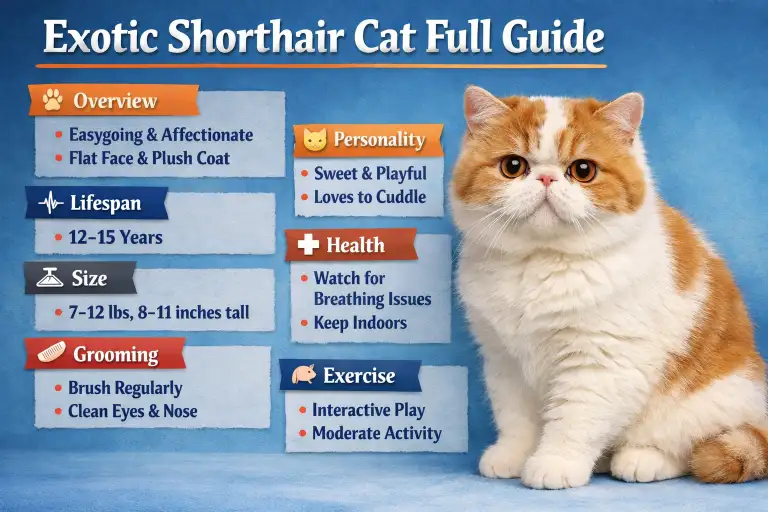
The Exotic Shorthair is a charming and friendly cat that looks a lot like the Persian but has a short, plush coat. Many people are drawn to this breed because it combines the sweet, calm personality of a Persian with easier grooming. These cats are perfect for owners who want a gentle, affectionate companion without the daily brushing demands of a long-haired breed.
Exotic Shorthairs were created in the mid-20th century by crossing Persians with American Shorthairs. The goal was to develop a cat with the Persian’s rounded face and calm personality but with a coat that was easier to care for. Today, the breed is recognized by major cat organizations like the CFA and TICA and is a favorite in cat shows around the world.
These cats are known for their gentle and laid-back temperament. They enjoy being around people and often form strong bonds with their owners. While they are playful, they are not overly energetic, making them a good fit for apartment living or families who want a calm indoor cat.
Exotic Shorthairs also have a distinctive appearance that makes them stand out. Their round face, large eyes, and plush coat give them a teddy bear-like look. Despite their small size and compact body, they are sturdy and muscular, giving them a strong, healthy build. Many owners describe them as “Persians you can snuggle without the extra grooming work.”
Breed Snapshot Table
| Trait | Details |
|---|---|
| Origin | United States (Persian × American Shorthair) |
| Recognition | CFA, TICA |
| Coat | Short, dense, plush |
| Color Variations | Solid, tabby, calico, bi-color, pointed |
| Size | Medium, 8–12 lbs average |
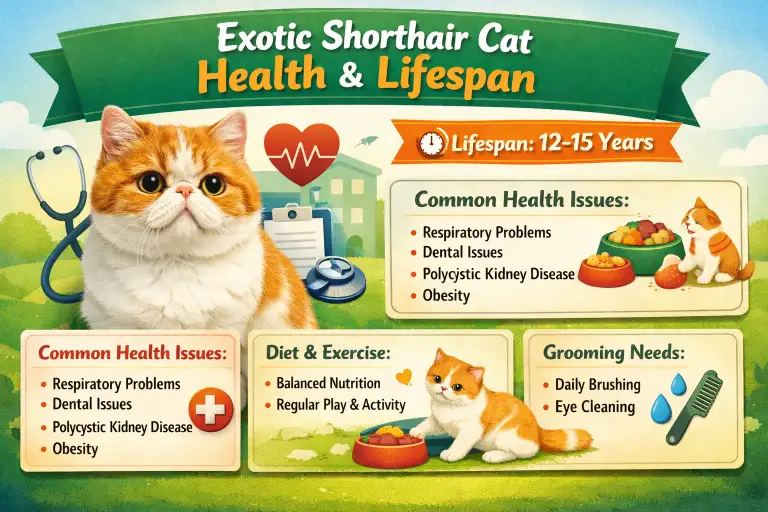
| Lifespan | 12–15 years |
| Temperament | Gentle, affectionate, calm, playful |
| Activity Level | Moderate |
| Grooming Level | Low to moderate |
Appearance & Physical Traits
Exotic Shorthairs are medium-sized cats with a compact, muscular body. They have a round head with large, expressive eyes that give them a sweet, alert expression. Their short nose and flat face are signature features inherited from their Persian ancestors, and they give the cat a unique, endearing look.
The coat is one of the breed’s most notable traits. It is short, thick, and plush, almost like velvet. Exotic Shorthairs come in many colors and patterns, including solid colors, tabby, calico, and pointed variations. Their coat does not mat easily, which makes grooming much simpler than for a long-haired Persian.
Their small, rounded ears sit wide apart on the head, complementing their round face. Paws are large and round, and the tail is short but fluffy, completing the overall compact and balanced appearance. These cats have strong legs and a sturdy build, giving them both elegance and strength in their movements.
Many people compare Exotic Shorthairs to Persians because of their similar face and body shape. However, the short coat gives them a more playful, approachable look. They are often described as looking like a “teddy bear cat,” which is part of the breed’s charm.
Appearance Comparison Table
| Feature | Exotic Shorthair | Persian | British Shorthair |
|---|---|---|---|
| Coat | Short, plush | Long, thick | Short, dense |
| Face | Flat, round | Flat, round | Rounded, less flat |
| Size | Medium | Medium-Large | Medium |
| Grooming | Low to moderate | High | Low |
| Personality | Calm, affectionate | Calm, affectionate | Calm, independent |
Temperament & Behavior
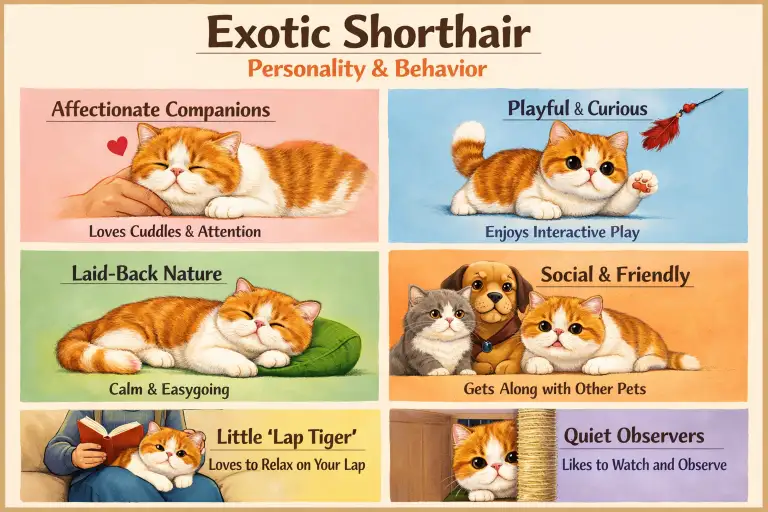
Exotic Shorthairs are known for being calm and gentle. They are affectionate without being clingy, which makes them perfect for families and single owners alike. These cats love attention and often follow their favorite person around the house but are also happy to relax quietly when given space.
They enjoy playing but are not overly active. Short bursts of chasing toys or climbing cat trees keep them entertained, but they prefer indoor environments and quiet spaces. They are generally easygoing and get along well with children, other cats, and even friendly dogs if introduced properly.
Communication is another strong trait of Exotic Shorthairs. They have soft, quiet voices and rarely meow loudly. Their expressive eyes and gentle purrs are often enough to communicate their moods. Many owners report that these cats have a very intuitive nature and seem to sense when their person needs comfort.
While very sweet, they do have some unique behaviors. Exotic Shorthairs may be sensitive to loud noises and sudden changes in their environment. They also enjoy routine and can become bored if left alone for long periods. Interactive toys or a companion cat can help keep them mentally stimulated.
Care Essentials
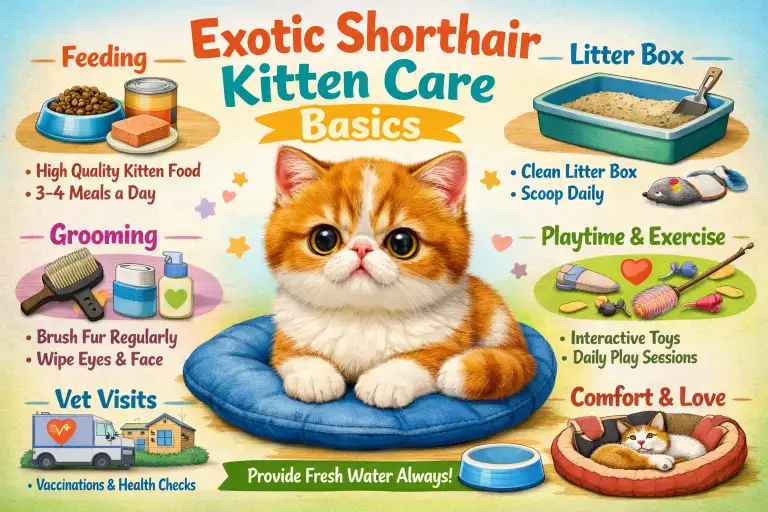
Exotic Shorthairs are relatively easy to care for compared to long-haired breeds. Their short, plush coat requires brushing once or twice a week to remove loose hair and prevent minor matting. Regular nail trimming, ear checks, and dental care are also recommended to keep them healthy.
Health-wise, they are generally robust but can inherit some issues from their Persian ancestors. Brachycephalic features may lead to breathing difficulties, and they are prone to eye tear staining. Polycystic kidney disease (PKD) is a genetic concern, so screening before breeding or adoption is important. Routine vet checkups are recommended to catch any early signs of health problems.
Training and socialization are straightforward with this breed. They learn routines quickly, including litter box habits and gentle play rules. They respond well to positive reinforcement and treats, making them fairly easy to train compared to other breeds.
Daily life with an Exotic Shorthair is calm and predictable. A few short play sessions, a comfortable spot near the family, and regular grooming are usually all that is needed to keep this cat happy and healthy.
Care & Health Checklist Table
| Care Task | Frequency |
|---|---|
| Brushing | 1–2 times per week |
| Nail Trimming | Every 2–3 weeks |
| Dental Cleaning | Weekly or as advised |
| Ear Cleaning | Monthly |
| Vet Checkups | Annual |
| Screening for PKD | Before adoption / breeding |
Pros, Cons & Choosing an Exotic Shorthair
Exotic Shorthairs are ideal for people who want a calm, affectionate, and low-maintenance indoor cat. They are playful but not hyperactive, love attention but respect personal space, and are well-suited for apartments and families alike.
Some potential drawbacks include the flat face, which may cause breathing or eye issues. They can be sensitive to environmental changes and may not enjoy high-noise households. Additionally, while grooming is easier than Persians, they still need weekly brushing and care.
When deciding if this breed is right for you, consider your household, activity level, and commitment to routine care. They thrive with attentive owners who provide interaction and gentle affection, making them a wonderful choice for first-time cat owners, seniors, or families with children.
Pros vs Cons Table
| Pros | Cons |
|---|---|
| Gentle and affectionate | May have breathing issues |
| Low to moderate grooming | Sensitive to loud noise |
| Calm indoor companion | Can become bored if alone |
| Good with children and other pets | Short face may lead to eye issues |
| Playful but not hyperactive | Need regular vet checkups |
Similar Breeds Comparison Table
| Breed | Coat | Temperament | Grooming | Activity Level |
|---|---|---|---|---|
| Exotic Shorthair | Short, plush | Calm, affectionate | Low | Moderate |
| Persian | Long, thick | Calm, affectionate | High | Low |
| British Shorthair | Short, dense | Calm, independent | Low | Moderate |
| Scottish Fold | Short to medium | Gentle, playful | Low | Moderate |
FAQs
- Are Exotic Shorthairs good with kids?
Yes, they are gentle, patient, and tolerant of handling, making them ideal for families with children. - Do Exotic Shorthairs shed a lot?
Shedding is moderate; regular brushing helps reduce loose hair. - How active are Exotic Shorthairs?
They are moderately active, enjoying short play sessions but mostly prefer lounging. - Do they require special grooming?
Weekly brushing and routine nail, ear, and dental care are enough for most cats. - Are Exotic Shorthairs noisy?
They are quiet cats with soft voices and gentle purrs. - How long do Exotic Shorthairs live?
Typically 12–15 years with proper care and regular vet visits. - Are they suitable for apartments?
Yes, their calm nature and moderate activity make them excellent apartment cats.
Final Thoughts
Exotic Shorthairs are perfect for owners seeking a calm, loving, and easygoing companion. They are affectionate without being clingy, playful without being hyperactive, and enjoy spending quiet time with their humans. Weekly grooming and attentive care are all that is needed to keep them healthy and happy.
This breed is well-suited for first-time cat owners, families, seniors, or anyone looking for a gentle indoor cat. However, households with loud noise or very high activity may not be ideal. Overall, their sweet personality and teddy bear-like appearance make them a beloved choice for many cat lovers.
For more detailed information about Exotic Shorthairs and their care, you can visit the Cat Fanciers’ Association guide here: https://cfa.org/exotic-shorthair

Ata Ur Rehman is the founder of Pet Age in Human Years Calculator, an educational platform that provides age conversion charts and lifespan guides for dogs, cats, birds, and other companion animals. His work focuses on helping pet owners understand how animal ages translate into human years using commonly accepted age conversion formulas and published lifespan averages.
The website compiles breed and species lifespan data from kennel clubs, breed organizations, and general animal lifespan studies to present simple and easy-to-understand guides for pet owners worldwide.
This website was created to centralize animal age conversion charts into one easy reference platform for pet owners.
This article is for general education. For symptoms, medication, diet changes, or health concerns, use a qualified veterinarian who can assess your individual pet.