On this page
Owning an Exotic Shorthair can be very rewarding, but it is important to understand the costs involved. These cats are friendly, calm, and cute, but they need proper care to stay healthy. Without planning, expenses can add up faster than expected.
Many people think the main cost is just buying the cat, but there are many hidden costs like food, litter, vet care, and emergencies. Knowing these costs helps you decide if you can afford to take care of a cat for its whole life.
Exotic Shorthairs have some breed-specific needs, like eye cleaning and gentle grooming, which add to the overall care costs. By planning ahead, you can provide a safe, happy home without surprises.
This guide will break down all costs in simple terms. You will see the one-time costs, monthly and yearly expenses, unexpected emergencies, and even lifetime estimates. This way, you can make a smart decision before bringing an Exotic Shorthair home.
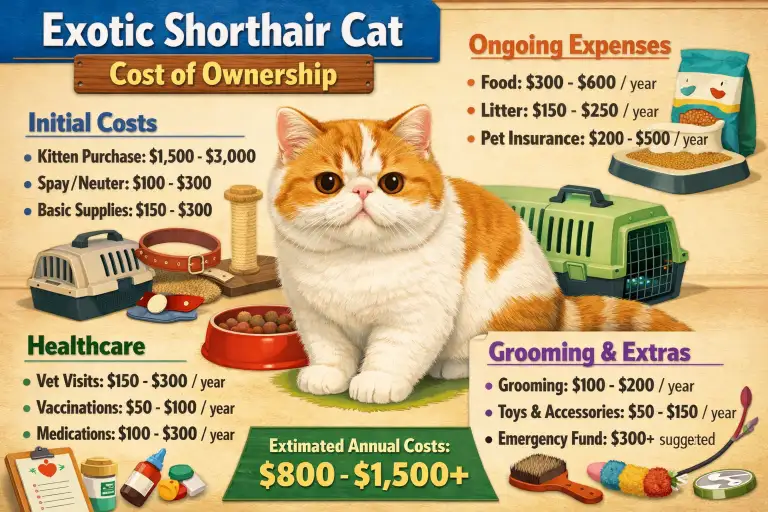
One-Time Initial Costs
When you first bring an Exotic Shorthair home, there are several one-time expenses you should plan for. These costs happen in the first few months and set up your cat for a healthy life.
The first cost is the price of adopting or buying the cat. Shelter adoption is usually lower than buying from a breeder, but both include important fees. You also need to plan for a spay or neuter procedure, microchip, and initial vaccinations. These are critical to keep your cat healthy and safe.
Next, you’ll need essential supplies like a litter box, litter, food and water dishes, bed, toys, scratching posts, and a carrier. Even though these are one-time purchases, some items will need occasional replacement over the years.
Grooming tools like brushes and nail clippers are also important, especially for Exotic Shorthairs, who need gentle maintenance for their coat and eyes. These small investments make a big difference in keeping your cat comfortable.
Initial & One-Time Costs
| Item | Low Cost | Average Cost | High Cost |
|---|---|---|---|
| Adoption/Purchase | $50 | $400 | $1,500 |
| Spay/Neuter & Vaccines | $150 | $250 | $400 |
| Microchip & ID | $25 | $50 | $100 |
| Supplies (litter box, bed, carrier, dishes, toys) | $100 | $200 | $400 |
| Grooming Tools | $20 | $50 | $100 |
| Total | $345 | $950 | $2,500 |
Ongoing Monthly and Annual Costs
Once your Exotic Shorthair is home, you will have regular costs to keep it healthy and happy. Food is one of the largest monthly expenses. Cats need high-quality cat food to avoid health problems. Depending on your choice, monthly food costs can vary a lot.
Litter is another regular expense. Exotic Shorthairs produce a moderate amount of waste, so you will need to buy enough litter each month. Treats and toys are optional but can improve your cat’s quality of life.
Routine vet care includes flea and tick prevention, yearly vaccines, and checkups. These help prevent health issues from becoming expensive emergencies. Grooming is needed too — regular brushing and nail trimming will keep your cat comfortable.
Boarding or pet sitting may be required if you travel. These are not monthly costs but can occur several times per year. Budgeting for these ensures your cat is cared for even when you are away.
Ongoing Monthly & Annual Costs
| Item | Monthly Cost | Annual Cost |
|---|---|---|
| Food | $30 | $360 |
| Litter | $15 | $180 |
| Routine Vet & Preventive Care | $20 | $240 |
| Grooming & Supplies | $10 | $120 |
| Boarding / Pet Sitting | – | $200 |
| Toys & Treats | $5 | $60 |
| Total | $80 | $1,160 |
Unexpected & Emergency Costs
Even with good planning, cats can have unexpected costs. Illness, injuries, or emergencies can be expensive. Exotic Shorthairs may have breed-specific risks, like breathing issues or dental problems, which can increase veterinary bills.
A sudden vet visit or surgery can cost hundreds or even thousands of dollars. Having an emergency fund can prevent financial stress and ensure your cat gets care when it’s needed most.
Other unexpected costs include accidents at home, like scratched furniture or minor repairs. Older cats may require extra care, such as supplements, special diets, or more frequent vet visits.
Planning for emergencies doesn’t mean worrying constantly, but it does mean being prepared. This protects your cat and helps you avoid difficult financial decisions later.
Unexpected & Emergency Costs Examples
| Type | Low Cost | Average Cost | High Cost |
|---|---|---|---|
| Minor Illness / Vet Visit | $50 | $150 | $300 |
| Major Surgery | $500 | $1,200 | $3,000 |
| Dental Cleaning | $200 | $400 | $800 |
| Home Repairs / Misc | $50 | $100 | $200 |
Lifetime Cost Estimates
Owning an Exotic Shorthair is a long-term commitment. These cats can live 12–15 years. When you combine initial costs, ongoing monthly expenses, annual costs, and potential emergencies, you get a realistic picture of the lifetime cost.
For a single indoor Exotic Shorthair with average spending, you can expect to spend around $15,000–$20,000 over its lifetime. High-end care or multiple emergencies can push this cost higher. Planning ahead helps you make informed decisions and prevents surprises.
Here’s a breakdown of lifetime costs, including low, average, and high spending scenarios:
Lifetime Cost Estimates
| Category | Low Cost | Average Cost | High Cost |
|---|---|---|---|
| One-Time Initial Costs | $345 | $950 | $2,500 |
| Monthly & Annual Costs | $9,280 | $13,800 | $18,000 |
| Unexpected / Emergency | $1,000 | $3,000 | $6,000 |
| Total Lifetime | $10,625 | $17,750 | $26,500 |
Practical Ways to Manage Costs Responsibly
There are ways to manage costs without compromising your cat’s health. Planning a monthly budget is the first step. Track expenses for food, litter, vet care, and toys. Setting aside money for emergencies is crucial.
Buy supplies in bulk when possible, but choose quality food and safe litter. Preventive care can save money by avoiding expensive illnesses later. Grooming your cat at home instead of paying for professional services can also reduce costs.
Consider your lifestyle too. Indoor cats may have lower vet costs, while multi-cat households may need more supplies. Small adjustments, like using durable toys or rotating enrichment items, can help reduce waste and spending.
By planning and budgeting responsibly, you can enjoy the companionship of your Exotic Shorthair without financial stress. This ensures a happy, healthy life for both you and your cat.
For more detailed care and cost planning tips for Exotic Shorthairs, you can visit The International Cat Association.

Ata Ur Rehman is the founder of Pet Age in Human Years Calculator, an educational platform that provides age conversion charts and lifespan guides for dogs, cats, birds, and other companion animals. His work focuses on helping pet owners understand how animal ages translate into human years using commonly accepted age conversion formulas and published lifespan averages.
The website compiles breed and species lifespan data from kennel clubs, breed organizations, and general animal lifespan studies to present simple and easy-to-understand guides for pet owners worldwide.
This website was created to centralize animal age conversion charts into one easy reference platform for pet owners.
This article is for general education. For symptoms, medication, diet changes, or health concerns, use a qualified veterinarian who can assess your individual pet.