On this page
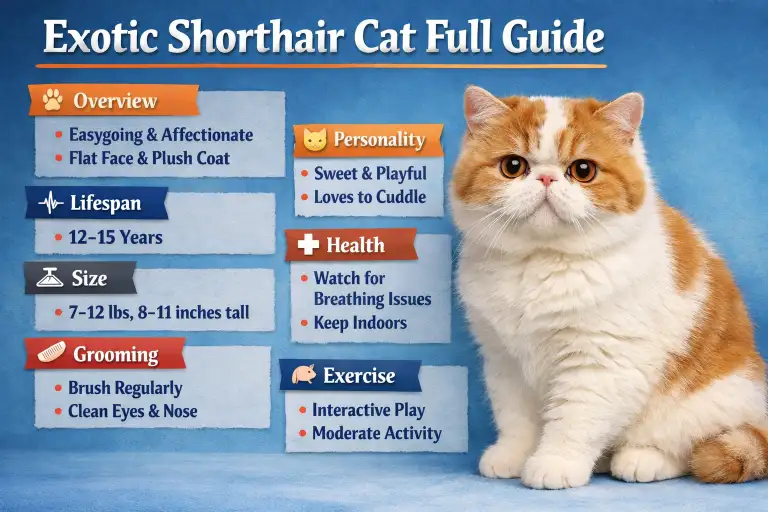
Exotic Shorthairs are gentle, affectionate cats with round faces and plush coats. They are often compared to Persians, but with shorter fur, making grooming easier. Like all cats, their overall health and lifespan depend on care, genetics, and environment. Understanding what to expect helps owners plan for a long, happy life with their feline companion.
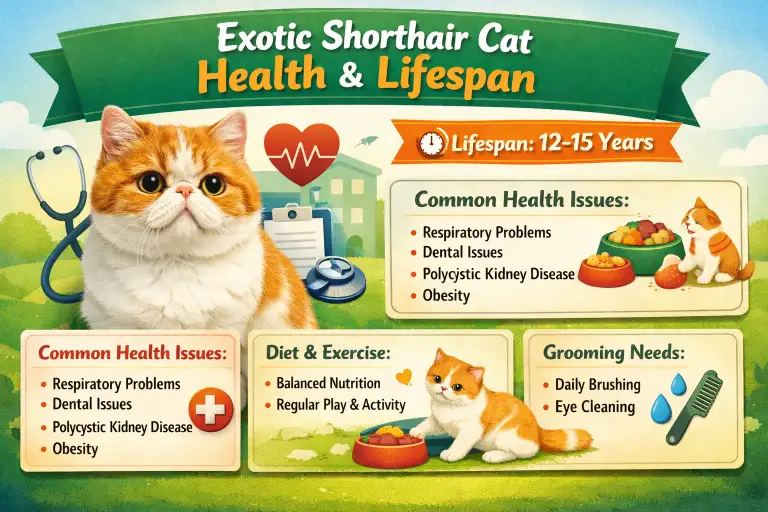
On average, Exotic Shorthairs live between 12 and 15 years, especially when kept indoors. Outdoor cats tend to face more risks, such as accidents, infections, and stress from the environment, which can shorten lifespan. Providing a safe indoor environment is one of the simplest ways to help your cat live a longer, healthier life.
While they are generally healthy, Exotic Shorthairs have some breed-specific traits, such as a flattened face (brachycephalic) and round eyes. These traits can affect breathing, tear drainage, and dental alignment. Knowing what is normal and what may require attention can give owners peace of mind.
Many factors, including nutrition, regular veterinary care, and mental enrichment, influence lifespan. Early observation of small changes in behavior or appetite can alert you to potential problems before they become serious. Preventive care and a safe, stimulating environment are key for supporting a long, happy life.
Lifespan Expectations for Exotic Shorthairs
| Category | Typical Lifespan |
|---|---|
| Indoor Exotic Shorthair | 12–15+ years |
| Outdoor Exotic Shorthair | Shorter, varies |
| Factors that may shorten lifespan | Obesity, stress, lack of routine care |
Common Health Issues in Exotic Shorthair Cats
Exotic Shorthairs are prone to some health issues due to their unique physical features. Brachycephalic traits can make breathing a bit noisier and sometimes cause mild snoring. Their large, round eyes may produce more tear staining, which needs gentle cleaning. These features are normal but should be monitored for changes.
Dental problems are common because of their short jaws. Overcrowded teeth can lead to tartar buildup and gum irritation. Maintaining oral hygiene with regular vet check-ups is important. Obesity is another concern, especially for indoor cats who may be less active. Carrying extra weight can stress the heart, kidneys, and joints.
Kidney and urinary issues may appear as cats age, and some may develop mild urinary tract problems. Paying attention to changes in drinking or urination habits helps owners notice problems early. While serious conditions can occur, routine care usually keeps most Exotic Shorthairs healthy.
Other health issues may include minor infections or age-related changes in mobility and vision. Understanding these tendencies helps owners provide appropriate care without worry. Observing your cat closely and noting any unusual changes is the best preventive measure.
Common Health Issues & What Owners Should Know
| Health Category | What to Watch For | Preventive Step |
|---|---|---|
| Respiratory & Brachycephalic Traits | Noisy breathing, snoring | Vet check-ups, monitoring |
| Dental Disease | Bad breath, tartar | Regular dental exams/cleaning |
| Obesity | Weight gain | Balanced diet & exercise |
| Eye Irritation | Discharge, redness | Gentle cleaning, monitoring |
| Urinary & Kidney Concerns | Frequent urination | Hydration & vet review |
Key Factors That Influence Lifespan
Several factors influence how long an Exotic Shorthair may live. Genetics play a role, as some cats inherit traits that affect heart, kidney, or respiratory health. While you cannot change genetics, being aware of inherited tendencies can help with early monitoring.
Lifestyle is another major factor. Cats that eat a balanced diet and maintain a healthy weight are generally healthier. Indoor cats face fewer risks than outdoor cats, and stress-free environments contribute to long-term wellbeing. Providing toys, climbing structures, and quiet spaces can improve both mental and physical health.
Routine veterinary care is essential. Regular check-ups help detect problems before they become serious. Vaccinations, parasite prevention, and dental exams are simple steps that make a big difference over a cat’s life.
Even small daily habits matter. Observing appetite, activity, and litter box habits helps owners notice early changes. By combining good nutrition, exercise, mental stimulation, and regular veterinary care, you can give your Exotic Shorthair the best chance at a long, healthy life.
Preventive Care & Early Warning Signs
Preventive care is the best way to keep Exotic Shorthairs healthy. Routine veterinary visits allow for early detection of problems, including dental disease, obesity, and minor infections. Vaccinations and parasite control protect against common illnesses.
Owners should also watch for subtle changes at home. Reduced appetite, changes in drinking or urination, sneezing, or unusual lethargy can indicate a problem. Monitoring behavior and physical condition regularly makes it easier to notice these early signs.
Grooming is an important preventive step. Although Exotic Shorthairs have shorter fur than Persians, brushing helps reduce shedding, hairballs, and skin irritation. Cleaning around the eyes and keeping nails trimmed prevents minor issues from becoming bigger problems.
Subtle Warning Signs vs. When to Consult a Vet
| Observation | May Be Early Concern | Seek Veterinary Evaluation |
|---|---|---|
| Reduced appetite | ✔️ | ❌ (unless prolonged) |
| Sneezing occasionally | ✔️ | ❌ |
| Sudden lethargy | ✔️ | ✔️ |
| Change in urination | ✔️ | ✔️ |
| Labored breathing | ❌ | ✔️ |
Aging & Quality of Life in Senior Exotic Shorthairs
As Exotic Shorthairs age, changes in mobility, vision, and activity are normal. Providing softer bedding, ramps, or low-height furniture can help older cats move comfortably. Maintaining mental stimulation with gentle play and interactive toys is also important.
Diet adjustments may be needed for senior cats to support kidney health, joint mobility, and weight management. Always follow your veterinarian’s guidance for nutritional changes. Consistent feeding schedules and easy access to water help maintain overall wellbeing.
Dental and grooming care remain critical as cats age. Brushing, regular teeth checks, and grooming prevent discomfort and secondary issues. Watching for subtle changes in behavior, like hiding or reduced interaction, helps owners spot early signs of discomfort or illness.
Even in their senior years, Exotic Shorthairs can enjoy a high quality of life. Preventive care, attention to comfort, and emotional support make a significant difference in their happiness and longevity.
For more detailed guidance on cat health and wellness, you can visit the American Association of Feline Practitioners (AAFP) website: https://catvets.com

Ata Ur Rehman is the founder of Pet Age in Human Years Calculator, an educational platform that provides age conversion charts and lifespan guides for dogs, cats, birds, and other companion animals. His work focuses on helping pet owners understand how animal ages translate into human years using commonly accepted age conversion formulas and published lifespan averages.
The website compiles breed and species lifespan data from kennel clubs, breed organizations, and general animal lifespan studies to present simple and easy-to-understand guides for pet owners worldwide.
This website was created to centralize animal age conversion charts into one easy reference platform for pet owners.
This article is for general education. For symptoms, medication, diet changes, or health concerns, use a qualified veterinarian who can assess your individual pet.