On this page
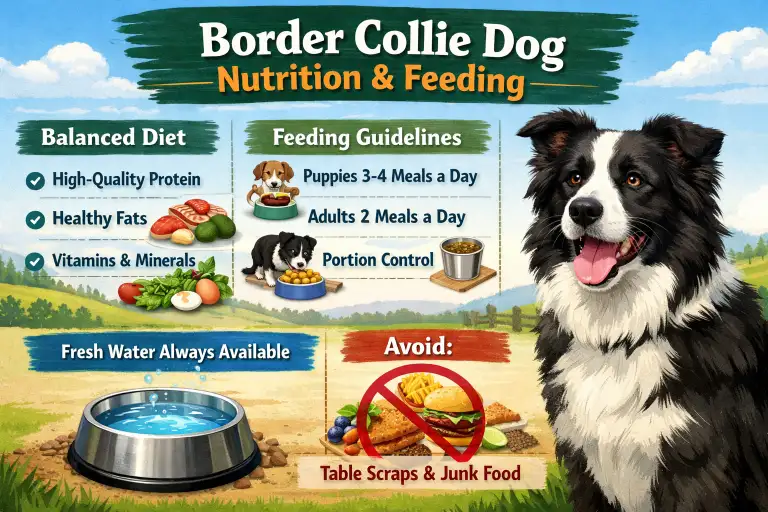
Border Collies are active, high-energy dogs, so their food needs are closely tied to age, weight, activity level, and body condition. A young Border Collie puppy needs frequent meals and enough calories for growth, while an adult Border Collie needs controlled portions to maintain lean muscle. Senior Border Collies often need fewer calories but better support for digestion, joints, and healthy weight.
This Border Collie feeding chart by age gives you a practical starting point for daily food amounts, calories, and meal frequency. Use it as a guide, then adjust based on your dog’s weight, activity, stool quality, and body condition.
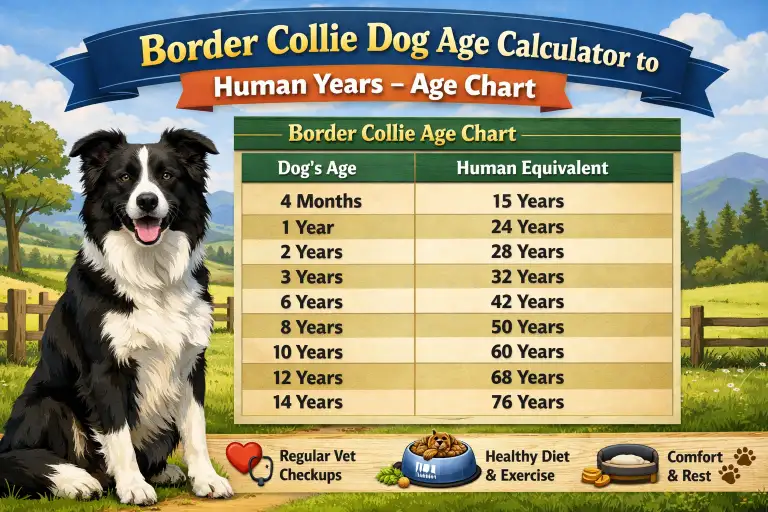
If you also want to understand your Border Collie’s current life stage, use the Border Collie Dog Age Calculator to compare your dog’s age before adjusting feeding routines.
Border Collie Feeding Chart by Age
The right amount to feed a Border Collie depends on age, body weight, activity level, metabolism, and whether the dog is growing, maintaining, or entering the senior stage. The chart below gives a general feeding range for healthy Border Collies. Always check your dog food label because calories per cup vary by brand and formula.
| Border Collie Age | Meals Per Day | Daily Food Amount | Daily Calories | Feeding Focus |
|---|---|---|---|---|
| 8–12 weeks | 3–4 meals | 1 to 2 cups | 600–900 calories | Growth, digestion, steady energy |
| 3–6 months | 3 meals | 1.5 to 2.5 cups | 700–1,100 calories | Puppy growth and muscle development |
| 6–12 months | 2–3 meals | 2 to 3 cups | 800–1,300 calories | Controlled growth and activity support |
| 1–7 years | 2 meals | 1.5 to 3 cups | 700–1,400 calories | Lean adult maintenance |
| 8+ years | 2 smaller meals | 1.25 to 2.5 cups | 600–1,100 calories | Weight control, joints, digestion |
These feeding amounts are estimates. A working or sport Border Collie may need more calories than a household companion, while a less active or neutered Border Collie may need less. The best long-term guide is body condition: you should be able to feel the ribs with light pressure and see a visible waist from above.
Important: Feeding charts are starting estimates, not fixed rules. If your Border Collie is underweight, overweight, pregnant, nursing, highly active, recovering from illness, or dealing with a medical condition, adjust food with guidance from a veterinarian.
Border Collie Puppy Feeding Chart
Border Collie puppies need more frequent meals than adults because they are growing quickly and burn energy fast. A puppy feeding schedule also helps prevent energy dips, overeating, and digestive upset.
| Puppy Age | Meals Per Day | Daily Food Amount | Feeding Notes |
|---|---|---|---|
| 8–12 weeks | 3–4 meals | 1 to 2 cups | Use puppy food; keep meals consistent |
| 3–4 months | 3 meals | 1.5 to 2.25 cups | Increase gradually as weight increases |
| 5–6 months | 3 meals | 2 to 2.5 cups | Support growth without overfeeding |
| 7–12 months | 2–3 meals | 2 to 3 cups | Begin transitioning toward adult routine |
For a Border Collie puppy, choose a life-stage appropriate puppy formula with quality protein, healthy fats, calcium, phosphorus, and digestible carbohydrates. Do not switch to adult food too early unless your veterinarian recommends it.
Adult Border Collie Feeding Guide
Most adult Border Collies do well with two meals per day. Adult feeding should focus on lean muscle, steady energy, and weight control. Because Border Collies are athletic dogs, their calorie needs can vary widely depending on whether they are low activity, moderately active, or highly active.
| Adult Activity Level | Daily Food Amount | Daily Calories | Best Feeding Approach |
|---|---|---|---|
| Low activity | 1.5 to 2 cups | 700–900 calories | Measure portions carefully to prevent weight gain |
| Moderate activity | 2 to 2.5 cups | 900–1,200 calories | Balanced meals with controlled treats |
| High activity / working | 2.5 to 3.5 cups | 1,200–1,600 calories | Higher-calorie food may be needed for stamina |
If your Border Collie is gaining weight, reduce portions slightly and limit treats. If your dog is losing weight, tiring quickly, or seems constantly hungry, the current food amount may not match activity level.
Senior Border Collie Feeding Guide
Senior Border Collies usually need fewer calories because activity often decreases with age. The goal is to protect lean muscle, avoid excess weight, and support digestion. Some senior dogs also benefit from smaller meals that are easier to digest.
| Senior Feeding Need | What to Adjust | Why It Matters |
|---|---|---|
| Weight control | Lower calories if activity drops | Extra weight adds strain to joints |
| Muscle support | Keep quality protein in the diet | Helps preserve lean body condition |
| Digestion | Use consistent meals and digestible ingredients | Supports stool quality and comfort |
| Meal timing | Feed 2 smaller meals daily | Often easier for older dogs to handle |
Senior feeding should be adjusted gradually. Sudden calorie cuts can leave your dog hungry, while overfeeding can quickly lead to weight gain.
How Much Should a Border Collie Eat Per Day?
Most Border Collies eat between 1.5 and 3 cups of food per day, split into two meals. Puppies, working dogs, and highly active adults may need more. Seniors, neutered dogs, or less active dogs may need less.
The exact amount depends on the calorie density of the food. One cup of dog food may contain about 300 to 500 calories depending on the formula, so cups per day should always be checked against the food label.
| Body / Lifestyle Signal | What It May Mean | Feeding Adjustment |
|---|---|---|
| Ribs hard to feel | Too much body fat | Reduce portions slightly |
| Visible waist and steady energy | Portion is likely appropriate | Maintain current routine |
| Low stamina or weight loss | Calories may be too low | Increase food gradually |
| Loose stool | Food change or poor tolerance | Slow transition or simplify diet |
| Constant hunger | Meal size or food quality may be poor | Review protein, fiber, and treat intake |
Border Collie Meal Frequency by Age
Meal frequency matters because Border Collies are active dogs that can burn energy quickly. Puppies usually need more meals, while adults and seniors usually do well with two measured meals per day.
| Age Group | Suggested Meal Pattern | Why It Helps |
|---|---|---|
| Puppy | 3 meals per day | Supports growth and helps prevent energy dips |
| Adult | 2 meals per day | Supports routine, digestion, and portion control |
| Senior | 2 smaller meals per day | Often easier to digest and manage |
Key Nutrients Border Collies Need
A Border Collie diet should support energy, lean muscle, coat health, digestion, and recovery after activity. The best food is not simply the most popular brand. It is the food that fits your dog’s life stage, activity level, and tolerance.
| Nutrient | Why It Matters for Border Collies | What Owners May Notice When It Is Lacking |
|---|---|---|
| Protein | Supports lean muscle and recovery | Loss of muscle tone or slow recovery |
| Healthy fats | Provides sustained energy and supports coat health | Low stamina or dry coat |
| Digestible carbohydrates | Fuel activity and training | Quick fatigue or inconsistent energy |
| Fiber | Supports digestion and stool quality | Loose stool or irregular bowel habits |
| Vitamins and minerals | Support body systems and immunity | Dull coat or low vitality |
Best Food Types for Border Collies
The best food type for a Border Collie depends on age, activity level, digestion, and body condition. Dry food, wet food, fresh food, and mixed feeding can all work if the diet is complete, balanced, and matched to your dog’s life stage.
For most Border Collies, the goal is steady energy, lean muscle, healthy digestion, and controlled weight. Highly active dogs may need more calorie-dense food, while seniors or less active dogs may need lighter portions with enough protein to support muscle.
| Food Type | Best For | Watch Out For |
|---|---|---|
| Dry kibble | Most adult Border Collies, easy portion control, daily feeding routines | Calories per cup vary, so measure carefully |
| Wet food | Dogs needing more moisture, picky eaters, seniors with chewing difficulty | Can be higher cost and easier to overfeed |
| Fresh food | Dogs needing highly digestible meals or carefully controlled ingredients | Must be complete and balanced, not just homemade leftovers |
| Mixed feeding | Border Collies that do well with kibble plus wet or fresh food | Total daily calories still need to be measured |
| Puppy formula | Growing Border Collie puppies | Should not be replaced with adult food too early |
| Senior formula | Older Border Collies with lower activity or weight-control needs | Should still provide enough quality protein |
What to Look For on a Border Collie Food Label
A good Border Collie food should match your dog’s age and energy needs. Look for clear ingredients, balanced nutrition, and a formula that supports activity without causing weight gain or digestive upset.
| Food Feature | Why It Helps |
|---|---|
| Named animal protein | Supports lean muscle and recovery |
| Clearly listed fat source | Supports stamina, skin, and coat health |
| Digestible carbohydrates | Helps fuel training and activity |
| Life-stage appropriate formula | Matches puppy, adult, or senior feeding needs |
| Balanced fiber | Supports digestion and stool quality |
| Clear calorie information | Makes portion control easier |
High-quality Border Collie food should list a named animal protein as a main ingredient, include healthy fats, and match your dog’s life stage. Some Border Collies do well on dry kibble, while others do better with wet food, fresh food, or a mixed feeding routine.
Keep the diet consistent and make changes slowly. Sudden food changes are one of the most common reasons for soft stool, vomiting, or reduced appetite.
| Food Feature | Why It Helps |
|---|---|
| Named animal protein | Supports muscle and recovery |
| Clearly listed fat source | Supports energy and coat health |
| Digestible carbohydrates | Helps fuel activity without stomach upset |
| Life-stage appropriate formula | Matches puppy, adult, or senior needs |
| Balanced fiber | Supports digestion and stool quality |
Foods Border Collies Should Avoid
Some foods are unsafe for dogs and should not be included in a Border Collie diet. Others are not toxic but can cause weight gain, digestive upset, or poor nutrition if fed too often.
| Food or Ingredient | Why to Avoid It |
|---|---|
| Chocolate | Toxic to dogs and can cause serious health problems |
| Grapes and raisins | Can be dangerous for dogs and should be avoided completely |
| Onions and garlic | Can harm red blood cells in dogs |
| Cooked bones | Can splinter and cause choking or internal injury |
| High-fat table scraps | Can trigger stomach upset and weight gain |
| Too many treats | Can unbalance the diet and increase calories quickly |
Common Border Collie Feeding Problems
Border Collies can develop feeding problems when meals are too large, food is changed too quickly, or calorie intake does not match activity level. Watch weight, stool quality, energy, appetite, and coat condition to judge whether the current diet is working.
| Problem | Common Cause | What Helps |
|---|---|---|
| Eating too fast | High food drive or excitement at meals | Use a slow feeder bowl or puzzle feeder |
| Soft stool | Sudden diet changes or poor tolerance | Transition food slowly and keep meals consistent |
| Picky eating | Too many toppers or inconsistent routine | Use a set meal schedule and limit add-ons |
| Weight gain | Overfeeding or too many treats | Measure meals and reduce extra calories |
| Low stamina | Diet mismatch or poor meal timing | Review calories, meal timing, and food quality |
Safe Food Transition Schedule
When changing your Border Collie’s food, transition gradually over several days. This gives the digestive system time to adjust and lowers the chance of soft stool or vomiting.
| Day Range | Mix Old Food and New Food |
|---|---|
| Days 1–2 | Mostly old food with a small amount of new food |
| Days 3–4 | Half old food and half new food |
| Days 5–6 | Mostly new food with a small amount of old food |
| Day 7+ | Fully new food if your dog is tolerating it well |
Feeding Mistakes to Avoid
The most common Border Collie feeding mistake is using one fixed amount without adjusting for age, activity level, and body condition. A highly active dog may need more fuel, while a less active dog may gain weight quickly on the same amount.
| Mistake | Why It Hurts Results | Better Approach |
|---|---|---|
| Free-feeding all day | Makes portion control difficult | Use measured meals |
| Ignoring life stage | Puppies, adults, and seniors need different nutrition | Match food to age and life stage |
| Too many treats | Adds calories without balanced nutrition | Keep treats limited and measured |
| Changing food suddenly | Can trigger digestive upset | Transition over several days |
| Feeding only by the bag | Bag guidelines may not match your dog’s activity | Adjust based on weight and body condition |
Because feeding needs change as your dog moves from puppy to adult to senior, it is useful to review your Border Collie’s age and life stage regularly. You can check this with the Border Collie Dog Age Calculator and then adjust meals based on your dog’s condition and activity level.
For more detail, see our Border Collie age chart.
Border Collie Feeding FAQs
How much should I feed a Border Collie per day?
Most adult Border Collies eat about 1.5 to 3 cups of food per day, split into two meals. The right amount depends on weight, activity level, age, metabolism, and the calorie density of the food. Highly active Border Collies may need more, while less active or senior dogs may need less.
How much should I feed a Border Collie puppy?
A Border Collie puppy usually needs 1 to 3 cups of puppy food per day, depending on age, size, and activity level. Younger puppies often need 3 to 4 meals per day, while older puppies can usually move toward 2 to 3 meals per day.
How many times a day should a Border Collie eat?
Border Collie puppies usually eat 3 meals per day, while adult Border Collies usually eat 2 meals per day. Senior Border Collies often do best with 2 smaller meals per day because smaller portions can be easier to digest.
How many calories does a Border Collie need per day?
Most Border Collies need about 700 to 1,400 calories per day, depending on age, body weight, and activity level. Working, sport, or highly active Border Collies may need more calories, while seniors and less active dogs may need fewer.
What is the best food for a Border Collie?
The best food for a Border Collie is a life-stage appropriate diet with quality animal protein, healthy fats, digestible carbohydrates, balanced fiber, vitamins, and minerals. Puppies need puppy food, adults need maintenance food, and seniors may need formulas that support digestion and weight control.
What should I feed a Border Collie puppy?
A Border Collie puppy should be fed a complete puppy formula designed for growth. Look for quality protein, healthy fats, calcium, phosphorus, and digestible ingredients. Avoid switching to adult food too early unless your veterinarian recommends it.
When should I switch my Border Collie from puppy food to adult food?
Many Border Collies transition from puppy food to adult food around 12 months of age, but timing can vary based on growth, body condition, and veterinary advice. Transition slowly over several days to avoid digestive upset.
Do senior Border Collies need different food?
Senior Border Collies may need fewer calories if their activity level drops. They may also benefit from food that supports lean muscle, digestion, joint comfort, and healthy weight. Portion control becomes especially important in the senior stage.
Can I feed my Border Collie once a day?
Most Border Collies do better with two measured meals per day instead of one large meal. Splitting meals helps with digestion, energy stability, and portion control, especially for active dogs.
How do I know if I am feeding my Border Collie too much?
You may be feeding too much if your Border Collie is gaining weight, the ribs are hard to feel, the waist is disappearing, or treats are adding too many extra calories. Reduce portions gradually and monitor body condition weekly.
Does feeding change as a Border Collie gets older?
Yes. Border Collie feeding changes from puppy to adult to senior because growth, activity, metabolism, and body condition change with age. You can use the Border Collie Dog Age Calculator to check your dog’s life stage and adjust feeding routines accordingly.

Ata Ur Rehman is the founder of Pet Age in Human Years Calculator, an educational platform that provides age conversion charts and lifespan guides for dogs, cats, birds, and other companion animals. His work focuses on helping pet owners understand how animal ages translate into human years using commonly accepted age conversion formulas and published lifespan averages.
The website compiles breed and species lifespan data from kennel clubs, breed organizations, and general animal lifespan studies to present simple and easy-to-understand guides for pet owners worldwide.
This website was created to centralize animal age conversion charts into one easy reference platform for pet owners.
This article is for general education. For symptoms, medication, diet changes, or health concerns, use a qualified veterinarian who can assess your individual pet.