On this page
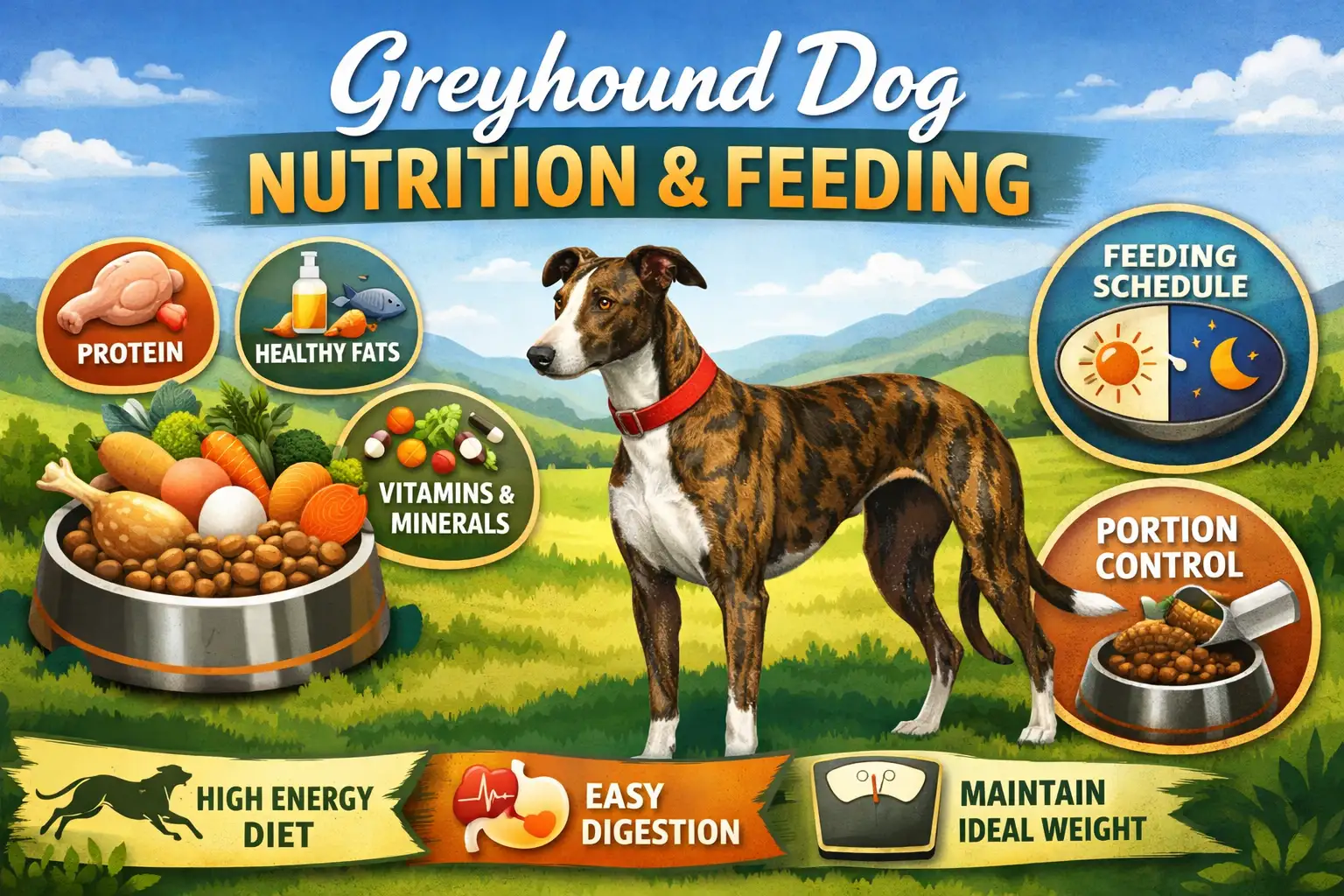
Greyhound nutrition is different from feeding many other dog breeds because these elegant sighthounds have a naturally lean body, low body fat, and well-developed muscles. Many first-time owners worry that their Greyhound looks too thin, but a healthy Greyhound should have a defined waist, visible muscle tone, and ribs that can often be seen or easily felt without indicating poor health.
Providing the right diet helps maintain muscle mass, supports healthy digestion, promotes a shiny coat, strengthens the immune system, and supplies enough energy for daily walks and exercise. Whether you own a growing Greyhound puppy, an active adult, or a senior companion, understanding their nutritional needs allows you to make better feeding decisions and avoid common mistakes such as overfeeding or feeding foods that are too rich.
Greyhounds are also known for having sensitive digestive systems, particularly retired racing Greyhounds transitioning into family homes. Sudden food changes, excessive treats, or diets high in fat may cause digestive upset, loose stools, or reduced appetite. Choosing a balanced, complete diet and maintaining a consistent feeding routine usually provides the best long-term results.
Why Greyhound Nutrition Is Different
Greyhounds were bred for speed and endurance. Unlike many other breeds, they naturally carry very little body fat while maintaining significant muscle mass. Their nutritional requirements focus on preserving lean muscle instead of promoting unnecessary weight gain.
| Trait | Greyhound | Typical Dog |
|---|---|---|
| Body Fat | Very Low | Moderate |
| Muscle Mass | High | Moderate |
| Body Shape | Lean and Athletic | Average |
| Metabolism | Slightly Faster | Average |
| Visible Ribs | Often Normal | May Indicate Underweight |
| Digestive Sensitivity | Higher | Moderate |
Owners often mistake a healthy Greyhound for being underweight simply because they compare them to stockier breeds. Instead of focusing only on appearance, monitor your dog’s body condition, energy level, stool quality, and muscle tone.
Greyhound Nutritional Requirements
A balanced diet should contain high-quality protein, moderate healthy fats, digestible carbohydrates, fiber, vitamins, and minerals.
Protein
Protein is the most important nutrient for maintaining lean muscle.
Good protein sources include:
- Chicken
- Turkey
- Lamb
- Beef
- Fish
- Eggs
Adult Greyhounds generally perform well on foods containing approximately 24–30% protein.
Healthy Fats
Fat supplies concentrated energy while supporting healthy skin and coat.
Recommended fat level:
- Approximately 12–18%
Too much fat may contribute to digestive upset, especially in dogs with sensitive stomachs.
Carbohydrates
Digestible carbohydrates provide a steady source of energy.
Good options include:
- Brown rice
- Oats
- Sweet potatoes
- Barley
Avoid diets loaded with inexpensive fillers that provide little nutritional value.
Fiber
Moderate fiber supports digestive health and stool consistency.
Recommended range:
- 3–6%
Good fiber sources include pumpkin, beet pulp, oats, and vegetables.
Vitamins and Minerals
Essential vitamins and minerals support:
- Bone development
- Immune health
- Joint function
- Skin health
- Coat quality
- Organ function
Commercial foods labeled as “complete and balanced” generally provide these nutrients in appropriate amounts.
Recommended Nutrient Profile
| Nutrient | Recommended Amount | Purpose |
|---|---|---|
| Protein | 24–30% | Muscle maintenance |
| Fat | 12–18% | Energy and coat health |
| Fiber | 3–6% | Digestive support |
| Calcium | Balanced | Bone development |
| Omega-3 Fatty Acids | Moderate | Skin and joint support |
| Vitamins & Minerals | Complete and Balanced | Overall health |
Best Food for Greyhounds
There is no single “best” food for every Greyhound. The ideal choice depends on age, activity level, health conditions, and digestive sensitivity.
| Food Type | Advantages | Disadvantages | Best For |
|---|---|---|---|
| Dry Kibble | Balanced, affordable, convenient | Quality varies | Most Greyhounds |
| Wet Food | Highly palatable, extra moisture | More expensive | Picky eaters |
| Fresh Food | Excellent digestibility | Higher cost | Dogs needing premium nutrition |
| Raw Diet | High protein | Requires careful preparation | Experienced owners |
| Homemade Diet | Full ingredient control | Requires veterinary formulation | Dogs with medical conditions |
When selecting commercial food, look for:
- Meat listed as the first ingredient
- Moderate fat content
- Clearly identified protein sources
- Complete and balanced nutritional statement
- No excessive artificial additives
Avoid switching foods frequently, as Greyhounds often thrive on consistency.
Is Grain-Free Food Better?
Not necessarily.
Most Greyhounds digest grains such as rice and oats very well. Grain-free diets should only be considered when recommended by a veterinarian due to a confirmed allergy or food sensitivity.
Instead of marketing terms like:
- Ultra-premium
- Ancestral diet
- Wolf formula
- High-performance formula
Focus on how well your individual dog maintains:
- Healthy weight
- Firm stools
- Consistent energy
- Healthy skin
- Shiny coat
How Much Should a Greyhound Eat?
The right amount of food depends on your Greyhound’s age, body weight, activity level, metabolism, and overall health. Instead of feeding based on appearance alone, monitor your dog’s body condition and adjust portions when necessary.
Estimated Daily Calorie Requirements
| Greyhound Weight | Low Activity | Moderate Activity | High Activity |
|---|---|---|---|
| 55 lb (25 kg) | 900 kcal | 1,100 kcal | 1,300 kcal |
| 66 lb (30 kg) | 1,000 kcal | 1,250 kcal | 1,500 kcal |
| 77 lb (35 kg) | 1,100 kcal | 1,350 kcal | 1,600 kcal |
These values are estimates. Puppies, pregnant females, nursing mothers, and working dogs may require additional calories.
Greyhound Feeding Schedule
Feeding two meals each day helps maintain energy levels and supports healthy digestion.
| Life Stage | Meals Per Day |
|---|---|
| Puppy (2–6 months) | 3–4 meals |
| Puppy (6–12 months) | 2–3 meals |
| Adult | 2 meals |
| Senior | 2 smaller meals |
Avoid feeding immediately before or after vigorous exercise to reduce the risk of digestive discomfort.
Monitoring Your Greyhound’s Body Condition
Greyhounds naturally have a lean appearance, so use body condition rather than body weight alone.
| Body Check | Healthy Condition | May Need Attention |
|---|---|---|
| Ribs | Easily felt with slight visibility | Very prominent or difficult to feel |
| Waist | Clearly visible tuck | No waist or excessive narrowing |
| Muscle Tone | Firm thighs and shoulders | Muscle loss or weakness |
| Energy | Active and alert | Fatigue or lethargy |
If you notice rapid weight loss or weight gain, consult your veterinarian before making significant dietary changes.
Common Feeding Problems
Greyhounds can experience digestive sensitivity, particularly after changing diets.
| Problem | Possible Cause | Recommended Solution |
|---|---|---|
| Loose stools | Sudden food change | Transition food gradually |
| Gas | Rich foods or intolerance | Choose simple ingredients |
| Poor appetite | Stress or routine changes | Feed at consistent times |
| Weight loss | Insufficient calories | Increase portions gradually |
| Weight gain | Overfeeding | Reduce portions slightly |
How to Switch Dog Food Safely
Always transition to a new food gradually over 7–10 days.
| Day | Previous Food | New Food |
|---|---|---|
| 1–3 | 75% | 25% |
| 4–6 | 50% | 50% |
| 7–9 | 25% | 75% |
| 10 | 0% | 100% |
Slow transitions help minimize digestive upset and improve acceptance of the new food.
Safe Foods for Greyhounds
Many human foods can be offered occasionally in moderation.
| Safe Foods | Foods to Avoid |
|---|---|
| Plain cooked chicken | Chocolate |
| Plain turkey | Grapes |
| Cooked salmon | Raisins |
| Pumpkin | Onions |
| Carrots | Garlic |
| Apples (without seeds) | Xylitol |
| Plain rice | Alcohol |
| Plain yogurt | Macadamia nuts |
Avoid seasoned, fried, salty, or sugary foods.
Healthy Treat Guidelines
Treats should account for no more than 10% of your Greyhound’s daily calorie intake.
Good treat choices include:
- Small training treats
- Freeze-dried meat
- Carrot slices
- Apple slices (without seeds)
- Plain pumpkin
- Green beans
Limit table scraps to avoid unnecessary calories and digestive upset.
Signs Your Greyhound Has a Healthy Diet
A properly fed Greyhound should have:
- Lean but well-defined muscles
- Healthy body weight
- Bright eyes
- Soft, shiny coat
- Firm stools
- Consistent energy levels
- Healthy appetite
When Should You Contact a Veterinarian?
Seek veterinary advice if your Greyhound develops:
- Rapid weight loss
- Persistent diarrhea
- Frequent vomiting
- Loss of appetite lasting more than 48 hours
- Excessive drinking
- Severe lethargy
- Difficulty eating
- Sudden changes in body condition
Prompt evaluation helps identify nutritional deficiencies or underlying medical conditions early.
Frequently Asked Questions
Is it normal for a Greyhound to look skinny?
Yes. Greyhounds naturally have very little body fat, and slight rib visibility is completely normal. Their lean build is one of the breed’s defining characteristics.
How much should an adult Greyhound eat each day?
Most adult Greyhounds consume approximately 900–1,500 calories daily depending on body weight, activity level, and metabolism.
What is the best food for a Greyhound?
A complete and balanced dog food containing high-quality animal protein, moderate fat, digestible carbohydrates, and essential vitamins and minerals is suitable for most Greyhounds.
Can Greyhounds eat grain-free food?
Only if medically necessary. Most Greyhounds tolerate grains such as rice and oats without problems.
How often should I feed my Greyhound?
Adult Greyhounds generally do best with two meals per day, while puppies require three or four smaller meals.
Why does my Greyhound skip breakfast?
Some Greyhounds naturally prefer eating later in the day. If your dog maintains a healthy weight and energy level, occasional skipped meals are usually not a concern.
Can Greyhounds eat raw food?
Some owners successfully feed raw diets, but they require careful planning to ensure nutritional balance and food safety. Consult your veterinarian before switching.
What treats are best for Greyhounds?
Low-calorie treats such as freeze-dried meat, carrots, pumpkin, and commercial training treats are excellent choices when fed in moderation.
How can I help my Greyhound gain weight?
Increase daily calories gradually using nutrient-dense food with quality protein instead of relying on high-fat treats or table scraps.
Should I give my Greyhound supplements?
Healthy Greyhounds eating a complete and balanced diet usually do not require supplements unless recommended by a veterinarian.
Final Thoughts
Proper Greyhound nutrition is about maintaining lean muscle, healthy digestion, and long-term wellness rather than encouraging unnecessary weight gain. Because this breed naturally has a slim physique, owners should focus on body condition, energy levels, and overall health instead of appearance alone. Feeding a consistent, balanced diet with quality protein, moderate fat, digestible carbohydrates, and essential nutrients will help your Greyhound thrive throughout every stage of life. Regular weight checks, fresh water, appropriate portion sizes, and routine veterinary care will ensure your Greyhound remains healthy, active, and comfortable for many years.

Ata Ur Rehman is the founder of Pet Age in Human Years Calculator, an educational platform that provides age conversion charts and lifespan guides for dogs, cats, birds, and other companion animals. His work focuses on helping pet owners understand how animal ages translate into human years using commonly accepted age conversion formulas and published lifespan averages.
The website compiles breed and species lifespan data from kennel clubs, breed organizations, and general animal lifespan studies to present simple and easy-to-understand guides for pet owners worldwide.
This website was created to centralize animal age conversion charts into one easy reference platform for pet owners.
This article is for general education. For symptoms, medication, diet changes, or health concerns, use a qualified veterinarian who can assess your individual pet.