On this page
Crate training can feel confusing at first, especially if your puppy cries, refuses to go inside, or has accidents soon after being let out. The good news is that crate training works best when it is simple: introduce the crate slowly, keep early sessions short, use plenty of positive reinforcement, and build crate time around naps, meals, and potty breaks.
This puppy crate guide walks you through how to crate train a puppy step by step, then gives you a realistic crate schedule by age so you know what to do during the day and overnight.
The goal is not to keep your puppy in the crate for long periods. The goal is to help your puppy see the crate as a safe resting place while also supporting potty training, sleep, and a predictable daily routine.
How to Crate Train a Puppy Step by Step
The easiest way to crate train a puppy is to make the crate feel safe before you expect your puppy to stay inside it. Do not start by closing the door for a long time and hoping your puppy “gets used to it.” That can make the crate feel scary.
Instead, build comfort in small steps.
Step 1: Introduce the Crate Positively
Place the crate in a calm area where your puppy can still feel close to the household. Leave the door open and let your puppy explore it without being pushed inside.
You can toss a few treats into the crate or place a favorite toy near the entrance. If your puppy steps inside, praise calmly. If they only sniff it and walk away, that is fine too.
At this stage, the crate should feel optional. Your puppy is learning that good things happen around it.
Avoid forcing your puppy into the crate, closing the door immediately, or using the crate as punishment. Those choices can slow down training because the puppy starts associating the crate with stress instead of rest.
Step 2: Feed Meals Near or Inside the Crate
Once your puppy is willing to approach the crate, use meals to build a stronger positive connection.
Start by placing the food bowl just outside the crate. If your puppy eats comfortably, move the bowl slightly inside at the next meal. Over time, place the bowl farther back.
For nervous puppies, move slowly. For confident puppies, this step may only take a day or two.
When your puppy can eat inside the crate without hesitation, briefly close the door while they eat. Open it again before they finish or right after they finish, before they become worried.
This teaches your puppy that the crate door closing does not always mean being left alone.
Step 3: Practice Short Crate Sessions
After your puppy is comfortable going inside, begin short crate sessions while you are nearby.
Start with just a few minutes. Give your puppy a treat or safe chew, close the door, and sit close enough that they know you are still there. Keep your voice calm and relaxed.
Let your puppy out before they become upset if possible. This helps them learn that quiet crate time ends calmly.
A good early pattern is:
- 2–5 minutes with the door closed
- A calm release
- A potty break if needed
- A short play or training session
Gradually increase the time as your puppy settles more easily. Do not jump from five minutes to one hour in a single day. Crate training works better when the puppy succeeds repeatedly at short sessions first.
Step 4: Add Crate Time During Naps
Puppies need a lot of sleep, and nap time is one of the best times to use the crate.
After your puppy has had playtime, training, and a potty break, guide them into the crate for a nap. A tired puppy is much more likely to settle than a puppy full of energy.
Keep the room calm. You can sit nearby for the first few sessions, then slowly increase distance once your puppy feels secure.
This step is important because it helps your puppy understand that the crate is not only for separation. It is also a normal place to rest.
Step 5: Use the Crate Overnight
For nighttime crate training, place the crate close enough that you can hear your puppy if they need to go out. Many young puppies settle better when the crate is near your bed at first.
Before bedtime, take your puppy outside for a final potty break. Keep this trip quiet and boring. The goal is potty, not play.
Young puppies usually cannot hold their bladder all night. If your puppy wakes and cries, take them out calmly for a potty break, then return them to the crate without turning it into playtime.
Over time, your puppy should begin sleeping for longer stretches as their bladder control improves.
Puppy Crate Schedule by Age
A good crate schedule should match your puppy’s age, bladder control, energy level, and comfort with the crate. Very young puppies need short crate sessions and frequent potty breaks. Older puppies can usually handle longer rest periods, but crate time should still be balanced with exercise, training, meals, and attention.
Use the schedules below as a starting point, not a strict rule. If your puppy is having accidents or becoming distressed, shorten crate sessions and add more potty breaks.
8–10 Week Puppy Crate Schedule
At 8 to 10 weeks old, puppies are still babies. They need frequent potty breaks and should not be expected to stay in the crate for long daytime stretches.
A typical pattern at this age is:
- Potty break immediately after waking
- Breakfast
- Short play or training session
- Potty break
- Crate nap for 30 minutes to 1.5 hours
- Potty break after waking
- Repeat this cycle through the day
At this age, crate time should mostly happen during naps, not as long confinement while your puppy is wide awake.
Overnight, many puppies need at least one potty break. Some may need more, especially during the first few nights in a new home.
A useful rule is to take your puppy out after waking, eating, drinking, playing, and before going into the crate for a longer nap.
11–16 Week Puppy Crate Schedule
From 11 to 16 weeks, many puppies can begin handling slightly longer crate sessions, especially after exercise and a potty break.
A typical crate schedule may include:
- Morning potty break and breakfast
- Play, training, and another potty break
- Crate nap for 1–2 hours
- Midday potty break and meal if your puppy still eats lunch
- Afternoon play and crate nap
- Evening potty break, dinner, and calm crate practice
- Final potty break before bed
Some puppies at this age may start sleeping longer overnight, but accidents can still happen if the schedule is too ambitious.
If your puppy cries shortly after being crated, ask yourself:
- Did they potty before going in?
- Are they tired enough to settle?
- Was the crate session too long?
- Are they used to being alone yet?
This helps you adjust the crate schedule instead of guessing.
4–6 Month Puppy Crate Schedule
By 4 to 6 months, many puppies can handle a more predictable routine. They may need fewer potty breaks and may nap for longer periods in the crate.
A daily schedule at this age may include:
- Morning potty break
- Breakfast and activity
- Mid-morning crate nap
- Potty break and play
- Afternoon crate rest
- Evening exercise, dinner, and family time
- Final potty break before overnight crate time
Even if your puppy can stay in the crate longer, avoid using the crate as a place to park them for most of the day. Puppies still need movement, social interaction, training, and chances to explore safely.
If your puppy is calm in the crate, enters willingly, and rarely has accidents, you can slowly increase flexibility. If they resist the crate or seem anxious, go back to shorter sessions and rebuild comfort.
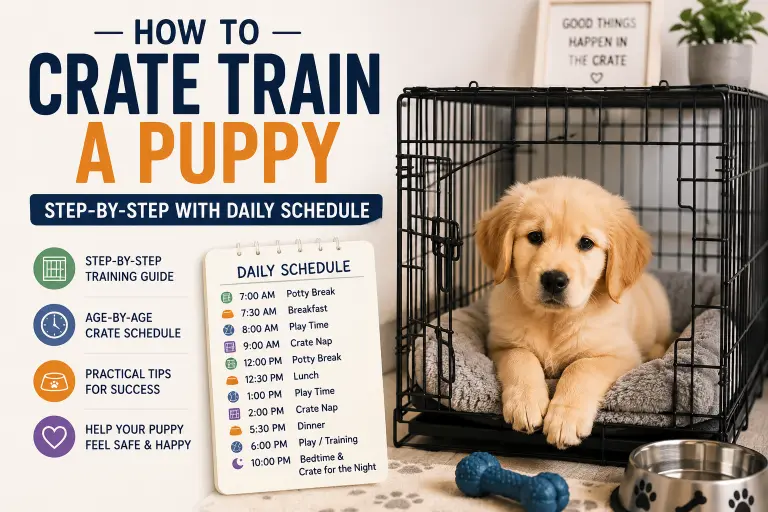
Sample Daily Crate Training Schedule
A crate schedule works best when it follows your puppy’s natural routine: potty, food, activity, potty again, then rest. Most crate problems happen when a puppy is crated with too much energy, a full bladder, or no clear routine.
Use this sample schedule as a flexible guide. Adjust the times based on your puppy’s age, meal schedule, and how long they can comfortably hold their bladder.
| Time | What to Do |
|---|---|
| 6:30 AM | Take your puppy outside for a potty break immediately after waking |
| 6:45 AM | Breakfast |
| 7:00 AM | Short play or basic training |
| 7:20 AM | Potty break |
| 7:30 AM | Crate nap |
| 9:00 AM | Potty break after waking |
| 9:15 AM | Supervised play, chewing, or training |
| 10:00 AM | Short crate session or nap |
| 11:30 AM | Potty break |
| 12:00 PM | Lunch, if your puppy is still on three meals a day |
| 12:15 PM | Potty break after eating |
| 12:30 PM | Crate nap |
| 2:00 PM | Potty break and playtime |
| 3:00 PM | Crate rest or nap |
| 5:00 PM | Potty break, dinner, and calm activity |
| 7:00 PM | Short crate practice while the household is active |
| 9:30 PM | Final calm play or settling time |
| 10:00 PM | Last potty break |
| 10:15 PM | Overnight crate time |
The exact times matter less than the pattern. A young puppy should usually go outside after waking, after eating, after active play, and before longer crate time.
If your puppy has an accident in the crate, the schedule may need more potty breaks. If your puppy cries every time they go in, the crate sessions may be too long or happening when your puppy is not ready to settle.
For many puppies, the best crate schedule is built around naps. A puppy who has played, gone potty, and had a chance to wind down is much more likely to sleep calmly in the crate.
Crate Training Tips for Faster Progress
Small changes can make crate training easier. The goal is to help your puppy feel safe and relaxed, not trapped or ignored.
Keep Crate Sessions Short at First
Early crate training should feel easy for your puppy. Start with short sessions and end them before your puppy becomes very upset.
A few successful five-minute sessions are better than one long session that causes panic. Once your puppy can stay calm for a short time, slowly add a few more minutes.
Progress may look simple:
- First, your puppy walks into the crate willingly.
- Then, they stay inside with the door open.
- Then, they stay calm with the door closed for a few minutes.
- Then, they begin napping in the crate.
Do not rush this process. Moving too fast often creates more crying and resistance.
Use the Crate Before Your Puppy Gets Overtired
Many puppies behave worse when they are overtired. They may bite, bark, run around, or refuse to settle even though they need sleep.
Try using the crate after your puppy has had:
- A potty break
- A short play session
- A little training or mental stimulation
- A chance to drink water if needed
Then guide them into the crate for a nap. This timing helps your puppy connect the crate with rest.
Avoid putting your puppy in the crate only when they are already frustrated or overstimulated. At that point, settling is harder.
Make the Crate Comfortable but Safe
The crate should be comfortable, but safety matters more than decoration.
For some puppies, a soft crate mat or blanket works well. For heavy chewers, loose bedding can be risky because they may shred or swallow pieces. In that case, use a safer crate mat designed for chewing or keep the setup simple until the chewing phase improves.
You can add a safe chew toy if your puppy can use it without breaking pieces off. Avoid small toys, anything with loose parts, or items your puppy might swallow.
The crate should also be the right size. Your puppy should be able to stand up, turn around, and lie down comfortably. If the crate is too large, some puppies may use one end as a bathroom area.
Stay Calm When Leaving the Room
How you act around the crate matters. If you make a big emotional goodbye every time you leave, your puppy may become more alert or anxious.
Instead, keep crate time calm and normal. Give your cue, offer a treat or safe chew, close the door, and leave without making it dramatic.
The same rule applies when you return. Wait for a calm moment if possible, then open the crate quietly. This teaches your puppy that going in and coming out of the crate are normal parts of the day.
What to Do If Your Puppy Cries in the Crate
Crate crying is common, especially in the first few days. The important part is figuring out why your puppy is crying before deciding what to do.
A puppy may cry because they need to potty, feel scared, have too much energy, want attention, or were crated for too long. The response should match the reason.
Check for Potty Needs First
For young puppies, crying in the crate often means they need to go outside. This is especially true if they just woke up, recently ate or drank, or have been in the crate for a while.
Take your puppy out calmly and quietly. Do not turn it into playtime. Give them a chance to potty, then return them to the crate.
If they potty, they likely had a real need. If they do not potty and seem playful, they may be asking to come out for attention instead.
Nighttime potty breaks should be boring. Keep lights low, avoid excited talking, and go straight back to the crate afterward.
Do Not Reward Panic or Demand Barking
There is a difference between helping a distressed puppy and teaching a puppy that barking always opens the crate.
If your puppy is panicking, shaking, drooling, trying to escape, or crying intensely for a long time, the session is too hard. Let them calm down if possible, then reset the training with shorter sessions later.
If your puppy is doing mild protest barking after all needs are met, wait for a brief quiet moment before opening the door. Even a few seconds of quiet can help your puppy learn that calm behavior gets results.
Do not yell, hit the crate, or punish your puppy for crying. That can make the crate feel unsafe and increase anxiety.
Shorten the Next Crate Session
If your puppy cries every time they are crated, do not keep repeating the same plan. Adjust it.
The next session should be easier. Try:
- A shorter crate time
- More exercise before crating
- A potty break right before the crate
- Sitting closer to the crate at first
- Giving a safe chew or food-stuffed toy
- Practicing during daytime before expecting overnight success
Crate training tips only work when they match the puppy in front of you. Some puppies adjust quickly. Others need several days or weeks of slower practice.
The goal is steady progress: less crying, faster settling, fewer accidents, and a puppy who can rest in the crate without fear.
When Crate Training Is Working — and When to Adjust
Crate training does not have to be perfect every day. Some whining, hesitation, or schedule changes are normal, especially during the first week. What matters is the overall direction.
Your puppy is making progress if crate time is becoming calmer, more predictable, and less stressful.
Signs crate training is working include:
- Your puppy enters the crate with less hesitation.
- They settle faster after the door closes.
- They nap in the crate during the day.
- They sleep for longer stretches overnight.
- Crying becomes shorter or less frequent.
- Accidents in the crate decrease.
- Your puppy can relax when you briefly leave the room.
These signs usually appear gradually. A puppy may do well one day and struggle the next, especially after a busy day, a change in routine, or too much excitement before bedtime.
If your puppy is improving overall, keep the crate schedule consistent and continue increasing crate time slowly.
You may need to adjust the training plan if your puppy:
- Panics when placed in the crate
- Refuses to go near the crate
- Cries intensely for long periods
- Has repeated accidents inside the crate
- Bites or scratches at the crate door
- Only cries when left alone, not when you are nearby
These are signs that the crate training plan may be moving too quickly or that another issue needs attention.
Start by making the next session easier. Shorten the crate time, add a potty break before crating, use the crate during naps, and stay nearby until your puppy settles. You can also go back to feeding meals in the crate with the door open for a few days.
If your puppy continues to panic or tries to injure themselves escaping the crate, do not force longer crate sessions. In that case, it may be better to speak with a qualified trainer or veterinarian, especially if the behavior looks like severe separation distress rather than normal puppy protest.
The crate should help your puppy feel safe and rested. If the crate is becoming a daily battle, slow the process down and rebuild comfort before expecting longer sessions.
FAQs About Crate Training a Puppy
How long does it take to crate train a puppy?
Many puppies start improving within a few days, but full crate training can take a few weeks. The timeline depends on your puppy’s age, temperament, previous experience, and how consistent the schedule is.
A puppy who has never used a crate may need more time than one who already feels comfortable sleeping in enclosed spaces. Focus on steady progress rather than trying to finish crate training by a specific day.
Should I let my puppy cry in the crate?
First, check whether your puppy needs something important, especially a potty break. Young puppies often cry because they genuinely cannot hold their bladder.
If your puppy has already gone potty, is safe, and is only doing mild protest whining, wait for a brief quiet moment before letting them out. This helps avoid teaching them that barking immediately opens the crate.
However, intense panic, nonstop crying, drooling, or frantic escape attempts should not be ignored. Those signs mean the session is too difficult and the training plan needs to be slowed down.
How long can a puppy stay in a crate during the day?
It depends on age and bladder control. Very young puppies need frequent potty breaks and should mostly use the crate for naps. They should not be left in the crate for long daytime stretches.
As your puppy gets older, they may be able to handle longer crate sessions, especially after exercise and a potty break. Even then, crate time should be balanced with play, training, meals, bathroom breaks, and interaction.
If your puppy is having accidents or becoming distressed, the crate session is probably too long.
Should my puppy sleep in the crate the first night?
Yes, many puppies can sleep in the crate from the first night, but the setup matters. Keep the crate close enough that your puppy can hear or sense you nearby. This can help them feel less alone in a new place.
Take your puppy out for a final potty break before bed. If they wake and cry during the night, take them outside calmly, give them a chance to potty, and return them to the crate without play.
Over time, your puppy should need fewer nighttime breaks.
What should I put in my puppy’s crate?
Keep the crate simple and safe. You can use a comfortable mat or blanket if your puppy does not chew or swallow bedding. For puppies who chew heavily, avoid loose bedding until they are more reliable.
A safe chew toy can help some puppies settle, but avoid small items, soft toys with pieces that can come off, or anything your puppy might destroy and swallow.
The crate should feel comfortable, but it should not be crowded. Your puppy needs enough space to stand, turn around, and lie down easily.

Ata Ur Rehman is the founder of Pet Age in Human Years Calculator, an educational platform that provides age conversion charts and lifespan guides for dogs, cats, birds, and other companion animals. His work focuses on helping pet owners understand how animal ages translate into human years using commonly accepted age conversion formulas and published lifespan averages.
The website compiles breed and species lifespan data from kennel clubs, breed organizations, and general animal lifespan studies to present simple and easy-to-understand guides for pet owners worldwide.
This website was created to centralize animal age conversion charts into one easy reference platform for pet owners.
This article is for general education. For symptoms, medication, diet changes, or health concerns, use a qualified veterinarian who can assess your individual pet.