On this page
Your dog was doing great with potty training. Then suddenly, you find pee on the floor, accidents near the door, or messes in places they never used before.
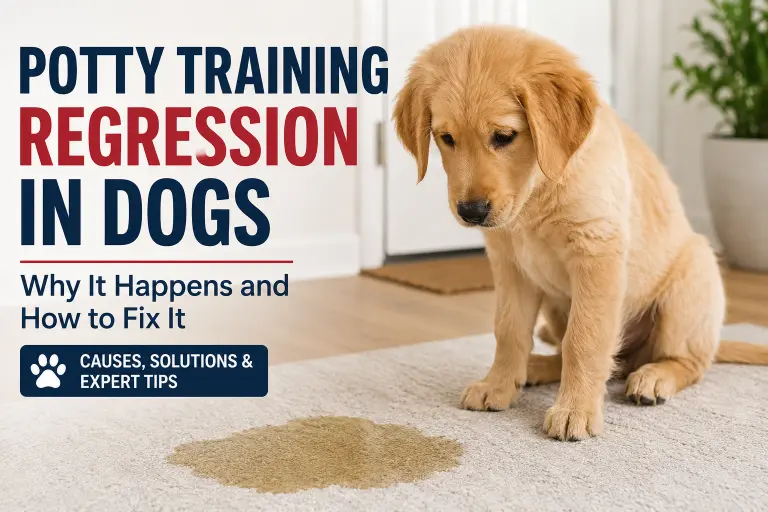
Potty training regression in dogs is frustrating, but it does not always mean your dog has “forgotten” their training. In many cases, accidents happen because something has changed: their routine, health, environment, stress level, or the amount of supervision they are getting indoors.
The right fix depends on the cause. Some dogs need a simple training reset. Others may need a vet check before you treat the problem as behavioral. This guide explains why dog accidents after being trained happen and what you can do to get your dog back on track.
Why Is My Dog Having Accidents After Being Trained?
A dog who was previously potty trained may start having accidents again because their usual habits have been disrupted or because something is making it harder for them to hold it.
This can happen with puppies, adult dogs, newly adopted dogs, and senior dogs. It may show up as occasional accidents, sudden daily accidents, peeing in a specific room, pooping indoors, or not signaling to go outside like they used to.
The most common reasons include:
- A change in routine or potty schedule
- Stress, anxiety, or excitement
- Incomplete or inconsistent potty training
- Too much indoor freedom too soon
- Medical issues such as urinary problems or digestive upset
- Age-related changes in bladder or bowel control
The important thing is not to assume your dog is being stubborn or doing it on purpose. Dogs usually have accidents because they are confused, overwhelmed, physically unable to wait, or have learned that indoor accidents can happen without being interrupted.
If the regression is sudden, frequent, or unusual for your dog, start by looking for a possible health issue. If your dog seems otherwise normal, you can usually begin with a structured potty training reset.
Common Causes of Potty Training Regression in Dogs
To fix potty training regression, you first need to understand what changed. The accident itself is only the symptom. The cause is what tells you whether your dog needs training, routine changes, medical care, or more supervision.
Changes in Routine or Environment
Dogs rely heavily on routine. If your dog is used to going outside at certain times and that schedule changes, accidents can happen quickly.
Common routine changes include:
- A new work schedule
- Moving to a new home
- Traveling or staying somewhere unfamiliar
- A new baby, pet, roommate, or visitor in the home
- Changes in feeding times
- Less frequent walks or potty breaks
- Different access to the yard or potty area
For example, a dog who normally goes out first thing in the morning may have an accident if breakfast, walks, or wake-up times suddenly shift. A dog who moves to a new house may not immediately understand where the correct potty area is.
In these cases, the solution is often to rebuild predictability. Take your dog out more often, use the same door when possible, reward outdoor potty breaks, and limit unsupervised indoor time until the habit is reliable again.
Stress, Anxiety, or Excitement
Stress can affect a dog’s bathroom habits. Some dogs regress after loud events, boarding, household tension, separation anxiety, construction noise, or changes in who is home during the day.
An anxious dog may have accidents because they are too worked up to signal, too stressed to fully empty outside, or panicking when left alone. Excitement can also trigger accidents, especially in younger dogs or dogs who lose control when greeting people.
Signs that stress may be involved include:
- Accidents when left alone
- Pacing, whining, barking, or destructive behavior
- Accidents after visitors, storms, fireworks, or travel
- Clinginess or nervous behavior
- A dog who seems unsettled even after going outside
If stress is the trigger, simply taking the dog out more may not fully solve the problem. You may need to reduce stress, create a calmer routine, and prevent accidents while your dog settles. For separation-related accidents, the potty issue may improve only when the anxiety is addressed too.
Incomplete or Inconsistent Potty Training
Some dogs seem potty trained before the habit is fully reliable. This is especially common with puppies, rescue dogs, or dogs who were trained in one environment but not another.
A puppy may understand that going outside is good but still not know how to hold it, signal clearly, or avoid accidents when excited. A newly adopted dog may have been potty trained in a previous home but not understand the new schedule, door, yard, or expectations.
Regression can also happen when owners give too much freedom too soon. If a dog has access to the whole house before they are truly reliable, they may find quiet places to have accidents without anyone noticing.
This kind of regression usually means the dog needs a reset, not punishment. Go back to basics: frequent potty breaks, close supervision, rewards outside, and restricted indoor access until accidents stop.
Medical Issues
Not all potty training regression is behavioral. A dog who suddenly starts having accidents after being trained may have a medical problem that makes it harder to control their bladder or bowels.
Possible medical causes include:
- Urinary tract problems
- Digestive upset or diarrhea
- Increased thirst and urination
- Pain when moving or squatting
- Incontinence
- Age-related bladder or bowel control changes
Medical causes are more likely if the accidents start suddenly, happen frequently, occur during sleep, or come with other symptoms like straining, blood in urine, vomiting, diarrhea, excessive thirst, or low energy.
When in doubt, treat sudden regression as something worth checking. Training can help only if your dog is physically able to hold it and feels well enough to follow the routine.
When Potty Training Regression Could Be a Health Problem
If your dog suddenly starts having accidents after being trained, do not jump straight to behavior correction. Sometimes the problem is not that your dog forgot their training. It may be that they cannot comfortably hold their bladder or bowels.
A vet check is especially important if the regression appears out of nowhere or feels very different from your dog’s usual behavior.
Watch for signs such as:
- Peeing more often than usual
- Straining to pee or poop
- Blood in the urine
- Diarrhea or loose stool
- Accidents while sleeping or resting
- Drinking much more water than normal
- Licking around the urinary area
- Whining, restlessness, or signs of pain
- Sudden accidents in a senior dog
These signs do not always mean something serious, but they are strong reasons to rule out a medical issue before treating the accidents as a training problem.
This matters because training methods will not fix a dog who has a urinary issue, stomach upset, pain, or incontinence. In fact, delaying a vet visit can make the problem worse and may cause your dog to associate potty time with discomfort.
If your dog seems healthy, energetic, and the accidents started after a clear routine or environment change, you can usually begin with a potty training reset. But if the accidents are sudden, frequent, or paired with physical symptoms, start with your vet.
How to Fix Potty Training Regression in Dogs
Fixing potty training regression in dogs usually means going back to the structure that helped your dog succeed in the first place. The goal is not to punish accidents. The goal is to prevent new ones, reward the right behavior, and rebuild a reliable routine.
Go Back to a Predictable Potty Schedule
Start by taking your dog outside more often than you think they need. This gives them more chances to succeed and fewer chances to make mistakes indoors.
Good times to take your dog out include:
- First thing in the morning
- After meals
- After drinking water
- After naps
- After playtime
- Before being left alone
- Before bedtime
For puppies, newly adopted dogs, and dogs with recent accidents, do not wait for them to signal. Take them out proactively. Some dogs stop signaling during regression because their routine has become unclear or because past signals were missed.
Use the same potty area when possible. Stand calmly, give your dog time, and avoid turning potty breaks into playtime until after they go. This helps your dog understand the purpose of the trip outside.
Reward Outdoor Potty Breaks Immediately
When your dog pees or poops outside, reward them right away. Timing matters. If you wait until you are back inside, your dog may not connect the reward with the potty behavior.
Use simple praise, a small treat, or both. The reward should come immediately after they finish.
For example:
“Good potty!” followed by a treat right there outside.
This is especially helpful when dealing with dog accidents after being trained because it reminds your dog which behavior gets rewarded. You are not just hoping they remember the old habit. You are actively rebuilding it.
Supervise Indoors and Limit Freedom Temporarily
One of the biggest mistakes during regression is allowing the dog to keep wandering freely around the house. If your dog has repeated accidents in hidden areas, the habit can become harder to break.
Temporarily limit access until your dog is reliable again. You can use:
- Baby gates
- A crate, if your dog is crate trained
- A playpen
- A leash attached to you indoors
- Closed doors to block problem rooms
This is not a permanent restriction. It is a short-term management step to stop accidents from repeating.
When your dog is indoors, watch for signs they may need to go out, such as sniffing, circling, pacing, whining, walking toward the door, or suddenly leaving the room. If you see those signs, take them outside immediately.
Clean Accidents Properly
Cleaning matters more than many owners realize. If your dog can still smell urine or stool in an area, they may return to that spot and use it again.
Use an enzymatic cleaner made for pet accidents. Regular household cleaners may remove the visible stain but leave behind odors your dog can still detect.
Avoid ammonia-based cleaners on urine spots because the smell can resemble urine and may make the area more attractive to your dog.
Clean the area thoroughly, then block access if your dog keeps returning to the same place. If accidents happen on rugs, mats, or soft surfaces, remove them temporarily while you rebuild the potty routine.
What Not to Do When Your Dog Regresses
When a trained dog starts having accidents again, it is easy to feel frustrated. But harsh reactions usually make the problem worse.
Do not yell, punish, or rub your dog’s nose in the accident. These reactions do not teach your dog where to go. They may only teach your dog to hide accidents or feel anxious around potty time.
Also avoid correcting your dog long after the accident happened. Dogs do not connect delayed punishment with something they did earlier. If you find an accident after the fact, clean it up and adjust your supervision so it is less likely to happen again.
You should also avoid giving full freedom back too quickly. A few accident-free days is progress, but it does not always mean the habit is fully reset. Increase freedom gradually as your dog becomes reliable again.
The best approach is simple: prevent accidents, reward outdoor potty breaks, keep the routine predictable, and check for health problems when the regression is sudden or unusual.
How Long Does It Take to Correct Potty Training Regression?
Mild potty training regression may improve within a few days to a couple of weeks once your dog is back on a clear routine. This is most likely when the regression was caused by a schedule change, a temporary disruption, or too much freedom indoors.
The timeline depends on what caused the accidents.
If your dog was confused by a new home, new schedule, or missed potty breaks, consistency can make a noticeable difference quickly. Take them out more often, reward outdoor potty breaks, and prevent unsupervised accidents indoors.
If the regression is linked to anxiety, repeated indoor accidents, or a medical issue, it may take longer. In those cases, the potty problem may not improve until the underlying cause is addressed.
A good rule is to treat your dog like they are temporarily back in training. Do not wait for accidents to happen before making changes. Increase potty breaks, supervise closely, and only give more freedom once your dog has been reliable for several days in a row.
Progress may look like:
- Fewer accidents each week
- Your dog starting to signal again
- Longer stretches between potty breaks
- More consistent outdoor potty habits
- Fewer accidents in previous problem areas
If you are following a consistent routine and your dog is still having frequent accidents after a couple of weeks, or the accidents are getting worse, it is worth checking in with your vet or a qualified trainer. The issue may need more than a basic potty training reset.
FAQs About Potty Training Regression in Dogs
Is potty training regression normal in dogs?
Yes, potty training regression in dogs can happen, especially after routine changes, stress, illness, or inconsistent training. It does not always mean your dog has forgotten everything. It usually means something has disrupted their normal habit.
Why is my dog suddenly peeing in the house after being trained?
A dog may suddenly pee in the house because of a schedule change, anxiety, incomplete training, urinary discomfort, increased thirst, or age-related changes. If the accidents are sudden or frequent, rule out a medical cause before assuming it is behavioral.
Should I punish my dog for potty accidents?
No. Punishment can make your dog anxious or cause them to hide accidents. It is more effective to calmly clean the area, supervise better, take your dog out more often, and reward them immediately when they go outside.
When should I call the vet for potty training regression?
Call your vet if the accidents start suddenly, happen often, occur during sleep, or come with signs like blood in urine, diarrhea, straining, excessive thirst, pain, low energy, or behavior changes.
Can an adult dog have potty training regression?
Yes. Adult dogs can have potty training regression because of stress, health problems, changes in routine, moving homes, or disrupted potty habits. The fix depends on the cause, but most dogs need a temporary return to structure and supervision.
Final Thoughts
Potty training regression in dogs is usually a sign that something needs to be adjusted, not a reason to assume your dog is being difficult. Start by looking at what changed: their routine, environment, stress level, health, or level of indoor freedom.
If the accidents are sudden, frequent, or paired with symptoms like straining, diarrhea, excessive thirst, or accidents during sleep, contact your vet first. If your dog seems healthy, go back to a simple potty training reset: more frequent outdoor breaks, close supervision, immediate rewards, and proper cleanup.
With consistency, many dogs can get back on track quickly. The key is to prevent repeated accidents while helping your dog clearly understand where and when they should go.

Ata Ur Rehman is the founder of Pet Age in Human Years Calculator, an educational platform that provides age conversion charts and lifespan guides for dogs, cats, birds, and other companion animals. His work focuses on helping pet owners understand how animal ages translate into human years using commonly accepted age conversion formulas and published lifespan averages.
The website compiles breed and species lifespan data from kennel clubs, breed organizations, and general animal lifespan studies to present simple and easy-to-understand guides for pet owners worldwide.
This website was created to centralize animal age conversion charts into one easy reference platform for pet owners.
This article is for general education. For symptoms, medication, diet changes, or health concerns, use a qualified veterinarian who can assess your individual pet.