On this page
Schipperke training works best when you understand the breed first. A Schipperke is smart, alert, energetic, and independent, so training should never feel like forcing obedience. It should feel like building clear communication with a dog that learns quickly but also thinks for itself.
Schipperkes were developed as small working watchdogs, and that background still affects how they behave today. They notice sounds, movement, strangers, routines, and changes in the home faster than many small breeds. This makes them excellent watchdogs, but it also means they need structure, boundaries, mental stimulation, and consistent obedience training from an early age.
If you approach Schipperke dog training the same way you would with a highly people-pleasing breed, you may feel frustrated. Many owners describe the breed as stubborn or selectively deaf, but in most cases the dog is simply deciding whether the command is clear, rewarding, and worth repeating.
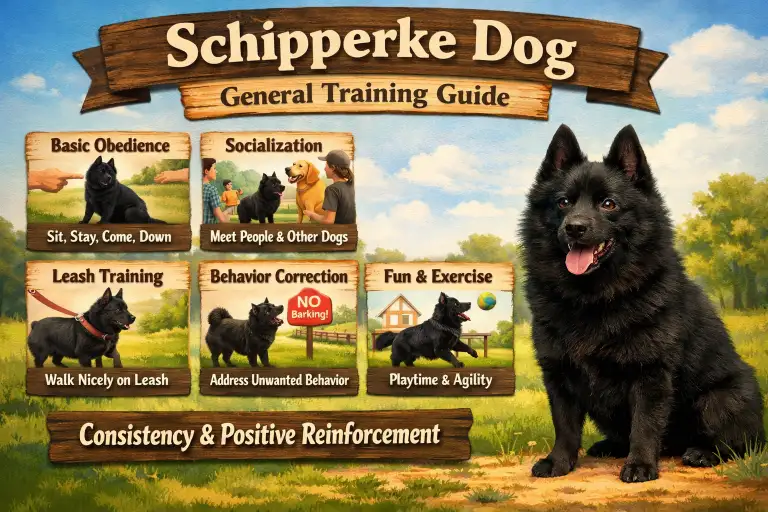
This guide explains how to train a Schipperke using practical steps for obedience, recall, leash manners, barking control, focus, and daily mental stimulation. The goal is not only to teach commands, but to build a Schipperke that listens reliably, stays engaged, and understands household rules.
Why Schipperke Training Is Different From Other Breeds
Schipperkes are small dogs with a strong working-dog mindset. They are intelligent, fast learners, and naturally alert, but they are not usually passive followers. They often want to investigate, make decisions, and test whether rules are consistent.
This is why Schipperke obedience training must be clear, short, and consistent. Long repetitive sessions can bore them. Harsh correction can make them resistant. The best results usually come from short sessions, high-value rewards, clear commands, and immediate feedback.
Here is the difference between an untrained Schipperke and a well-trained Schipperke:
| Training Area | Untrained Schipperke | Well-Trained Schipperke |
|---|---|---|
| Barking control | Barks at every sound, visitor, or movement | Alerts when needed, then stops when redirected |
| Recall | Ignores commands outdoors when distracted | Returns when called because recall has been rewarded often |
| Leash manners | Pulls, darts forward, or reacts to triggers | Walks with better focus and responds to direction changes |
| Obedience commands | Chooses when to listen | Responds more consistently to known commands |
| Focus | Gets distracted by sounds, smells, and movement | Checks in with the owner during training and walks |
| Household rules | Tests limits and creates its own routines | Understands boundaries, routines, and expected behavior |
The key is to train the Schipperke you have, not the dog you expected. This breed responds best when training has structure, purpose, and enough variety to keep the dog mentally engaged.
Understanding Schipperke Temperament and Learning Style
Schipperkes are curious, bold, alert, and independent. They usually learn commands quickly, but fast learning does not always mean automatic obedience. A Schipperke may understand what you want and still decide whether responding is rewarding enough.
Puppies need early routines before habits become difficult to change. Adult Schipperkes can still learn very well, but they may need more repetition if they already have habits such as excessive barking, pulling on leash, jumping, or ignoring recall.
Here is how common Schipperke traits affect training:
| Trait | How It Appears During Training | Best Training Approach |
|---|---|---|
| High intelligence | Learns fast but gets bored with repetition | Use short sessions and rotate exercises |
| Independence | Tests limits or delays responding | Use consistent rules and reward quick responses |
| Alertness | Reacts to sounds, visitors, and movement | Teach quiet, place, and redirection cues |
| Curiosity | Explores, investigates, and gets into things | Use puzzle toys, scent games, and structured play |
| Energy | Needs activity before calm focus improves | Combine short walks, training, and mental work |
| Small size | Owners may ignore bad habits because the dog is small | Set the same rules you would set for a larger dog |
Good Schipperke training tips always come back to the same principle: make the right behavior clear, rewarding, and repeatable. If the dog is confused, bored, or overstimulated, training progress slows down.
How to Train a Schipperke Step by Step
The best way to train a Schipperke is to use short daily sessions that combine obedience, focus, recall, leash practice, and mental stimulation. One long training session is usually less effective than several short sessions spread throughout the day.
Start with simple commands in a quiet area, then slowly increase distractions. Teach one behavior clearly before expecting your Schipperke to perform it outdoors, around visitors, or near other dogs.
Simple daily Schipperke training plan:
| Time | Training Focus | Duration | Goal |
|---|---|---|---|
| Morning | Basic obedience commands such as sit, stay, down, and place | 5–10 minutes | Build focus and response to commands |
| Midday | Puzzle toy, scent game, or food-search activity | 10 minutes | Provide mental stimulation and reduce boredom |
| Afternoon | Leash walking practice with direction changes | 10–15 minutes | Improve loose-leash walking and owner focus |
| Evening | Recall practice indoors, in the yard, or in a safe enclosed space | 5 minutes | Strengthen come-when-called reliability |
| Anytime | Barking control practice using quiet, redirect, and reward | 2–5 minutes | Teach the dog to stop alert barking on cue |
Core skills every Schipperke should learn include focus, sit, stay, down, place, leave it, quiet, recall, leash walking, and calm behavior around triggers. These commands create the foundation for better control at home and outside.
Schipperke Obedience Training Basics
Mental Stimulation for Schipperke Training
Mental stimulation is one of the most important parts of Schipperke training. This breed is smart, curious, and easily bored, so physical exercise alone is not enough. A bored Schipperke may bark more, ignore commands, chew, dig, escape, or create its own games around the house.
The best mental stimulation exercises make your Schipperke think, problem-solve, sniff, follow rules, and work with you. These activities also improve focus, impulse control, and obedience because the dog learns to use its brain instead of reacting to every sound or movement.
Best mental stimulation activities for Schipperkes:
| Activity | How It Helps | Best Time to Use |
|---|---|---|
| Puzzle toys | Builds problem-solving and reduces boredom | During quiet time or when the dog needs focus |
| Scent games | Uses natural curiosity and sniffing ability | Before evening rest or after a walk |
| Hide-and-seek | Improves recall and engagement with the owner | Indoors, yard, or safe enclosed space |
| Place training | Teaches calm behavior and impulse control | When visitors arrive or household activity increases |
| Short trick training | Keeps learning fun and prevents repetition boredom | 5-minute daily sessions |
| Food-search games | Slows eating and gives the dog a job | Meal time or enrichment time |
Keep mental work short and structured. Five to ten minutes of focused enrichment is often more useful than a long, unplanned play session. The goal is to give your Schipperke a job, not simply make the dog tired.
For the best results, combine mental stimulation with obedience commands. Ask for sit before a puzzle toy, recall before a scent game, or place before releasing the dog to a reward. This turns enrichment into practical training instead of random activity.
Schipperke obedience training should begin with commands that improve daily control. Start with simple cues like sit, stay, down, come, leave it, and place. Use the same words every time, reward quickly, and avoid repeating commands too many times.
If your Schipperke ignores a command, do not turn it into a long argument. Reduce distractions, make the task easier, and reward the dog as soon as it responds correctly. This teaches the dog that listening quickly brings value.
Best rewards for Schipperke training:
| Reward Type | Best Use | Training Tip |
|---|---|---|
| Treats | Teaching new commands | Use small, soft treats so the session keeps moving |
| Toys | Motivating energetic dogs | Use tug or fetch as a reward after a correct response |
| Praise | Reinforcing known behaviors | Keep praise calm so the dog stays focused |
| Play | Ending a session positively | Use short play breaks to keep the dog engaged |
| Access | Real-life rewards such as going outside or greeting someone | Ask for a simple command before giving access |
The goal is not to bribe your Schipperke forever. The goal is to build a habit of responding, then gradually reward the best responses while still keeping training valuable and enjoyable.
Schipperke Barking Training and Alert Control
Schipperke barking training is important because this breed is naturally alert. Barking is not always bad behavior. In many cases, the dog is doing what it was bred to do: notice activity and warn the household.
The goal is not to remove barking completely. The goal is to teach your Schipperke when to alert, when to stop, and what to do instead. A useful pattern is: acknowledge the alert, give a quiet cue, redirect the dog, then reward calm behavior.
Simple barking control process:
- Let your Schipperke alert briefly when something happens.
- Use one clear cue such as “quiet” or “enough.”
- Redirect the dog to a known command like sit, place, or come.
- Reward the moment the dog stops barking and focuses on you.
- Practice before the dog becomes too excited to listen.
If barking is caused by boredom, add more mental stimulation. If barking is caused by fear, reduce pressure and train from a calmer distance. If barking is constant, intense, or linked to separation anxiety, professional help may be needed.
Recall and Leash Training for Schipperkes
Recall and leash manners are two of the most important control skills for this breed. Schipperkes are curious and quick, so outdoor distractions can easily become more interesting than the owner.
For recall training, begin indoors or in a secure enclosed area. Use a happy voice, reward generously, and never punish your dog after it comes to you. A Schipperke should learn that coming when called always leads to something good.
For leash training, reward your Schipperke for checking in, walking near you, and responding to direction changes. If the dog pulls, stop moving or change direction calmly. This teaches that pulling does not move the walk forward, but attention does.
Age-Based Schipperke Training Stages
Training should match your Schipperke’s age and maturity. Puppies need foundations, young adults need impulse control, and older dogs may need habit correction or lower-impact mental work.
| Life Stage | Main Training Focus | Best Approach |
|---|---|---|
| Puppy | House rules, socialization, name response, basic commands | Use short, positive sessions and build routines early |
| Adolescent | Impulse control, recall, leash manners, barking control | Stay consistent because testing boundaries is common |
| Adult | Reliability, behavior correction, stronger obedience | Reward good choices and rebuild weak habits step by step |
| Senior | Gentle mental stimulation and routine-based obedience | Keep sessions low-stress, short, and comfortable |
This age-based approach also connects training with your dog’s overall life stage. A Schipperke puppy, adult, and senior dog may all need obedience work, but the intensity, patience level, and daily routine should change with age.
Common Schipperke Training Problems and Quick Fixes
Common Mistakes Owners Make When Training a Schipperke
Many Schipperke training problems do not happen because the dog is difficult. They happen because the training is unclear, inconsistent, too repetitive, or not rewarding enough for this breed’s personality. Schipperkes learn quickly, but they also learn bad habits quickly if owners allow them to practice unwanted behavior.
Avoid these common Schipperke training mistakes:
| Mistake | Why It Hurts Training | Better Approach |
|---|---|---|
| Repeating commands many times | Teaches the dog it does not need to respond the first time | Say the cue once, help the dog succeed, then reward |
| Skipping daily practice | Weakens recall, obedience, and household rules | Use short 5–10 minute sessions every day |
| Using only physical exercise | Leaves the dog mentally bored and reactive | Add puzzle toys, scent games, and obedience drills |
| Rewarding barking by accident | The dog learns barking gets attention or access | Reward quiet behavior and redirect before escalation |
| Being inconsistent with rules | Encourages testing boundaries | Keep rules the same across all family members |
| Training only indoors | The dog may ignore commands outside | Practice in different locations with controlled distractions |
| Using harsh correction | Can create resistance, fear, or avoidance | Use clear direction, rewards, structure, and calm redirection |
The biggest rule is simple: do not let your Schipperke rehearse the behavior you want to stop. If the dog practices barking, pulling, ignoring recall, or jumping every day, those behaviors become stronger. Training should interrupt the pattern early and replace it with a clear alternative behavior.
Even with consistent training, Schipperkes can develop behavior problems if their energy, intelligence, or alertness is not managed well. The earlier you address these issues, the easier they are to correct.
Common Schipperke training problems:
| Problem | Likely Cause | Best Fix |
|---|---|---|
| Excessive barking | Alertness, boredom, anxiety, or lack of redirection | Teach quiet, reward calm behavior, and add mental stimulation |
| Ignoring recall outdoors | High distractions or low reward value | Practice in safe areas and use better rewards |
| Leash pulling | Excitement or no loose-leash structure | Stop, change direction, and reward walking near you |
| Stubborn behavior | Confusing rules or inconsistent rewards | Use clear commands and reward fast responses |
| Testing boundaries | Independence and inconsistent routines | Set firm household rules and apply them daily |
| Boredom behaviors | Not enough mental stimulation | Add puzzle toys, scent games, short training drills, and structured play |
The most common owner mistakes are skipping daily practice, repeating commands too many times, rewarding unwanted behavior by accident, and expecting calm obedience without enough mental or physical activity.
If your Schipperke shows aggression, severe fear, panic when left alone, or behavior that feels unsafe, work with a qualified positive-reinforcement trainer or behavior professional. Basic training tips can help with normal behavior problems, but serious behavior cases need individual guidance.
Schipperke Training FAQs
Are Schipperkes easy to train?
Schipperkes are intelligent and quick learners, but they are not always easy for first-time owners. They can be independent, alert, and easily distracted, so they need short sessions, consistent rules, and rewards that make training worth doing.
How do you train a Schipperke?
To train a Schipperke, start with short daily sessions focused on basic obedience, recall, leash manners, barking control, and mental stimulation. Use clear commands, reward fast responses, and practice in low-distraction areas before moving to harder environments.
Do Schipperkes bark a lot?
Schipperkes can bark a lot because they are naturally alert watchdogs. Barking training should teach the dog to alert briefly, stop on cue, redirect to another command, and stay calm after the trigger passes.
How do you stop a Schipperke from barking?
Teach a clear quiet cue, reward silence quickly, redirect the dog to sit or place, and reduce boredom with mental stimulation. Do not yell at the dog, because loud reactions can make barking more exciting.
Are Schipperkes stubborn?
Schipperkes can seem stubborn, but they are usually independent decision-makers. If commands are unclear, boring, or unrewarding, they may ignore them. Better structure, consistency, and high-value rewards usually improve cooperation.
What is the best age to start Schipperke training?
Start Schipperke training as early as possible with simple routines, name response, basic commands, house rules, and socialization. Adult Schipperkes can still learn, but established habits may take longer to change.
How much exercise and training does a Schipperke need?
Most Schipperkes need daily physical activity plus mental work. Short walks, play, obedience practice, puzzle toys, scent games, and recall exercises help prevent boredom and improve behavior.

Ata Ur Rehman is the founder of Pet Age in Human Years Calculator, an educational platform that provides age conversion charts and lifespan guides for dogs, cats, birds, and other companion animals. His work focuses on helping pet owners understand how animal ages translate into human years using commonly accepted age conversion formulas and published lifespan averages.
The website compiles breed and species lifespan data from kennel clubs, breed organizations, and general animal lifespan studies to present simple and easy-to-understand guides for pet owners worldwide.
This website was created to centralize animal age conversion charts into one easy reference platform for pet owners.
This article is for general education. For symptoms, medication, diet changes, or health concerns, use a qualified veterinarian who can assess your individual pet.