On this page
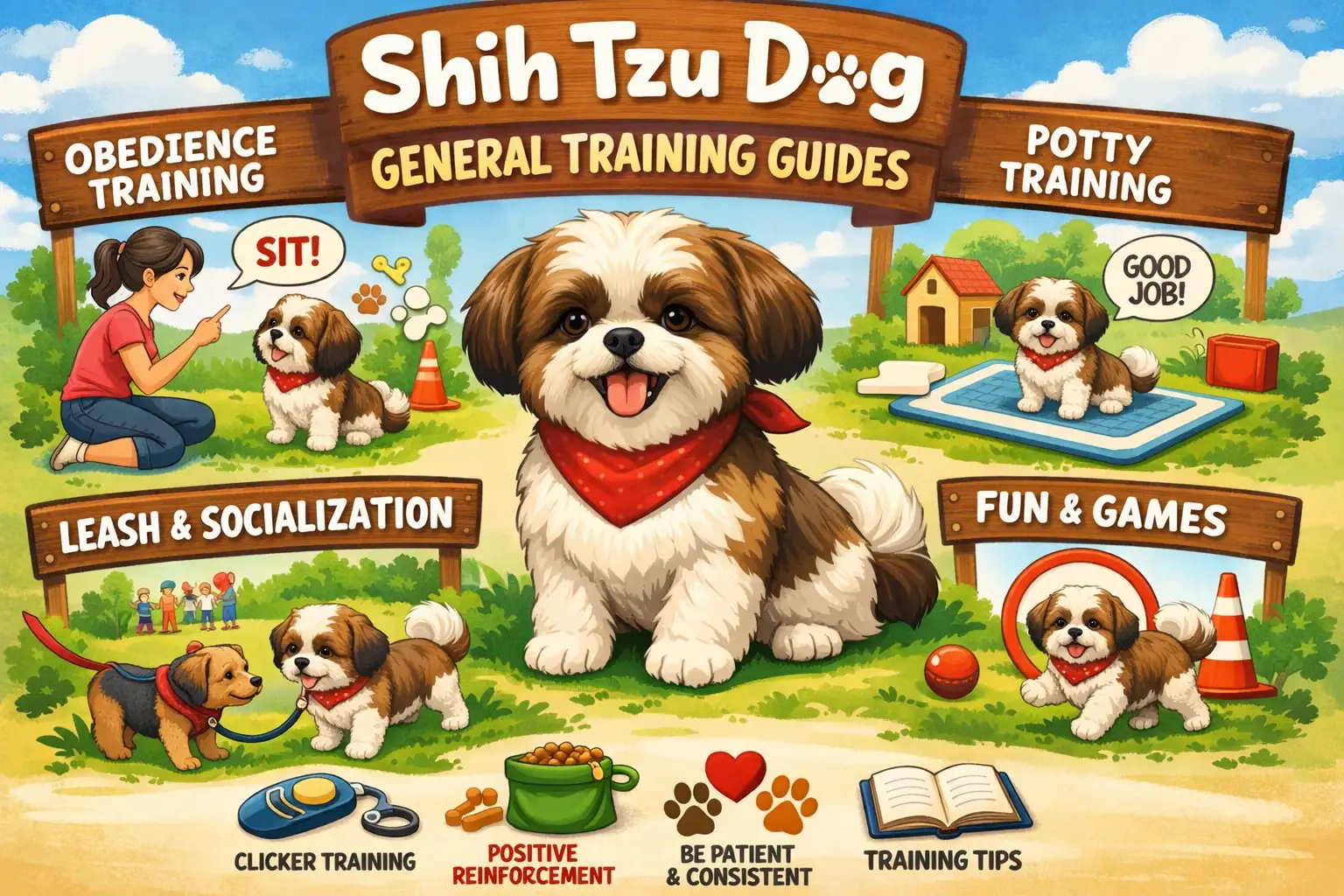
Shih Tzu training works best when it is short, positive, consistent, and built around how this companion breed learns. Shih Tzus are intelligent, affectionate, and people-focused, but they can also be independent and sensitive. That means they usually do not respond well to pressure, harsh correction, or long repetitive sessions.
This Shih Tzu training guide explains how to train a Shih Tzu puppy or adult dog using simple, realistic methods that fit everyday home life. Whether you are working on puppy basics, potty habits, basic commands, leash manners, biting, barking, or stubborn behavior, the goal is the same: build good behavior through routine, motivation, patience, and trust.
Quick answer: The best way to train a Shih Tzu is to use positive reinforcement, keep sessions around 5-10 minutes, reward good behavior immediately, and practice the same rules every day. Shih Tzus learn faster when training feels calm, rewarding, and predictable.
In this guide, you’ll learn:
- how Shih Tzus learn differently from high-drive working breeds
- which Shih Tzu training methods work best for puppies and adults
- how to start basic commands without confusing your dog
- how to prevent common mistakes that create “stubborn” behavior
- what realistic training progress should look like by age
This is not a dominance-based or quick-fix approach. It focuses on humane, reward-based Shih Tzu training tips that work for apartments, families, busy households, and small-dog lifestyles.
Understanding Shih Tzu Behavior and Trainability
Before you can train a Shih Tzu successfully, you need to understand how this breed thinks. Many owners describe Shih Tzus as stubborn, but in most cases, the real issue is low motivation, unclear rules, distraction, fear, or training sessions that are too long.
Shih Tzus were bred as companion dogs, not working dogs. They enjoy people, comfort, attention, and routine, but they do not always feel a strong natural drive to obey commands just to please an owner. Because of this, Shih Tzu training works best when the reward is worth the effort.
Here’s what matters most when training a Shih Tzu:
- They learn quickly when the reward is motivating
- They may shut down if training feels harsh, loud, or stressful
- They lose focus during long or boring sessions
- They respond better to rewards, praise, and routine than pressure
- They need consistency from every person in the home
Shih Tzu Training Traits Explained
| Trait | What Owners Often See | What It Means for Training |
|---|---|---|
| Independent nature | Ignores commands or walks away | Use better rewards and shorter sessions instead of more pressure |
| Sensitive personality | Gets nervous, freezes, or avoids training | Use a calm voice, gentle handling, and positive reinforcement |
| Food motivation | Learns quickly with treats | Reward immediately so your Shih Tzu connects the behavior with the reward |
| Short attention span | Loses focus after a few minutes | Keep training sessions around 5-10 minutes |
| People-oriented nature | Follows the owner and wants attention | Use praise, routine, and bonding as part of training |
Most Shih Tzus focus best in short sessions. For puppies, 5 minutes may be enough. For adults, 5-10 minutes is usually more effective than one long session. Training longer than your dog can handle often leads to frustration, ignoring commands, or slow progress.
Shih Tzus also learn better in quiet, low-distraction spaces before practicing around guests, children, other pets, or outdoor distractions. Start easy, reward success, then slowly make the training environment more challenging.
How to Train a Shih Tzu Step by Step
If you are wondering how to train a Shih Tzu, start with the basics: short sessions, one command at a time, clear rewards, and the same rules every day. You do not need special equipment or long training sessions. You need timing, consistency, and patience.
Shih Tzus learn best when training feels calm and predictable. Yelling, pulling, chasing, or repeating the same command too many times usually teaches them to avoid training or ignore the command.
Before each training session, follow these rules:
- Train when your Shih Tzu is calm, alert, and not overly tired
- Use small, soft, high-value treats your dog actually wants
- Practice in a quiet area before adding distractions
- Keep each session short and focused
- Reward the correct behavior immediately
- End the session before your dog loses interest
Daily Shih Tzu Training Routine
| Training Area | Session Length | How Often | Main Goal |
|---|---|---|---|
| Basic commands | 5-10 minutes | 1-2 times daily | Sit, stay, come, leave it, and name response |
| Potty training | Very short | After sleep, meals, play, and naps | Build a reliable bathroom routine |
| Leash practice | 5 minutes | Daily | Teach calm walking without pulling |
| Handling practice | 2-5 minutes | Several times weekly | Prepare for grooming, brushing, and vet handling |
| Mental games | 5 minutes | 3-4 times weekly | Reduce boredom and improve focus |
Short daily practice is better than one long training session. A Shih Tzu that ends training successfully is more likely to stay interested the next time.
Shih Tzu Puppy Training vs Adult Training
| Age or Stage | Main Training Focus | Best Approach |
|---|---|---|
| 8-16 weeks | Name response, potty routine, crate comfort, gentle handling | Use very short sessions, frequent rewards, and a predictable routine |
| 4-8 months | Sit, come, leash walking, biting control, calm behavior | Practice daily and reward focus before distractions increase |
| Adult Shih Tzu | Consistency, manners, recall, barking control, fixing bad habits | Retrain with clear rules, better rewards, and patience |
| Senior Shih Tzu | Gentle routines, confidence, comfort, and simple commands | Keep training easy, low-stress, and suited to energy level |
Shih Tzu puppy training should focus on routine and confidence first. Adult Shih Tzu training should focus on consistency and replacing old habits with better ones. In both cases, positive reinforcement works better than punishment.
Basic Shih Tzu Training Steps That Work
- Choose one simple command, such as “sit” or “come.”
- Say the command once in a calm voice.
- Guide the behavior gently if needed.
- Reward your Shih Tzu the moment they do the right action.
- Use soft praise so your dog understands they succeeded.
- Repeat a few times, then stop before your dog loses focus.
Do not repeat the same command again and again. If your Shih Tzu does not respond, pause, reset, and try again with a better reward or fewer distractions.
Training should feel simple, positive, and manageable. If your Shih Tzu walks away, barks, avoids eye contact, or stops responding, the session may be too long, too difficult, or not rewarding enough.
Shih Tzu Training Commands Every Owner Should Teach
Basic Shih Tzu training commands help your dog understand what you want in everyday situations. Start with simple commands before moving to harder behaviors. For this breed, short sessions and clear rewards work better than repeating commands many times.
The most useful commands for a Shih Tzu are “sit,” “come,” “stay,” “leave it,” “down,” and “quiet.” These commands help with manners, safety, grooming, walks, and home routines.
Basic Shih Tzu Training Commands
| Command | Why It Matters | Training Tip |
|---|---|---|
| Sit | Helps with calm behavior, greetings, feeding, and waiting | Use a treat above the nose and reward as soon as your Shih Tzu sits |
| Come | Important for safety and recall | Practice indoors first and reward every successful return |
| Stay | Builds patience and impulse control | Start with one second, then slowly increase time |
| Leave it | Helps stop chewing, picking up unsafe items, or grabbing food | Reward your dog for looking away from the item |
| Down | Useful for calm behavior and settling | Guide with a treat toward the floor and reward relaxed posture |
| Quiet | Helps manage barking | Reward silence after your Shih Tzu stops barking, even for a second |
Teach one command at a time. Do not introduce too many new words in one session. A Shih Tzu learns faster when each command has one clear meaning, one reward pattern, and one consistent response from the owner.
How to Train a Shih Tzu to Sit
“Sit” is usually the easiest command to teach a Shih Tzu because it is simple, useful, and easy to reward. It also helps reduce jumping, rushing to the food bowl, and excited behavior at the door.
- Hold a small treat close to your Shih Tzu’s nose.
- Slowly move the treat upward and slightly back over the head.
- As your dog follows the treat, the bottom should naturally lower.
- Say “sit” once as the movement happens.
- Reward immediately when your Shih Tzu sits.
- Repeat a few times, then stop before your dog gets bored.
Do not push your Shih Tzu’s back end down. This can make sensitive dogs uncomfortable. Let the treat guide the movement and reward the correct action quickly.
How to Train a Shih Tzu to Come When Called
Recall training teaches your Shih Tzu to come when called. This command should always feel positive. If your dog learns that “come” means play ends, grooming starts, or something unpleasant happens, they may stop responding.
- Start in a quiet room with no distractions.
- Say your Shih Tzu’s name in a happy voice.
- Say “come” once and step backward gently.
- Reward immediately when your dog moves toward you.
- Use praise, treats, or a favorite toy.
- Practice several short rounds, then end on success.
Never punish your Shih Tzu after they come to you, even if they were slow. Coming back should always lead to something good.
How to Potty Train a Shih Tzu
Shih Tzu potty training works best with a strict routine, close supervision, and fast rewards. Because Shih Tzus are small dogs, they may need more frequent bathroom breaks than larger breeds, especially as puppies.
The biggest mistake owners make is giving too much freedom too early. A Shih Tzu puppy should not have full access to the home until potty habits are reliable.
Simple Shih Tzu Potty Training Routine
| Time | What to Do | Why It Helps |
|---|---|---|
| After waking up | Take your Shih Tzu to the potty area right away | Puppies often need to go after sleep |
| After meals | Go out or to the pee pad within 10-20 minutes | Eating often triggers the need to potty |
| After play | Take a short potty break | Excitement can lead to accidents |
| After naps | Go directly to the potty area | This builds a predictable routine |
| Before bedtime | Give one final potty break | Helps reduce overnight accidents |
Choose one potty method and stay consistent. If you want your Shih Tzu to pee outside, take them to the same outdoor spot each time. If you use pee pads, place the pad in one fixed location and avoid moving it around too often.
When your Shih Tzu pees or poops in the right place, reward immediately. Do not wait until you are back inside. The reward must happen right after the correct behavior so your dog understands what earned it.
Shih Tzu Potty Training Problems
If your Shih Tzu keeps having accidents, the problem is usually schedule, supervision, or access. Shorten the time between potty breaks, watch your dog more closely, and limit free roaming until the habit improves.
- Do not punish indoor accidents after they happen.
- Clean accidents fully so the smell does not attract repeat behavior.
- Reward the correct potty spot every time.
- Use the same door, same area, and same command if possible.
- Give less freedom indoors until your Shih Tzu becomes reliable.
Potty training can take time, especially with young puppies. Consistency matters more than speed.
How to Stop Shih Tzu Puppy Biting
Shih Tzu puppy biting is common during teething, play, and excitement. Most puppies are not being aggressive. They are learning how to use their mouth, manage energy, and interact with people.
The goal is not to scare or punish your puppy. The goal is to teach that biting people ends the fun, while gentle play and chewing the right items are rewarded.
Steps to Reduce Shih Tzu Puppy Biting
- Stop moving your hands when your puppy bites.
- Pause play for a few seconds.
- Redirect your Shih Tzu to a safe chew toy.
- Reward calm chewing or gentle play.
- End the session if your puppy becomes too excited.
- Repeat the same response every time biting happens.
Avoid rough hand play, chasing, or teasing games. These can make biting worse because they teach your Shih Tzu that hands are toys.
Why Shih Tzu Puppies Bite More During Training
Some Shih Tzu puppies bite more when they are tired, overstimulated, teething, or frustrated. If biting increases during training, the session may be too long or too difficult.
Keep puppy training short and end before your Shih Tzu becomes overexcited. Calm repetition is more effective than trying to force one more command.
Common Shih Tzu Training Problems and How to Fix Them
Most Shih Tzu training problems come from unclear routines, weak rewards, too much repetition, or training that moves faster than the dog is ready for. This does not mean your Shih Tzu is bad or impossible to train. It usually means the training plan needs to be simpler, calmer, and more consistent.
Shih Tzus are sensitive companion dogs, so harsh correction often makes problems worse. If your Shih Tzu ignores commands, barks for attention, has potty accidents, pulls on the leash, or acts stubborn, the first step is to adjust the environment and reward the behavior you want.
Here are the most common Shih Tzu training problems and the fixes that usually work best.
Shih Tzu Training Problems and Fixes
| Problem | Why It Happens | What Works Best |
|---|---|---|
| Acts stubborn or ignores commands | The reward is not strong enough, the session is too long, or the command is unclear | Use better treats, train for 5-10 minutes, and say each command only once |
| Barks too much | Wants attention, feels bored, hears distractions, or has not learned a quiet cue | Reward quiet behavior, avoid rewarding attention barking, and give more mental activity |
| Potty accidents indoors | No clear schedule, too much freedom, or missed bathroom signals | Use a strict potty routine after sleep, meals, play, and naps |
| Bites or nips during play | Puppy teething, overstimulation, or rough play | Pause play, redirect to a chew toy, and reward calm mouth behavior |
| Pulls on the leash | Too excited, distracted, or used to moving forward while pulling | Stop walking when the leash tightens and reward walking beside you |
| Only listens sometimes | Rules change between people, rooms, or situations | Use the same commands, rewards, and rules every day |
| Runs away when called | Recall has not been rewarded enough or the dog expects the fun to end | Practice “come” indoors first and reward heavily every time your Shih Tzu returns |
Why Your Shih Tzu Acts Stubborn During Training
A stubborn Shih Tzu is usually not trying to challenge you. Most of the time, the dog is confused, distracted, tired, nervous, or not motivated enough. Repeating commands louder rarely helps. It often teaches the dog that the first command does not matter.
To fix stubborn behavior, make the task easier. Move to a quieter room, use a better reward, shorten the session, and reward small progress quickly. Once your Shih Tzu succeeds in an easy setting, slowly practice around more distractions.
Important Fixes Owners Often Miss
- Do not punish mistakes.
Punishment can make a Shih Tzu nervous, avoidant, or slower to learn. - Reward good behavior immediately.
Waiting even a few seconds can confuse your dog about what earned the reward. - Use the same rules every day.
If jumping, barking, or couch behavior is allowed sometimes but not others, your Shih Tzu will not understand the rule. - Control the environment.
Fewer distractions help your dog succeed faster, especially during puppy training. - Stop before frustration starts.
A short successful session is better than a long session that ends with ignoring, barking, or walking away.
If your Shih Tzu keeps repeating the same training problem, check these three things first:
- the training session may be too long
- the reward may not be exciting enough
- the rules may not be clear or consistent at home
Fixing these basics often solves the issue without advanced training. If the behavior involves fear, aggression, sudden personality changes, or no progress after several weeks, professional help may be needed.
When to Seek Professional Help for Shih Tzu Training
Most Shih Tzu training problems can improve at home with patience, routine, and positive reinforcement. However, some behaviors need help from a qualified trainer or veterinary professional. Getting help early is better than waiting until the behavior becomes a long-term habit.
You should consider professional help if your Shih Tzu shows fear, growling, snapping, sudden behavior changes, or no improvement after consistent training. These issues may involve stress, pain, anxiety, or a handling problem that needs a safer plan.
When Home Training Is Not Enough
| Behavior | How Long to Wait | What to Do |
|---|---|---|
| No improvement despite consistent training | 4-6 weeks | Work with a positive-reinforcement dog trainer |
| Fear, hiding, freezing, or panic | Right away | Speak with a vet or qualified behavior professional |
| Growling, snapping, or biting | Right away | Stop training alone and get professional help |
| Sudden behavior change | Immediate | Book a vet check before assuming it is a training issue |
| Training keeps going backward | Ongoing | Review the routine, environment, and reward system with a professional |
A good trainer can watch how your Shih Tzu behaves in real situations, adjust the training plan for your home, and help you spot mistakes that are easy to miss. This is especially useful for leash pulling, barking, recall problems, biting, fear, and stubborn behavior.
If fear, stress, aggression, or sudden behavior change is involved, speak with a veterinarian first. Some behavior problems are linked to pain, illness, anxiety, poor sleep, or past negative experiences rather than simple disobedience.
How to Choose the Right Trainer for a Shih Tzu
- Choose someone who uses positive reinforcement and reward-based training
- Avoid trainers who promise instant results or use fear-based methods
- Ask if they have experience with small, sensitive, companion breeds
- Make sure they explain the plan clearly and involve you in the process
- Look for a trainer who focuses on confidence, routine, and safe handling
Training should always help your Shih Tzu feel safe, confident, and willing to learn. If a method makes your dog scared, shut down, or more reactive, it is not the right approach.
More Shih Tzu Resources
Use these related Shih Tzu resources for topics that are covered in more detail on their dedicated pages:
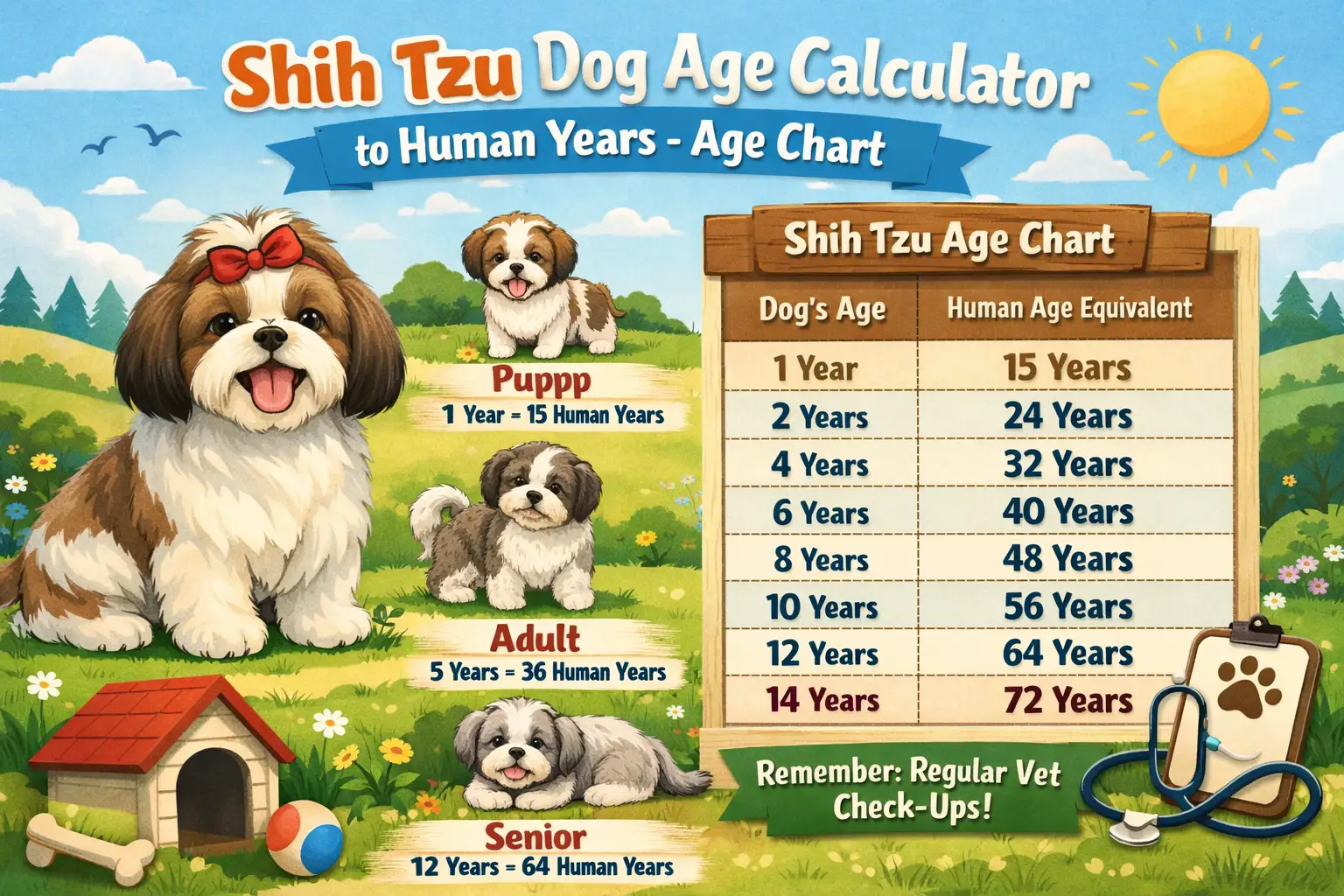
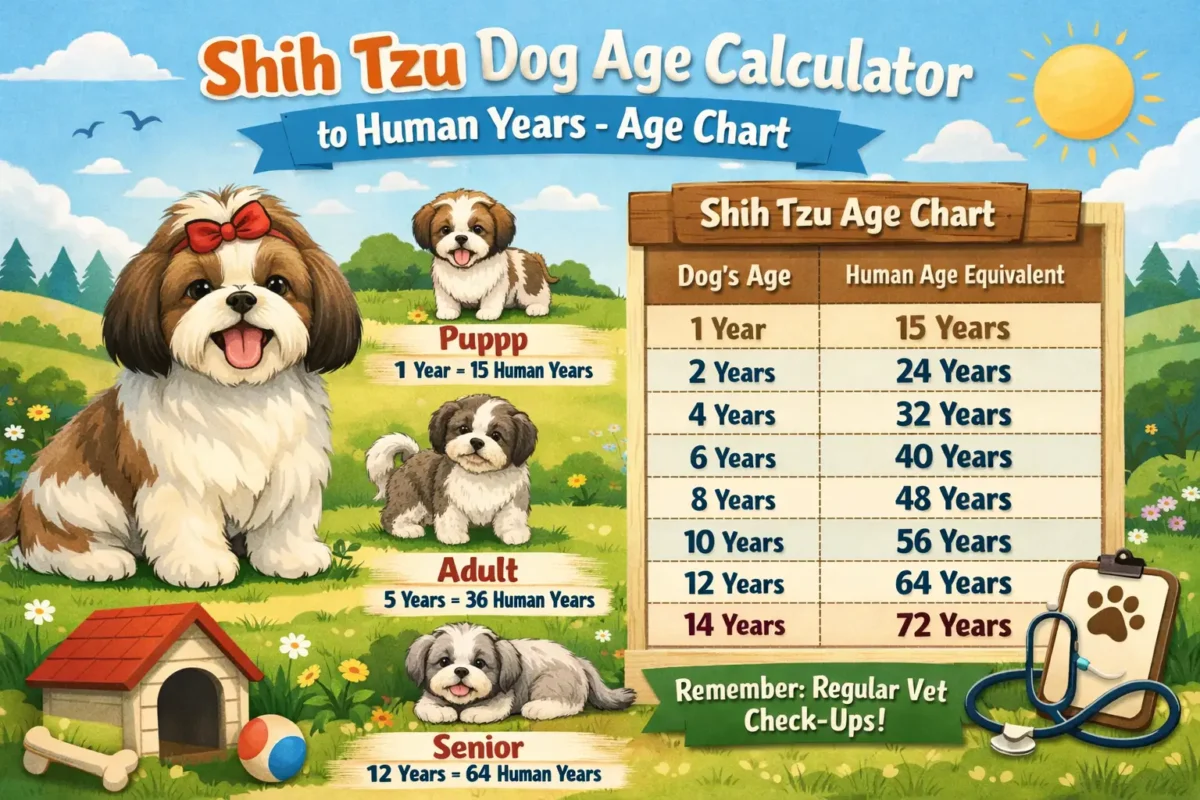
- Shih Tzu Dog Age Calculator
- Shih Tzu Dog Breed Guide
- Shih Tzu Age Chart
- Shih Tzu Grooming Guide
- Shih Tzu Nutrition and Feeding Guide
- Shih Tzu Cost of Ownership Guide

Ata Ur Rehman is the founder of Pet Age in Human Years Calculator, an educational platform that provides age conversion charts and lifespan guides for dogs, cats, birds, and other companion animals. His work focuses on helping pet owners understand how animal ages translate into human years using commonly accepted age conversion formulas and published lifespan averages.
The website compiles breed and species lifespan data from kennel clubs, breed organizations, and general animal lifespan studies to present simple and easy-to-understand guides for pet owners worldwide.
This website was created to centralize animal age conversion charts into one easy reference platform for pet owners.
This article is for general education. For symptoms, medication, diet changes, or health concerns, use a qualified veterinarian who can assess your individual pet.