On this page
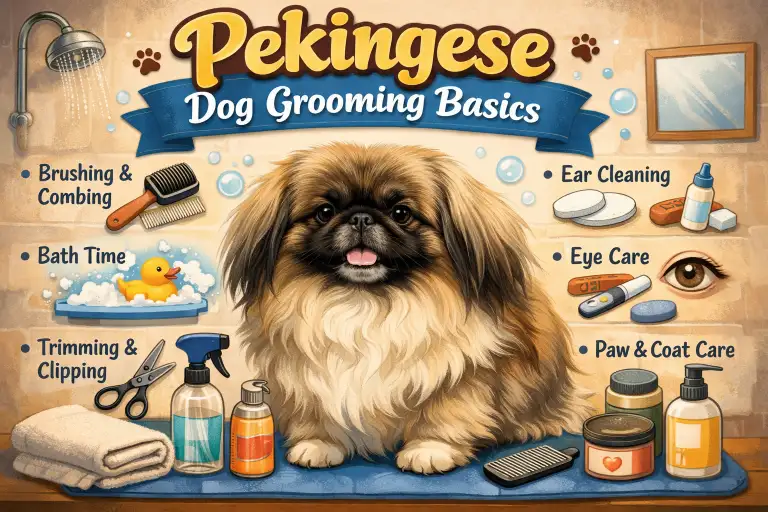
Pekingese grooming is an essential part of caring for this breed. While their long, flowing coat is one of their most recognizable features, it also requires consistent maintenance to prevent matting, control shedding, and support healthy skin. Unlike low-maintenance breeds, Pekingese dogs need a regular grooming routine that includes brushing, coat care, bathing, facial hygiene, and routine health checks.
This Pekingese grooming guide explains how to groom a Pekingese safely at home, how often grooming should be performed, and how to manage common challenges such as shedding, tangles, tear stains, and coat maintenance. Whether you are a first-time owner or have cared for the breed for years, following a consistent routine can help keep your dog comfortable and healthy.
Proper grooming affects far more than appearance. Regular coat care helps reduce shedding around the home, prevents painful mats from forming, supports healthy skin, improves comfort, and allows owners to identify potential health issues earlier. Because Pekingese dogs have a dense double coat and a flat facial structure, neglecting grooming can quickly lead to skin irritation, trapped moisture, eye problems, and discomfort.
Pekingese are also a brachycephalic breed, meaning they are more sensitive to heat and stress than many other dogs. Grooming sessions should always be calm, gentle, and performed in a cool environment. Safe grooming practices help maintain coat quality while reducing unnecessary stress on the dog.
Regular Pekingese grooming helps owners:
- Prevent painful mats and tangles
- Reduce loose hair and seasonal shedding
- Maintain healthy skin and coat condition
- Keep eyes, ears, and facial folds clean
- Detect skin, ear, or eye issues earlier
- Improve comfort during warm weather
- Make professional grooming visits easier
When grooming becomes part of a regular routine, most Pekingese adapt well to the process. Consistency is the key to maintaining a healthy coat and preventing small grooming problems from becoming larger health concerns.
| Pekingese Grooming Quick Facts | Recommendation |
|---|---|
| Coat Type | Long double coat |
| Shedding Level | Moderate to heavy |
| Brushing Frequency | Daily or every other day |
| Bathing Frequency | Every 3–6 weeks |
| Professional Grooming | Every 6–8 weeks |
| Hypoallergenic | No |
Understanding the Pekingese Coat and Grooming Needs
Pekingese dogs have a thick double coat consisting of a soft insulating undercoat and a longer outer coat. This coat helps protect the dog from environmental conditions, but it also requires frequent maintenance to stay clean, healthy, and free from mats.
One of the most common questions owners ask is: Do Pekingese shed? Yes. Pekingese are moderate to heavy shedders throughout the year and typically experience heavier seasonal shedding during spring and fall. Their dense undercoat traps loose hair, making regular brushing an important part of shedding control.
Without routine grooming, loose undercoat hair can become trapped, causing tangles and mats that pull on the skin. Dirt, moisture, and debris can also accumulate within the coat, increasing the risk of skin irritation and odor.
Some areas of the coat mat faster than others and should receive extra attention during every brushing session.
Common mat-prone areas include:
- Behind the ears
- Under the front legs (armpits)
- Chest and belly areas
- Around the tail
- Under collars and harnesses
If mats are ignored, they can tighten against the skin, causing discomfort, restricting movement, trapping moisture, and increasing the risk of skin infections.
Pekingese Coat Facts and What They Mean for Grooming
| Coat Feature | What It Means for Owners |
|---|---|
| Long outer coat | Requires frequent brushing to prevent tangles |
| Dense undercoat | Contributes to year-round shedding |
| Double coat | Should not be routinely shaved |
| Leg and tail feathering | Prone to matting without regular grooming |
| Dense coat near skin | Can trap moisture and increase skin issues |
Many owners assume shaving a Pekingese will reduce shedding or help keep the dog cool. In reality, shaving a double-coated breed can damage coat growth and interfere with natural temperature regulation. Regular brushing and coat maintenance are generally safer and more effective ways to manage shedding and comfort.
How Often Should You Groom a Pekingese?
Most Pekingese require brushing several times per week, with daily brushing recommended during heavy shedding seasons. Consistent grooming prevents mats, reduces loose hair, and keeps the coat easier to manage over time.
| Grooming Task | Recommended Frequency |
|---|---|
| Light brushing | Daily or every other day |
| Full brushing | 3–4 times per week |
| Bathing | Every 3–6 weeks |
| Professional grooming | Every 6–8 weeks |
| Mat inspection | Daily |
Short, consistent grooming sessions are usually more effective than infrequent, lengthy grooming sessions. Regular maintenance helps control shedding and prevents matting before it becomes a serious problem.
At-Home Pekingese Grooming Routine (Step-by-Step)
At-home grooming can be simple and effective when the proper tools are used. The goal is to maintain coat health, remove loose undercoat hair, reduce shedding, and prevent mats from forming between professional grooming appointments.
Essential Grooming Tools for a Pekingese
| Tool | Primary Purpose |
|---|---|
| Slicker brush | Removes loose hair and surface tangles |
| Metal comb | Detects hidden mats near the skin |
| Undercoat rake | Helps remove loose shedding undercoat |
| Detangling spray | Reduces breakage during brushing |
| Gentle dog shampoo | Cleans coat without stripping natural oils |
| Absorbent towel | Removes excess moisture after bathing |
| Low-heat dryer | Helps dry the double coat thoroughly |
Brushing Your Pekingese
Brushing is the most important part of Pekingese grooming. Because this breed has a thick double coat, regular brushing removes loose undercoat hair, reduces shedding, prevents mats, and keeps the coat healthy. Most Pekingese benefit from brushing several times per week, with daily brushing recommended during seasonal shedding periods.
How to brush a Pekingese safely:
- Brush dry or lightly misted fur, never soaking wet fur
- Work in small sections rather than brushing the entire coat at once
- Start near the ends of the coat and gradually work upward
- Use a slicker brush first, followed by a metal comb
- Pay special attention to mat-prone areas such as behind the ears and under the legs
- Stop and take breaks if your dog becomes stressed or uncomfortable
A technique known as line brushing can be especially helpful for long-coated breeds like the Pekingese. This method allows owners to reach the undercoat and remove trapped shedding hair before it forms mats.
Never pull hard on tangles or mats. If a mat cannot be safely worked out with a comb and detangling spray, professional grooming may be the safest option.
Bathing a Pekingese
Many owners ask how often a Pekingese should be bathed. In most cases, bathing every 3 to 6 weeks is enough to keep the coat clean while preserving healthy skin and coat oils. Dogs that spend more time outdoors or experience heavy shedding may require more frequent grooming maintenance.
| Bathing Task | Recommended Practice |
|---|---|
| Bath frequency | Every 3–6 weeks |
| Water temperature | Warm, never hot |
| Shampoo | Gentle dog-specific shampoo |
| Face cleaning | Damp cloth rather than shampoo |
| Drying | Towel dry followed by low heat if needed |
Always dry the coat completely after bathing. Moisture trapped inside a dense double coat can contribute to odor, matting, and skin irritation. Proper drying is just as important as the bath itself.
Mat Prevention Tips
Preventing mats is much easier than removing them. Consistent brushing and routine coat maintenance help prevent tangles from tightening into painful mats that pull on the skin.
Simple ways to reduce matting:
- Brush high-friction areas daily
- Check behind the ears and under the legs after walks
- Keep the coat fully dry after bathing
- Use a metal comb regularly to detect hidden mats
- Schedule professional grooming before matting becomes severe
Never cut mats close to the skin using household scissors. Serious skin injuries can occur when owners attempt to remove tight mats themselves.
Face, Eyes, Ears, Nails, and Skin Care for Pekingese
Pekingese require additional grooming attention beyond coat care. Their flat facial structure, prominent eyes, and long coat create areas where moisture, debris, and bacteria can accumulate if regular hygiene is neglected.
Face and eye care recommendations:
- Clean around the eyes daily using a soft damp cloth
- Gently remove tear staining before buildup becomes excessive
- Keep hair away from the eyes to reduce irritation
- Monitor for redness, swelling, excessive tearing, or discharge
Ear care is equally important because the long coat around the ears can trap moisture and debris. Routine ear cleaning helps reduce the risk of irritation and infection.
Nails should be checked regularly and trimmed before they become overly long. Excessively long nails can affect posture, traction, and overall comfort.
Healthy skin is closely connected to proper grooming. Regular brushing allows owners to identify irritation, hot spots, parasites, or unusual skin changes before they become more serious.
Care Areas and Maintenance Schedule
| Care Area | Recommended Frequency | Safe Method |
|---|---|---|
| Face folds | Daily | Damp cloth followed by drying |
| Eyes | Daily | Gentle wipe with soft cloth |
| Ears | Every 1–2 weeks | Dog ear cleaner and cotton pad |
| Nails | Every 3–4 weeks | Small-breed nail trimmer |
| Skin inspection | Weekly | Hands-on examination during brushing |
Grooming Safety, Professional Grooming, and Seasonal Shedding
Pekingese grooming should always be performed in a calm environment. Because the breed is sensitive to heat and stress, grooming sessions should be short, comfortable, and never rushed.
While many grooming tasks can be performed at home, professional groomers can help with severe matting, sanitary trims, coat shaping, nail trimming, and other specialized grooming needs.
Home Grooming vs Professional Grooming
| Task | Home Grooming | Professional Grooming |
|---|---|---|
| Brushing | Yes | Optional |
| Bathing | Yes | Optional |
| Face cleaning | Yes | Optional |
| Nail trimming | If comfortable | Recommended if unsure |
| Severe mat removal | No | Recommended |
| Hair trimming | Limited | Recommended |
| Sanitary trimming | Limited | Recommended |
Pekingese are moderate to heavy shedders throughout the year, with heavier shedding typically occurring during spring and fall. During these periods, owners should expect more loose hair and increase brushing frequency to help remove excess undercoat.
Seasonal shedding management tips:
- Brush daily during peak shedding periods
- Use an undercoat rake when appropriate
- Maintain a regular bathing schedule
- Schedule grooming appointments more frequently if needed
- Avoid shaving the double coat to reduce shedding
Shaving rarely solves shedding problems and can negatively affect coat quality. Regular brushing and proper coat maintenance remain the safest long-term shedding management strategy.
Popular Pekingese Haircut and Grooming Styles
Most Pekingese owners maintain the breed’s natural coat, but some choose grooming styles that make coat maintenance easier. While routine shaving is not recommended for a double-coated breed, light trimming and professional grooming can help keep the coat clean and manageable.
Common Pekingese grooming styles include:
| Style | Description |
|---|---|
| Natural Coat | Maintains the breed’s traditional long coat with routine trimming and brushing. |
| Puppy Cut | A shorter, easier-to-maintain trim that reduces daily grooming requirements. |
| Teddy Bear Cut | A rounded appearance that gives the coat a softer look while remaining manageable. |
| Sanitary Trim | Focuses on trimming around hygiene-sensitive areas while keeping the overall coat intact. |
Before choosing any haircut, owners should discuss coat condition, lifestyle, and maintenance expectations with a professional groomer. Preserving the health of the double coat should always be the primary goal.
Pekingese Grooming Schedule
| Grooming Task | Recommended Frequency |
|---|---|
| Light brushing | Daily |
| Full brushing | 3–4 times weekly |
| Face and eye cleaning | Daily |
| Ear cleaning | Every 1–2 weeks |
| Nail trimming | Every 3–4 weeks |
| Bathing | Every 3–6 weeks |
| Professional grooming | Every 6–8 weeks |
When to Seek Professional Grooming or Veterinary Care
| Sign | Possible Concern |
|---|---|
| Severe matting | Risk of skin injury or infection |
| Red or irritated skin | Possible skin condition |
| Strong ear odor | Possible ear infection |
| Eye swelling or discharge | Possible eye irritation or infection |
| Persistent scratching | Allergies, parasites, or skin issues |
Frequently Asked Questions
How often should you groom a Pekingese?
Most Pekingese should be brushed daily or every other day, with full grooming sessions several times per week. Regular grooming helps prevent mats, control shedding, and keep the double coat healthy.
Do Pekingese shed a lot?
Yes. Pekingese are moderate to heavy shedders due to their thick double coat. Shedding occurs year-round and usually increases during seasonal coat changes in spring and fall.
How often should a Pekingese be bathed?
Most Pekingese benefit from a bath every 3 to 6 weeks. Bathing too frequently may remove natural oils from the coat, while infrequent bathing can allow dirt and loose hair to build up.
Can you shave a Pekingese?
Routine shaving is generally not recommended for Pekingese. Their double coat helps regulate body temperature and protect the skin. Regular brushing is usually a better way to manage shedding and coat maintenance.
What is the best brush for a Pekingese?
A slicker brush and metal comb are the most commonly recommended grooming tools for Pekingese. These tools help remove loose hair, detect hidden mats, and maintain the coat between grooming sessions.
Are Pekingese hypoallergenic?
No. Pekingese are not considered hypoallergenic. They shed regularly and produce dander, which may trigger allergies in sensitive individuals.
How do you prevent mats in a Pekingese coat?
Regular brushing, checking high-friction areas daily, keeping the coat dry, and scheduling professional grooming when needed are the most effective ways to prevent mats from forming.
When should a Pekingese see a professional groomer?
A professional groomer should be considered when the coat develops severe mats, requires trimming, or becomes difficult to maintain at home. Many owners schedule professional grooming every 6 to 8 weeks.

Ata Ur Rehman is the founder of Pet Age in Human Years Calculator, an educational platform that provides age conversion charts and lifespan guides for dogs, cats, birds, and other companion animals. His work focuses on helping pet owners understand how animal ages translate into human years using commonly accepted age conversion formulas and published lifespan averages.
The website compiles breed and species lifespan data from kennel clubs, breed organizations, and general animal lifespan studies to present simple and easy-to-understand guides for pet owners worldwide.
This website was created to centralize animal age conversion charts into one easy reference platform for pet owners.
This article is for general education. For symptoms, medication, diet changes, or health concerns, use a qualified veterinarian who can assess your individual pet.